Data Needs a Story
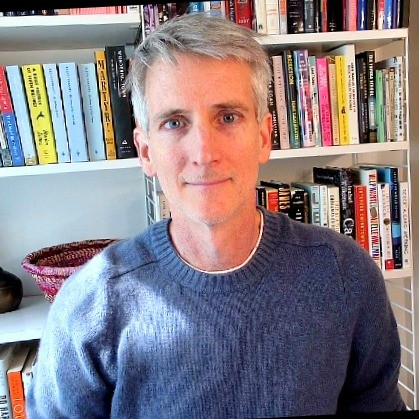
Andrew Grosso, Co-Founder of Pickaxe, is a drama major turned data scientist who has spent two decades helping media companies, streamers, and broadcasters turn their data into decisions. His clients have included the BBC, ITV, Sky, Peacock, and Hallmark. His core argument has not changed since he first encountered econometrics at Juno Online: every company is a data company, and data is only as useful as the story you can tell with it.
“I started out as a playwright. The dramatic training is just saying: keep your audience, give them context, then tell them what to do next.”
Andrew Grosso is Co-Founder and Chief Product Officer of Pickaxe, a New York-based data intelligence platform that helps media owners, streamers, and direct-to-consumer brands use their data to make better marketing decisions. Pickaxe works with broadcasters and streamers including the BBC, ITV, Sky, Peacock, Fox, and MSNBC, as well as direct-to-consumer brands like Hallmark.
Andrew studied English and Drama at Duke University and moved to New York intending to direct theatre. To fund his rent, he answered a job ad and joined D.E. Shaw, where they owned Juno Online, an AOL competitor. He started in customer service and became fascinated by the data reporting he was building for marketing, which led him through product management, internal tools, and data analytics. That path eventually became Pickaxe, which he co-founded in 2016.
Before Pickaxe, Andrew held product director roles at NBCUniversal, where he led DailyCandy’s digital products for several years, and VP Product roles at Levo and Savoteur. He has also taught Product Management at General Assembly. The throughline of the career is the same as the founding thesis of Pickaxe: that data is infrastructure, storytelling is what turns it into strategy, and both are necessary for any marketer to make decisions that hold up under scrutiny.
“Every company is a data company, whether you sell greeting cards or run a streamer.”
“Data is useless without a story to explain what it means.”
The most common failure mode Andrew sees is analysts who present the what without the so what or the now what. The executive receiving the data does not need the methodology explained. They need to know why this particular signal matters at this particular moment and what decision it implies. Andrew’s drama training, his original career intention, turns out to be the most durable skill he has: you are always performing for an audience who does not have time to sit through the full version.
“For a brief period you could know everything about every customer. Then the walled gardens closed.”
The cookie death conversation treats identity as a new problem. Andrew’s view is that the period of near-total attribution was the anomaly, not the baseline. Marketers are now returning to the techniques that predate the cookie era: econometrics, media mix modelling, and the use of a known panel to extrapolate about the unknown majority. The tools are faster and cheaper than they were twenty years ago, but the core logic has not changed.
“Phase zero is just getting live. Walk, run, fly. Econometrics is the fly part.”
Every marketing programme goes through the same lifecycle regardless of the business. The walk phase is getting pixels firing and tracking in place. The run phase is optimising channel allocation and messaging. The fly phase is media mix modelling, where you look back across all channels simultaneously and understand how they interact, how they cannibalise each other, and how to allocate a budget not for next week but for the next twelve months. Most companies stop at run because the fly phase requires committing to a view of the future.
Stay close to the conversation.
New leaders and insights. No noise.