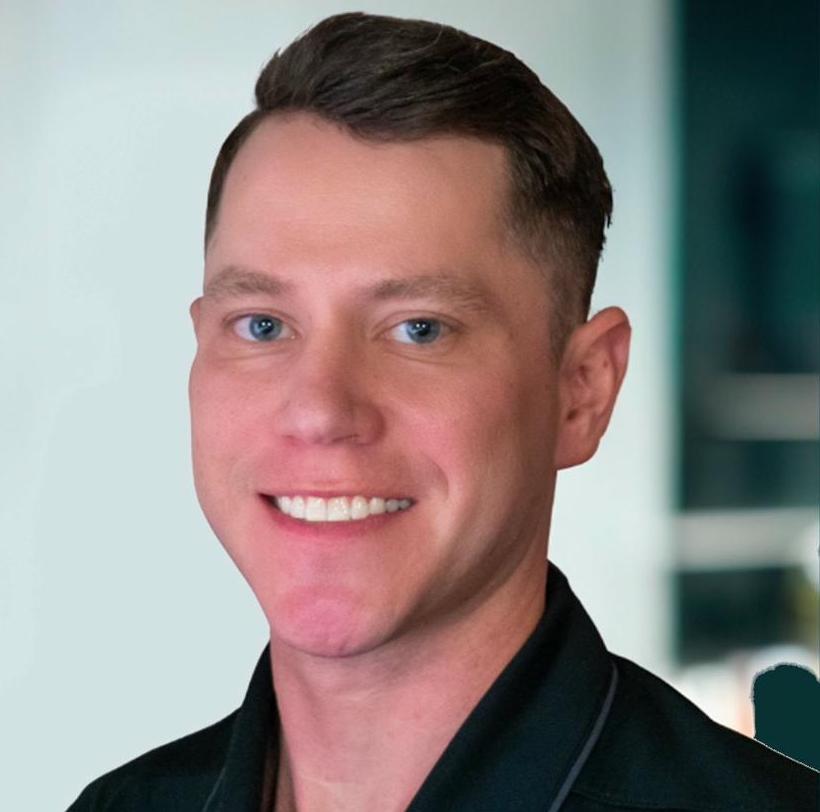
Two great pivots got us here: the open web, and the AI layer that connects it.
Alice Beecroft Senior Director, Global Strategy and Partnerships, Yahoo DSP
Interviewed by John Horsley
Published

Alice Beecroft is Senior Director of Global Strategy and Partnerships at Yahoo DSP. She has over two decades in digital advertising, originally trained as a software engineer. In this conversation she sets out the two transformational pivot points in programmatic (RTB and agentic communication); the DSP as a connected intelligence layer customers may not need to log into by 2026-2027; the 345 million deterministic identifiers globally scale that gives Yahoo modelling capability; and the lone wolves coming together collaboration move across the major platforms.
Two transformational pivot points: RTB and agentic communication
On the long view.
Two transformational pivot points in programmatic, where the whole ecosystem changes (buy side and sell side both). The first was the introduction of RTB and the automation that brought. The second is happening now: agentic communication coming into play, changing the way humans communicate with systems and how systems communicate with each other.
I feel grateful I was there at the beginning of RTB and now at the beginning of agentic communication.
The DSP as a connected intelligence layer
On where the agentic move is going.
It changes how buyers and sellers interact with the different platforms. Yahoo DSP works in an open ecosystem: agentic communication will happen inside our platform and in what we provide, but DSPs are going to start to become a connected intelligence layer into other platforms. Over 2026 and into 2027 we will start to see customers no longer come into the DSP UIs at all.
For an agency or advertiser today, the burden is going into every platform individually, understanding the workflows, learning to engage with each one. Imagine a future where they do that within their own platform and their own systems, communicating with all of those different platforms and understanding the best path forward.
On the governance layer.
Humans still sit in the driving seat. The governance layer is going to become more and more important. When we engage partners across Yahoo's omnichannel platform, we ask: how do they position themselves in different markets; do they have capabilities that transcend the US into Europe and APAC; how do they approach privacy regulation; are they robust on location and identity resolution.
Identity: deterministic plus contextual, layered
On the post-cookie reality.
A big sigh of relief when Chrome announced it would not fully block cookies. For the most part nobody has taken their foot off the pedal: a huge expanse of supply that is still non-addressable, across the open web but in out-of-home, TV, commerce. Cookies are prevalent but limited by channel.
For an omnichannel push with unified measurement across channels, you have to think beyond cookies. Deterministic identifiers are heavily prevalent. Where you have good scale, deterministic identifiers let you build models from a frequency, attribution, and audience perspective. Yahoo has 345 million deterministic identifiers globally. A strong position for the addressable and the non-addressable ecosystem.
On hybrid targeting.
Hybrid. Deterministic has its place and allows the ability to model out. Contextual is more than what is on the page: more than scanning content or understanding video. Contextual is starting to bring through emotion, the ability to understand the mindset somebody is in, what they are thinking about, what point of their day they are at. Contextual also covers other signals like geo.
Lone wolves are coming together
On the collaboration move.
Over the last 14 months: Channel 4 going on to YouTube, Netflix collaborating, Netflix coming into Amazon. Even the big lone wolves we would have said two years ago would never collaborate are realising that by coming together they can offer something unique.
Netflix-Spotify is a marriage with a purpose. TV and audio are natural bedfellows for omnichannel: case studies show incremental uplift from both upper and lower funnel. People do not consume media in a siloed channel or publisher. It is differentiated throughout the day. Media planning has to complement that.
On commerce as the bigger frame.
Commerce over retail. Retail makes most people think CPG. Commerce extends into beauty, travel, and more. A massive opportunity to bring off-site and online together, especially as more data is being surfaced and linked through a deterministic identifier or geo-indexing.
The majority of people still shop in bricks and mortar. The majority of media they consume is digital. Link the two so you are not cannibalising media budgets or pretending performance is driven by only digital or only off-site.
Neurodiversity in the workplace
On the mission.
I have just been promoted in my volunteer role: now Global Co-Lead with my partner Ashley in the US, looking after the Neurodiversity ERG for the whole of Yahoo. Heavily invested in neurodiversity for a couple of decades.
People who are neurodiverse think in different ways. The industry is innovative, fast-paced, and creative. We need people thinking differently and creatively. The ultimate goal is to get to a place where hiring neurodiverse people is organic, the same way we no longer notice when a woman is in a role.
The question for the board
If the DSP becomes a connected intelligence layer that agency platforms talk to, what share of media-tech spend invests in interoperability versus UI features by 2027?