From bootstrapped to IPO: why agentic commerce changes everything about CRM.
Andrew Bialecki Co-CEO & Co-Founder, Klaviyo
Interviewed by John Horsley
Published
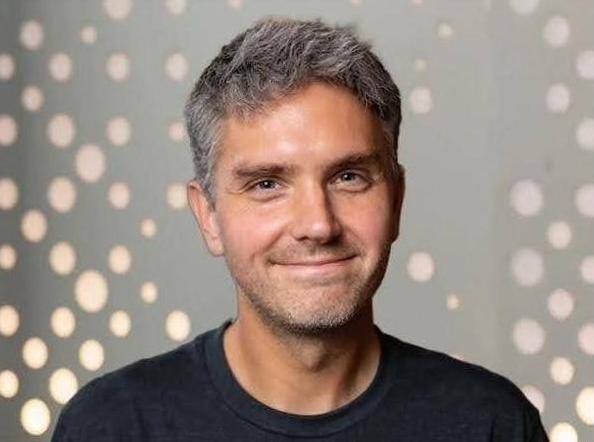
Andrew Bialecki is Co-Chief Executive Officer and Co-Founder of Klaviyo, the consumer CRM platform built for B2C businesses. Klaviyo was bootstrapped (one of the few non-VC-backed SaaS businesses to have IPO'd at that scale), is approaching its 14th year, and serves brands of all sizes from entrepreneurs through to iconic global names including Glossier, Liquid Death, Mattel, Castore, and Loop Earplugs. Bialecki and his co-founder Ed Hallen operated as a two-person team for three years while serving thousands of businesses; the company recently moved to a two-co-CEO operating model. Bialecki's academic background is in astrophysics, physics, and engineering. In this conversation he sets out the consumer CRM category Klaviyo defined; the database engineering that joined real-time online transactional capability with analytical-warehouse capability into what they now call the Klaviyo Data Platform; the Jeff Bezos invariants test (price, speed, selection forever) applied to Klaviyo's strategy (ownership of customer relationships, consumerization of every touchpoint); the autonomous CRM vision where the system programmes itself and the marketer becomes the editor-in-chief; the apprenticeship model of leadership (stay in the details, mentor by being in the work); the second-order benefit of automation (a better experience, beyond efficiency); and the curiosity, work ethic, and side projects advice for someone starting out.
What Klaviyo is, and being yourself at internet scale
The setup.
Klaviyo is a B2C CRM. We started almost 14 years ago. The mission: give a business the technology so every customer experience (marketing, service, the website, the mobile app) is tailored to every customer as if that customer were the only one that existed.
We want to enable the world's builders and creators to be independently successful, to own their destiny, and to do that by letting any business be themselves at internet scale to every consumer they have.
On what that means in practice.
In the early 2010s I built a little website that was a search engine to find your local 5K or half marathon. I went to race organisers, some raising money for charity, some running big iconic races like the Boston Marathon. I kept pitching the same product over and over with slight customisation for each. I thought: there has to be a way through technology to allow me, representing this business, to be myself without literally being the one doing the talking. AI now is the obvious realisation of that.
A friend ran a retail business getting into e-commerce. Same problem: different customers buying different products, some super-fans, some first-time, all needing personalisation. The idea: give the business the technology so the customer experience is tailored exactly to them across the website, the messaging, the customer service.
Use your own software, and the second-order benefit of automation
On the founder discipline.
The best companies use their own software. For the first three years Ed and I were the only two people, while serving thousands of businesses. We had a shared inbox. The rule: don't start any other work in the morning until the inbox is cleared. Some days an hour, some days most of the day.
The only way to solve it was to make the product answer more of those questions. We'd improve product quality. We'd use Klaviyo itself: building marketing automations to onboard customers (people would ask what are best practices to get started? so we'd send the first five steps automatically). Customers still reference it: some of the best onboarding material out there. The genesis was finding a way to automate what we were doing so every customer got their own tailored experience.
On the underestimated dividend.
The first thing you get from automation is time back (efficiency). The second thing, which people underestimate, is a better experience.
The example: we built Klaviyo originally as a database. We thought we need a brain that stores everything. We built APIs that catered to developers, and got requests to integrate with MySQL, Microsoft SQL Server, and various SaaS applications, including the connector that became our Shopify partnership. We built connectors out of expediency to answer those questions. That became a massive competitive advantage. Beyond efficiency, it made customers' lives better. Companies came to us in the first couple of years saying we're impressed by the data-integration tech you've built, would you join our team? We had bigger ambitions.
Bootstrapping, and physics applied to software
On the bootstrapping logic.
I had reverence for the tech companies founded in the 70s and 80s: Oracle, Apple, Microsoft. They were all profitable when they went public. That wasn't the norm by the 2010s and 2020s. We thought: they built real businesses, why can't we do the same? Combined with the small businesses my co-founder and I knew in our families (not technology businesses, but profitable), we felt technology should give you compounding scale to do that.
Because we didn't need to raise venture capital, we could pick the people we wanted to work with. When we eventually brought on external investors, we'd already established what we were. By the time we went public, we picked the investors we wanted. A much better model.
On systems thinking.
We're systems thinkers. The maths and sciences teach you to think in frameworks. From physics, the order-of-magnitude habit: napkin math. Not precise numbers, but a sense of how hard would this problem be to solve, or is it solvable by existing technology? The classic question: take the width of an electron, compare it to the distance light travels in a year, how many orders of magnitude apart? Or: nuclear fission versus burning coal, what's the energy-output difference? Reason about the difference between breaking bonds between atoms versus the energy inside the nucleus.
The same exists in business. If we wanted to scale to a certain number of requests, send a certain volume of messages, deliver a certain experience through our teams, you reason in orders of magnitude. Folks sometimes join Klaviyo and say we didn't do that in my last company, it must not be possible. We reason from first principles: the laws of physics say this is technically possible. The fact that we haven't done it just means we're the first.
The Klaviyo Data Platform: real-time plus analytical
On the unique technology bet.
When we started, the norm in marketing software (and databases) was two types you had to choose between. Online application databases (relational, low-latency, handling many queries per second to back a website or mobile app) versus analytical databases (data warehouses and data lakes, good at crunching numbers but slow with startup costs measured in tens of seconds or minutes).
The human brain analogy: ask a reasonably complex question and a person thinks for a few seconds and comes back quickly. Data warehouses didn't behave that way. We needed both: real-time and analytical in one. That was the data engineering of the first couple of years.
We first called it a customer data platform; that term has been thrown around so much that we now call ours the Klaviyo Data Platform. You get the analytic capabilities of a data warehouse plus the real-timeliness of a relational database. That's the underlying technology marketing and service are built on. For many customers it's the magic of the software.
On category creation.
Jeff Bezos has talked about aiming at invariants: truths that are true today and will be true 50 years from now. For Amazon: consumers always want price, speed, and selection. At Klaviyo we ask the same. Two invariants we care about: businesses want ownership (of their data, direct connections with customers, control of their destiny), and consumers want real-time, on-the-go, self-serve experiences.
The traditional CRM (before Klaviyo) was aimed at sales reps to keep track of deals and conversations. That stood in the face of the consumerism trend. A CRM built for sales reps implies the consumer has to talk to someone to buy, learn, or change something. We said: in the future the difference in experience is a piece of software standing between me as a consumer and a business, beyond a person.
That required different technology. Consumers want answers fast, so the database has to be fast. Consumers are used to messaging (email at first, then text messaging, then WhatsApp, now customer agents). That required a different data backend than a note-taking app or a reporting tool for a sales team.
Agentic commerce: the autonomous CRM
On the next era.
We're building a B2C CRM that becomes autonomous, the way cars are becoming self-driving.
The first piece: deliver the experience to the consumer autonomously. We've been doing personalised delivery for a long time; last-mile personalisation (product recommendations differ by person, tone differs by person) is getting more sophisticated.
The second piece: even the definition of what a great customer experience is for a business becomes autonomous. Two months ago we launched the marketing agent, a team of agents that you can think of as hiring a head of marketing agentically with a team of supporting agents. It goes through the business and finds opportunities to improve marketing (incremental campaigns you hadn't thought of). It then converts the marketing brief into real marketing constructs in Klaviyo (campaigns, creative, images, assets). Checks for brand relevance. Sends to customers. Feeds the engagement data back in. The idea engine improves as it sees what worked.
The autonomous CRM writes the rules for you, and you become the editor-in-chief reviewing the work. You can reject, edit, or accept. Same as a self-driving car: you tell it where to go, and have editorial oversight, but the system largely runs itself.
On where consumers spend time.
There are two parts to the consumer experience: initial discovery and ongoing communication. Discovery has changed almost constantly over 100 years (newspapers, radio, TV, search engines, advertising networks). Every 10 to 15 years a new paradigm doesn't eliminate the old ones; it adds. LLMs (ChatGPT, Gemini) are now a discovery channel. Klaviyo helps people optimise how they show up there.
Once a person becomes a customer, the channels change more slowly. Email, text messaging, and mobile apps have been stalwarts. We recently introduced WhatsApp support in the UK. Core channels consumers keep coming back to. The marketing agent personalises content for those channels.
The customer agent is the always-on representative for the business, answering questions via email, WhatsApp, or text. In the future, people may have their own agents querying the business agents directly. Search engines may become agent engines, querying the agents that represent businesses rather than scraping content. Every business needs an agent that can answer for them, for humans or for other AI, tailored to who the person is. The data layer underneath has to be right.
On the bar that is about to lift.
If you go to a business with whom you have a relationship and don't get a tailored experience, people have put up with it because it was technically hard. As it gets easier, that bar lifts. It will feel like a social faux pas. Meeting someone for the second time and they say, oh hey, I forgot your name. The same is about to happen with brands.
What CMOs are underestimating about AI, and the apprenticeship model of leadership
On the bar.
Everyone is enthusiastic but waiting for the technology to deliver on the idea. The tipping point arrived in the last six months. The thing CMOs underestimate: expect more from AI beyond make my process more efficient. Expect it to take on tasks you'd thought weren't possible.
The example: every CMO runs some kind of creative-brainstorm session, monthly or quarterly, to surface the big new campaign ideas. Historically it's been a whiteboard meeting where everyone brings ideas. Why not more frequently? And why not have AI bring more ideas to that discussion? Not excluding anyone, not taking away the creative process. Expect better, higher-quality ideas. AI can explore your data and your customers in a way a teammate doesn't have time for.
On the unexpected lesson.
Conventional advice says leaders need to delegate and let go. I agree at a point. Many leaders interpret that as I've told this person they own it, I'll check in once a month, out of sight out of mind. That's wrong in a creative discipline. Software and technology are creative acts: iterate, fail, iterate, get it right.
The model that works best is apprenticeship. Look at the trades historically: silversmiths in New England, jewellery crafted by apprentices joining a guild or workshop for years to train under a master. Skipping that and saying here, you're on your own, just go do great work doesn't work. Mentorship and coaching come from being in the work with someone.
That's the source of our Friday product reviews: an opportunity for the team to show what they've done, with a deep critique, never just calling out faults but trying to produce the best possible product. A teaching moment about the principles being applied. Stay in the details. If you want something to be a competitive advantage, lead by example on what greatness looks like.
On staying close to the product.
We made the recent change to two co-CEOs, which returns us to the early-days rhythm. To build the best products in the world, you have to use your own product and stay in the details of how it really works. CEOs get away from the product itself, away from using it, away from talking to customers and partners religiously. A lot of product problems are obvious to a real user.
Tactically: I spend Fridays in Friday product reviews. Teams demo what they've built that week. Discuss the big issues. If you're a software team iterating on a product where you show off what you've built every week and you get 52 at-bats a year, that product gets better really quickly. We go to user sessions where we're the users on Fridays, and we whiteboard concepts. The top five or six projects every Friday take most of the day.
Hiring rigour, and the curiosity-work-ethic-side-projects principle
On the redo.
For the most part, we'd take the same path. Gritty, grindy, two people serving hundreds of customers who weren't always happy. The one change: bring on more engineers and team members earlier. We had the capital. It was more fun with two and even better with a slightly larger team.
The big preserved lesson: maintain hiring rigour. We do deep interview exercises. Where do you see technology going? What impact do you want to have? What small businesses do you know? How do you think about autonomy? Are you missionary about what we're after? As Klaviyo has scaled (we now hire hundreds of people a year), we maintain the same process and rigour. What made you special in the early days can be dialled down as you grow. We keep the dial up. A certain type of person is a great fit for us; there are millions of businesses and they don't all have to look the same.
On three principles.
Work ethic and hard work are something you learn and ingrain. My grandfather told me when I got my first school job: be the first person there, the last to leave. Learning a craft takes time and dedication, and if you're the first in learning it, the slope for you is the steepest. The determination to push through.
Curiosity. I majored in physics and didn't intend to get into software. When I interview people coming out of university, the number-one thing I look for is how curious they are. The good emails I get from students are very researched: I listened to this podcast or read this thing you wrote, and I had this specific question about this technical detail or this advice you gave; here's the situation I'm in. I love responding to those. They spent the time and want to understand. I'm thinking about ways an experienced person could offer a customer agent so people could interrogate it.
Side projects. What are you building on the side? Multidisciplinary learning. I look for people building on the side (coding, leading in their community). Success is poorly defined: a side project doesn't have to become a business. Some of our best leaders were captain of a sports team or founded a community organisation. People with other pursuits are often the most successful.
On the autonomous experience across every interaction.
The CRM is the genre of software that defines a customer experience. Those experiences are about to get much better because the CRM stack will become autonomous and self-reinforcing.
The state-park example: I take my kids on hikes to state parks. In the future, the park, city, or region will offer a better experience than just the park as a product. A guided tour, the best park ranger as an audio companion educating the kids about the wildlife, alongside whatever Dad knows.
Healthcare gets a massive level-up. Doctors and nurses across the system will know you and be able to tailor advice and care.
Retail: trying out a shoe brand, plugging in information about yourself, and instantly getting I see you're an advanced runner, these are the shoes and gear that suit you.
All of this felt like science fiction. In the next 12 to 24 months it will be real. We're excited to deliver it for the entrepreneurs and iconic brands who need it.
The question for the board
If agentic commerce changes everything about CRM, what share of our customer data is ready for autonomous orchestration versus locked in legacy workflows?