People-centred transformation puts the client's customer at the centre, not your product.
Azlan Raj Chief Marketing Officer, Dentsu UK&I
Interviewed by Justin Cooke
Published
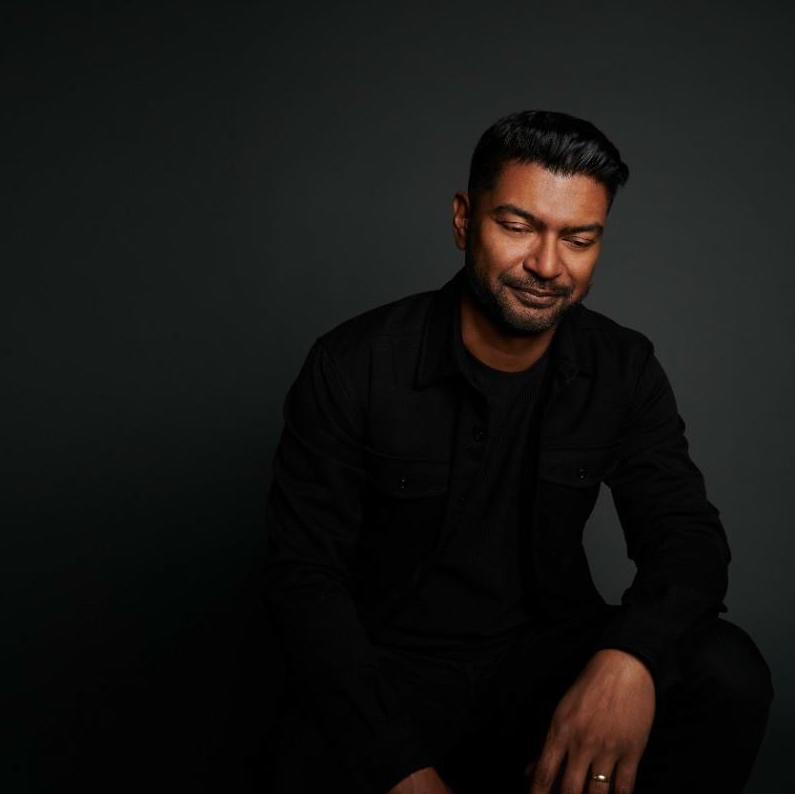
Azlan Raj is Chief Marketing Officer UK and Ireland at Dentsu, the global agency network whose UK portfolio includes Carat, iProspect, Dentsu X, Dentsu Creative, Merkle, and Tag. Raj came into the role through Dentsu's acquisition of Merkle, where he ran client-facing delivery of customer experience management. His career has run from tennis coaching through above-the-line and digital, performance, data, and strategy roles across consultancies, client side, and agency. He is a Forbes Council member, ranked among the top fifty performance marketers globally, and an Amazon-bestselling author. In this conversation he sets out how he restructured Dentsu's UK marketing function around the customer rather than the brand portfolio, why his team designed a Dentsu scent and a tissue cherry-blossom tree for the annual Seicho event, what the function does with a ringfenced innovation budget pitched Dragons'-Den style, and why character beats specific skill sets in the people he hires.
The mandate: do for ourselves what we do for our clients
You came in from the Merkle side, running customer experience delivery for clients. What was the brief in the new role?
The brief was straightforward: do for ourselves what we do for our clients. Dentsu's three practice areas, creative, media, and customer experience management, are designed to help clients with people-centred transformation, putting their customer at the heart of what they do. The brief for me was to apply that same orientation internally. Put our client at the heart of how Dentsu markets, and execute against that.
Where you started.
We centralised the function. Eighteen months ago we brought all the different marketing teams across the brands under one team so we could put the customer rather than the individual brand at the centre. We started with research, used our own capability for primary work, combined it with desk research, and spoke to clients directly to understand their challenges. Then we built a programme to solve those challenges, which informed how we activate, how we run events, and how we make sure all of that looks and feels distinctively Dentsu through every touchpoint.
The structural call: brand marketing, plus experience marketing
You divided the function into two halves. What were the alternatives you considered, and why this split?
We had long discussions about whether to position around topics, industries, capabilities, or channels. Where we landed was a fairly traditional top of the structure, brand marketing and communications, and then a second pillar, experience marketing. Specifically not growth marketing. We didn't want a label that implied marketing's job was to drive growth in isolation. The label is about delivering the experience, on the basis that experience delivered well drives growth as a consequence.
The discipline was bridging the daylight between the two halves. Most B2C businesses still have visible daylight between above-the-line and below-the-line work. We wanted those two pillars to operate as a single system: brand and comms set the position, experience marketing delivers it through products, verticals, and client industries.
Why call out brand marketing specifically.
Most of the industry's brand-related discussion is about awards, lead generation, or PR. Brand as a whole, what we stand for, where we appear, whether we should appear in out-of-home, is much less interrogated. We wanted to think about it as a whole.
The Seicho event: a Dentsu scent, a tissue cherry-blossom tree
Your team brought a different sensory discipline to your annual event. Walk through it.
I didn't want people to see Dentsu. I wanted them to feel Dentsu. At our annual event, Seicho, the Japanese word for growth, every detail was designed to make the event feel distinctively ours. We piloted a Dentsu scent, currently a cherry-blossom scent, with the longer-term ambition of developing our own licensed scent. We had a creative version of a cherry-blossom tree on the floor, in tissue. The staging, tone, colour palette, all designed so that the moment you walked in you knew it was a Dentsu event. The point of those sensory cues is that brand is the feeling someone walks out with, which is also the metric that matters most.
ABX and the always-on cycle
On account-based experience.
We're trying to design experiences that match the expectations of a consumer, because all of us are consumers. The only meaningful difference between B2B and B2C is the length of the sales cycle. ABX has become the way we stitch the different touchpoints together. We don't go to every event for its own sake. We don't enter every award. We qualify which to go after the same way you qualify a deal. The event has to tie into the content we're sharing and the thought leadership has to solve the problem we're trying to solve for. Then we build the work around it across channels, with ongoing always-on work and campaign-driven work in support. Our “Read the Room” research, teased at Seicho, will be released widely in the coming weeks; all of that activity stitches together.
Measurement: shared KPIs, brand by proxy, experience by feeling
On measurement.
For me it is about outcomes and business impact. Two principles. First, the KPIs are shared across the team. I don't have different leaders with different KPIs. If one part of the business isn't being as successful as we'd hoped, the other parts help. We win or fail together, as a sports team does. Second, understand business impact and brand impact distinctly. Brand is harder to measure, so we use proxies, but we also look at revenue impact, growth, and the underlying KPIs like average order value. Is AOV increasing because we're reaching more of the C-suite with bigger programmes? Or decreasing because we aren't getting there? The insight changes the behaviour, which is what KPIs really exist to do.
On measuring experience specifically.
There are traditional metrics, client satisfaction scores, share of voice, sentiment. But I think it's about how a customer feels. When you leave an event, the thing that makes you remember it is the feeling you have walking out. The same is true of the partner experience, the sales process, the value-add around the engagement. The industry doesn't have a settled measure of that feeling yet, but I'm convinced there is one to be found.
The C-suite and the surround sound
On reaching the C-suite.
Getting to the C-suite is the biggest challenge. The events that have worked best for me are the ones that curated a natural, organic environment to network with peers. The conversations were not about what we were selling. I can tell you more about those people's families, their dogs, their homes than I can about their day-to-day jobs, because we built a connection. The work then is replicating that across multiple levels: the C-suite, the level below, and the junior people who influence the C-suite member. Surround sound around the decision-maker.
Innovation as a ring-fenced budget, Dragons' Den style
You ring-fence a portion of budget for innovation. How does it work?
A percentage of the budget is ringfenced. The team has to pitch for it, Dragons' Den style. Pitches can be individual or team-based; the form of innovation can be operational or glossy. They have to tie the idea back to business impact, client impact, the forecasting that supports it, the payback period. We're not doing innovation for its own sake. We're doing it with purpose. A recent example was sustainability. The team came in with an idea for a reusable event stand and went a step further on the second-order implications across the rest of the business. They thought about it the way you'd build a client case: payback, credentials, knock-on effects.
Creating the culture around it.
KPIs first. Then create the opportunities for the team to try things. Get rid of the risk-mitigation default. Create an environment open to failure with the discipline of learning from it. Risk mitigation has its place, but it can't be the primary concern, otherwise nothing gets tried.
Channel mix and content formats
On the channels working hardest.
Social, especially LinkedIn, is doing serious work. There are interesting plays in development around how the website is used and what kind of interactions it enables, which I can't yet share. The principle is that the experience shouldn't feel like a brochure. Different audiences, including thought leaders and press, need to engage with us in the way they naturally behave, not in one standardised path.
On content format.
Audience first, format second. For the C-suite, bite-sized; for the senior operator, depth and craft. The aim is a profile of each contact rich enough that once we know what someone is looking at, we can recommend the right next piece, part B following part A, with continuity and an always-on approach.
The cycle, hiring, and the advice
On where clients are in the buying cycle.
Clients are still being a little more reserved with decision-making. The pandemic shook people up and the ones that struggled most were those without the organisational structure, measurement, or people to adapt at speed. Those clients are now stepping back, worried they cannot pivot at the speed required. The thoughtfulness can cause analysis paralysis. The right answer is to fix the root cause, then move.
On hiring.
The skills needed in a marketing team now are enormous, but I look for character first. The way a candidate approaches problems, their mindset. Character trumps skill set in a discipline where the skills of yesterday are not the skills of today. I want people with a proactive mindset who can break their own muscle memory when the work requires it.
The advice you'd give someone starting in marketing.
Be as curious as possible. There are many specialisms in marketing now and it is easy to disappear into one. Curiosity about areas outside your remit will make you a better marketer, even as a specialist, because marketing's biggest mistake is to silo too much. The more curiosity you bring to the parts you don't own, the better you stitch the work together.
The question for the board
If people-centred transformation puts the client's customer at the centre, what share of our work starts with that customer versus our own product?