Streaming TV's promise is real. Unified measurement is the problem we have not solved.
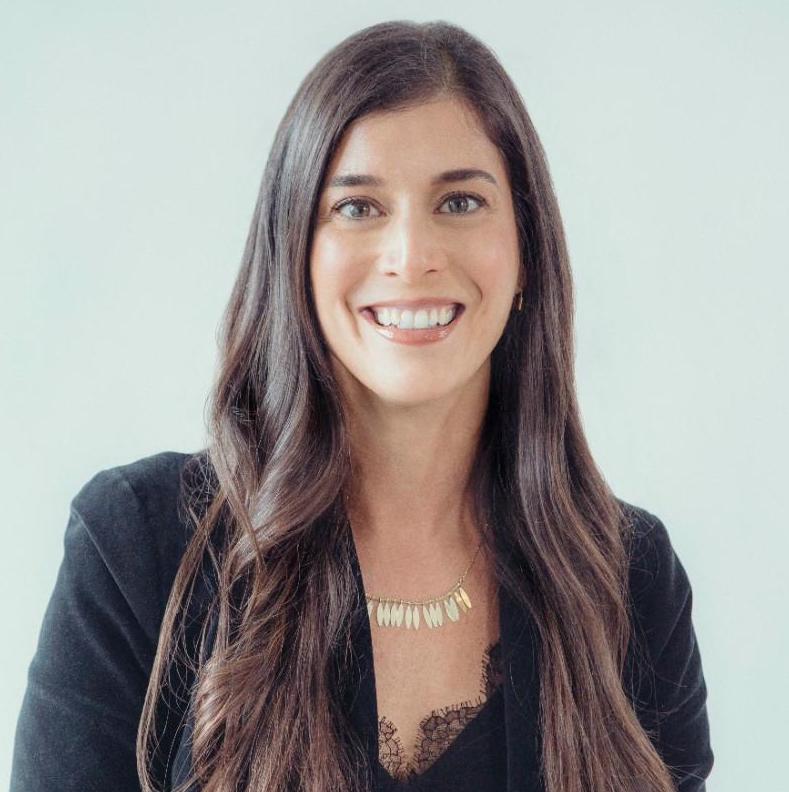
James Grant SVP & Head of Advanced TV, Equativ
Interviewed by Justin Cooke
Published

James Grant is Senior Vice President and Head of Advanced TV at Equativ, the ad-tech monetisation platform with technology spanning ad serving for publishers, a supply-side platform aggregating supply for buyers, a demand-side platform for campaign management, and a server-side ad-insertion and creative-management tool acquired a few years ago. Grant has worked in streaming for over 20 years, starting as a TV buyer at MediaCom in 2002 where his manager Rhys McLaughlin (now at ITV) watched 2002 World Cup clips on the early BBC website with him and recognised that the satellites would go and the internet would deliver our content. He has been a buyer, a seller, a strategist, and a startup operator across ad-serving and tech businesses. In this conversation he sets out the on a good day we lower the barriers to entry of great content defence of advertising, the 300-millisecond audience-profile read and household-level customisation capability, the Sky AdSmart model for medium-sized advertisers, the household-ID-plus-postcode-credit-score identity discipline at Equativ, the Green PMP sustainability work, and the closing advice that sales is the quickest route to learning how businesses work.
Equativ, and a 20-year career in streaming
The setup.
Equativ is an ad-tech monetisation platform. Technology covering ad serving for publishers, a supply-side platform aggregating supply for buyers, demand-side technology for campaign placement and management, and a server-side ad-insertion and creative-management tool acquired a few years ago. The business is focused on technology for monetisation of streaming and online ads.
The career began at MediaCom in 2002 as a TV buyer. My manager, Rhys McLaughlin (now at ITV), and I were watching clips of the 2002 World Cup in South Korea on the early BBC website because the time zones meant you caught up on clips that way. We realised that this is where our TV would come from. The satellites would go, the signals would go, and the internet would deliver our content. I oriented my career around the continued aggregation of TV and streaming media. Twenty-plus years on, I've been a buyer, a seller, a strategist, a startup operator, and worked on the technology that builds either the monetisation or the distribution of streaming TV.
On what motivates him.
It's a super exciting space. Our families watch streaming, our children watch streaming, we use the product ourselves. I used to say to my kids that on a bad day my job is encouraging people to buy things they don't need. On the best of days, we are lowering the barriers to entry of great content. You watch this for no upfront cost at the user level. The amount of TV and content we can watch today is huge, and it's the ads that pay for it.
The behavioural change since COVID: I no longer watch stressful, schedule-driven TV. I schedule my content as I want it. On-demand and delayed viewing is absolutely huge.
What's exciting in advanced TV right now
On the consumer side.
Consumers have never had such a good deal. The tech at their fingertips and the ability to consume content as they want is huge. The concept of best available screen: I can watch on my phone on the train; I can watch at home on a better screen than ever. The streaming platforms have more and more content. As niche or as mainstream as you want.
On the ad-tech side.
We can read an audience profile in 300 milliseconds and change the ads delivered in the stream at household level. We can customise the ads, manage subtitles, manage delivery by geographic location and audience type. Frequency capping is getting better. Cross-platform measurement is getting better. For buyers placing ads, the ability to manage return on investment is better than ever.
The Sky AdSmart and regional car dealership example.
Sky AdSmart is delivering more localised creative in viewers' homes today. Sometimes it's a car dealership. The ability to take a medium-sized advertiser onto TV and deliver to a specific area is here and you can use it. A growth area, but not everyone is ready to take the leap. The industry has to help with localised creative: an FMCG brand running a discount code might only run that code in 50% of the postcodes you deliver against, and the industry can help with creative execution and targeting. Those opportunities exist today. It opens up the number of advertisers that can come on TV.
Consumer-set ad preferences.
Every time we open a website we click do I accept these cookies? Wouldn't it be great if you just set up a cookie profile that did that automatically? And at household level, could I set my advertising preferences? At certain times of day it's family-oriented; on my own login, just for me. Titan OS, a TV operating-system partner of ours, has talked about personalisation in this area. Not mainstream yet, but I think it will come quicker than people anticipate. It helps with people's changing attitudes to privacy.
Adolescence at 6.1 million versus 18-million-plus Royal Weddings: the fragmentation problem
On the big challenge for buyers.
On the buy side, brands and agencies want to see reach: what percentage of my target audience can I reach, and how do I optimise that on price and delivery? Hard, because we don't have a unified audience universe across all of the different providers. We had it (or at least a model for it) with traditional TV. Something the industry needs to work on.
For the largest advertisers (Procters and J&Js), bringing more outcome-based metrics in-house is starting to happen, particularly when they bring the operation in-house.
Audience fragmentation in shows is the underlying issue. Adolescence has been in the news, hugely successful, lots of noise. Viewing figures were less than 10 million. The numbers being touted were around 6.1 million in the overnights. That's small versus 20 years ago, when the largest programmes (a Royal Wedding, a World Cup Final, an FA Cup Final) were north of 18 million. Fragmentation is a real problem for marketers and for all of us to try and solve.
On the unspoken obstacle.
Legacy business models still drive most people's activity. The transformation includes the business model as much as it includes the tech. Is a CFO ready to change the models the last 10 or 20 years of business have been structured on? That's a real part of the challenge. We can't ignore it. The legacy metrics have to be carried over while the new ones are built at the same time.
Household ID graph plus postcode-average credit score: the identity model at Equativ
On creative misalignment, player sizes, and household IDs.
A video player on a phone is a very different size to one on a TV. You have to change the creative, sometimes in real time, for the player. Technical misalignment.
You can also have targeting misalignment: a household ID is a family ID, but a child watches a programme and the targeting is off. Creative management has more tools than ever; the discipline comes down to identification of who you're targeting and security of what creative you're delivering. Most developed TV markets have a structure for linear-TV creative identification. We have to get better at adopting those across the board.
On the structure.
At Equativ we're building a household-ID graph. Within GDPR and within the structure of the law, you can build the television-device ID and, depending on what you're allowed to do, add the household and another device.
You can then overlay the household ID with additional information such as the average credit score for a postcode. If you have 20 houses in a postcode, you can have an average credit score and tie those household IDs together. Without singling out individuals or a specific house, you can start to build profiles. That's the direction for identity at Equativ.
Addressability layers in on top: the tools that enable advertisers to reach those audiences securely and accurately. Addressability is the audience and more besides; it may be the time of day and the device. Bring all of those into play.
Transparency is both reporting and safety. Reporting connects to outcomes: search drives performance, traditional TV drives branding and share of voice, outcomes is somewhere in the middle. Outcomes is a great word. Marketers want outcomes.
Green PMP, ITV-Channel 4 data overlay, and where the industry is stuck
On what's exciting in innovation.
Two innovations.
Sustainability: the industry has taken a long, hard look at itself in the last three years. We recently launched our Green PMP initiative, driving more focus into the sustainability of the platforms and systems behind monetisation. Transparent, open to buyers, users, and publishers. We can really do a lot better in that space.
Data-driven execution: ITV and Channel 4 are doing clever work where advertisers bring their own data, overlay it in a secure way against the broadcaster data, run it, and report on it at advertiser level. What does the advertiser get back? When the largest broadcasters in the market do this, it scales. Another opportunity to bring multiple data sets together and target the right people with the right message.
On the unsolved problems.
Unified measurement. We're stuck there.
Transparency. Knowing where your ad ran and which ad ran where is critically important. We still have a lot of work to do. Not all of the players in the space will show their log-level data: sometimes it's a publisher that can't, sometimes legacy contracts. All of us need to get better at providing that information.
Supply-path optimisation today is blunt. One SSP has a primary connection to a publisher. When the publisher wants to add another SSP, they don't want to go through a full legal process, and that model doesn't work well. A broadcaster said at a recent event: we don't really care about SPO the way the industry sets it up today. We would rather you share transparency in the logs and log-level data so we can see where it went and to whom. A more scalable model.
On who needs to lead the fix.
The industry as a whole should deal with it before regulators have to step in. Tech platforms have to take the lead because they're competing against each other; they can offer the service. Buyers have to take it on, and publishers have to accept it as well. A combination of the three, with either the tech platforms starting the initiative or the buyers demanding it. Then it snowballs.
The next two-to-three-year picture, and the advice
On what's coming.
An acceleration in viewing on streaming platforms. We've talked for a long time about a big drop-off in linear; it's never come. It will continue to be a gradual decline, not a cliff. A big uptick in streaming. Younger generations only stream as they get older.
The outcomes piece will accelerate. Marketers want outcomes. It will impact brand measurement. More and more of the ecosystem of TV streaming advertising will focus on outcomes: how do we provide it, what was the target, how do we reconcile it, what does that mean for spend?
Beyond the obvious: I suspect there's a surprise none of us see. We're due a new startup from a garage somewhere in the back end of nowhere in America. The movement of online tech to television will throw up surprises. Three years is a long time. Something else will turn up in that space too.
Advice for marketers wanting to future-proof their video strategy.
Be clear on your expected outcomes. The clearer and more transparent you are, the more the chain that runs your advertising can help you. That's number one.
Number two: don't always think television is just for the largest brands. There is real growth in small-to-medium-business opportunities for streaming TV, regional delivery, and postcode-local delivery. Go and check it out for yourself.
Advice for someone starting out.
Be open-minded about the roles you're looking for. My first job was as a trainee TV buyer. Part of the reason I took it was I didn't think I could do sales. I've spoken to many people over the years who say the same. We're all selling somewhere. Don't be put off by the concept of selling or being a salesperson. It's probably your quickest route to commercial, to learning how businesses work, than any other role.
The question for the board
If unified measurement is the unsolved problem of streaming TV, what share of our spend can prove outcomes versus run on faith?