Marketing must move beyond clicks and attribution to measure what really matters.
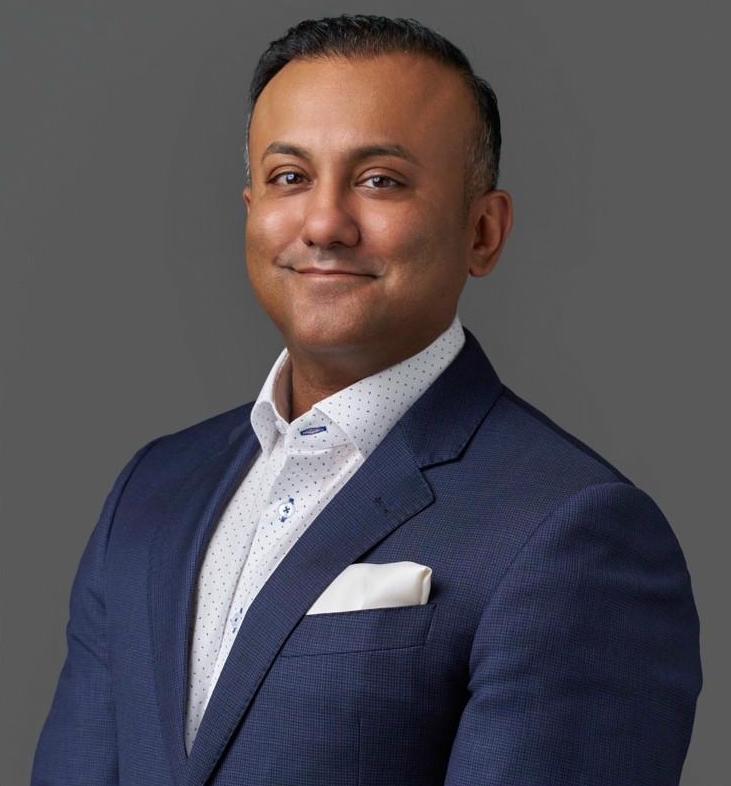
Maor Sadra CEO & Co-Founder, INCRMNTAL
Interviewed by John Horsley
Published

Maor Sadra is Chief Executive Officer and Co-Founder of INCRMNTAL, the AI-attribution platform built to evolve marketing measurement from counting clicks to measuring value, working at aggregate level rather than on user-level data. The company was born the same month Apple announced the deprecation of IDFA. Sadra has more than 24 years across the ad tech and marketing technology industry, with leadership roles at AppLift and PubNative and involvement in significant M&A (including the Verve Mobile acquisition six or seven years ago). In this conversation he sets out the separate truth from BS discipline he runs across his career; the every marketer should be generating incremental value principle that founded INCRMNTAL; the FREENOW (the European mobility company recently acquired by Lyft) case study where an incrementality-driven aggressive remix produced fewer dollars spent for more conversions; the attribution is the USD of our industry and crypto-style currency changes take time observation; the consolidation everywhere except retail media networks read on the structure; the eliminate the cookie option to begin with design-from-scratch principle; the 50% efficiency-gain prediction; the ambition can't be taught, skill can hiring principle; and the opinions matter at the entry level advice for young marketers entering ad tech.
A career stumbled-into and 24 years long
The setup.
I stumbled completely into ad tech and marketing technology. In my first job I joined a company without fully getting what they were doing. The job was simple: hunt for leads. Early 2000s, I was savvy on the internet, my English was good for where I came from, so I said okay, cool. When they tried to explain impressions to me, I said what is that?
Once I got what the company was doing I was fascinated, particularly the ability to impact the world from a keyboard regardless of where I was. In the early days of the pioneers it was a new frontier; anything was possible. I'm still passionate about the industry 24 years later.
On the consistent challenge.
If I had to sum up the recurring challenge marketers face: separating truth from BS. We're in a marketing space, so we market to one another, and that makes it hard for people to know what's genuine and what's BS. I've seen that throughout my entire career.
The other thread: when I came in, I was fascinated that we can track everything. The notion made sense to me. When I started understanding how the industry truly worked (last-click attribution: 100% of the credit to whoever tapped the user last), it stopped making sense. Who are we kidding? That drove me to want to change reality from BS.
I used to believe fractional attribution would be the way. Before I started INCRMNTAL I wanted to build that: tracking user proximity, learning everything about the user. Then I asked: why do I need to know everything about you as an individual to be able to answer whether my campaign is working better or not? That stopped making sense too.
What INCRMNTAL is, and the FREENOW case study
The mission.
INCRMNTAL's mission is to evolve marketing from counting clicks to measuring value. Every marketer's job is to create value. Incrementality should be the default. If I'm spending money on ads, I should be getting something I wouldn't get without the ad spend. Tracking-and-attribution as it stood looked only at inventory and was easy to manipulate: tap a user before checkout and welcome to affiliate marketing.
A worked example.
FREENOW, the European mobility company recently acquired by Lyft, was using their existing attribution provider to see which channels and campaigns generated value. They challenged us: can we create an aggressive remix of their inventory based on incremental value? The test produced fewer dollars spent for more conversions. They scaled from there.
On timing.
We were born the month Apple announced the deprecation of IDFA. Privacy was amazing for us: the market started to think how do I measure without relying on user-level data, how do I measure without being able to say who clicked on what?
Attribution, love it or hate it, is a currency. It's the USD of our industry. Incrementality as AI attribution is the crypto. People don't make that change in a day. It's an evolution that takes time. We walk people into it and educate the market. We're not the main educator; the market is being educated by Apple, Google, and Meta, who are advocating incrementality measurement using probabilistic rather than deterministic models.
Where incrementality sits, and consolidation everywhere except retail media networks
On the bigger picture.
Eventually incrementality replaces what currently sits there. We do it in aggregate form: we're not looking at individual users because privacy only goes one way. At aggregate level we're measuring the effectiveness of the campaign. We're not tracking a user to say why did this user buy this coffee or this iPad? I don't truly know. And I don't want to collect the data I'd need to answer that.
On the shape of the industry.
Consolidation continues. It's a market of very few winners. When there's a new medium or technology, fierce competition makes sense; eventually only a couple of winners come out.
The one outlier breaking the consolidation hypothesis: retail media networks. There are hundreds of them, and many bring incremental value and edge. An Uber isn't going to merge with a Walmart. Both have crazy valuable inventory. Interesting to see how this gets consolidated, by a DSP or by a supplier.
On the structure.
Big companies are mega-cruise-ships, but you still need speed-boats to truly get anywhere.
I understand why companies want to be walled gardens. It's nice in a walled garden: very safe, and you can do a lot with your first-party data. We'll see more walled gardens, especially with retail media networks (you don't want to share your extremely valuable first-party user-level data).
On the other hand, you need tools to make sense of it all. That's where INCRMNTAL comes in: a good opportunity for us. Difficult for advertisers because they may now need to operate on 15 platforms (or 50), rather than the two or three they once relied on. Worth it if you want to scale.
The toughest leadership lesson, and the hybrid founder setup
On the discipline.
Restructuring, layoffs, the toughest days in the career. The lesson is to take things personally, to do them with feelings and humanity, and not break away from what you're truly doing. I want to be able to learn from mistakes, do things better the next time, and get to the point where I don't need to take such hard steps.
On culture.
Keep things transparent. Be open. People can handle openness, especially when you treat people as people rather than hierarchically. Open discussions, questions welcomed, curiosity rewarded. When someone is courageous enough to ask a question, they're often doing it for the 90% who stay silent.
On the practical setup.
We're hybrid. If it were up to my co-founder we'd be five days a week in the office. If it were up to me, zero, because I spend a lot of my day on Zoom. Hybrid is the setup currently.
We started during the pandemic. I didn't see my co-founder physically for the first 18 months. We had a background together as colleagues and remained friends while both living in Berlin for many years. The distance was felt, but we always knew it would end and we'd meet and be fine. Constant communication. Always with video on.
Ambition over skill, and INCRMNTAL as a summation of his career
On the founder's perspective.
INCRMNTAL is the problem that really bugged me, that I really wanted to solve. That's why it feels different. I take it personally when I talk about the company, the philosophy, the vision. The feedback bears it out: a common quote at demos is how did we not hear about you previously? or every marketer in the world should be using your platform.
On the principle.
Ambition over skill. Skill can be taught. Ambition can't. Ambition is a characteristic you bring from home or for life. I really like working with people with drive. The drive doesn't have to be tangible or aimed at a specific goal; the drive has to be there.
Creative and analytical are both important. A creative person figures it out as they go. That's where drive really kicks in. You don't need all the skills to know everything; if you have ambition, you'll figure it out. You use research, colleagues, you ask for help. Being creative is more than design; it's finding solutions when there isn't a specific one in front of you.
How privacy, cookie deprecation, and AI reshape attribution
On where this is going.
The whole offering of INCRMNTAL is AI attribution without relying on user-level data or planned experiments. In a world where we had unlimited access to user-level data, in a way it was never right. It was a fluke that the industry was allowed that access for so long. It was a mouse-chase between the browser operators and ad tech, always an attempt to eliminate access to cookie user-level data because it never really made sense how much tracking advertisers could get on an individual user.
On the frame for a CMO.
It was always supposed to look at real incremental ROI. Are we generating additional revenue, or are we just getting nice reporting that shows we're doing our job?
Marketing measurement is tied to incentives. More companies are realising it. More boards are rewarding CMOs for the results of the company, rather than the results of marketing. Sometimes very different: if marketing cannibalises organic results or direct results, the marketing is in fact a lot less valuable than you want it to be. You either change your perception and how you do things, or you come out and lead the conversation. The tricky version: nobody wants to be the one to say remember this $10m we spent? Half of it was wasted.
The design-from-scratch principle.
If I could redesign digital measurement from scratch I'd go back 25 or 30 years ago and eliminate the cookie option to begin with, and continue with how marketing measurement worked for the past 100 years. Always the mix. Media-mix modelling, one of the first measurement technologies, came from somewhere in the 50s or 60s. Last-click was, in a way, the promise of digital advertising, and it didn't really make sense. Any first-year marketing student learns about a funnel; the funnel doesn't end with a single touch.
What he reads, and the advice for someone entering ad tech
On the inputs.
Sixteen to twenty hours of podcasts a week, during commutes and when I'm in the office working solo. I read a lot. I always try to listen to people early in their career. I want to hear newbies' opinions. Those reflect the reality as it is. We're prone to see what we're used to seeing; I want fresh perspective. Sometimes I'd rather look at someone in their first three years in their career; they see things that wouldn't be obvious to me.
On the principle.
When I entered, the requirements were minimal compared to today. The advice for young people: come with opinions. Come with views of your own about what companies should be doing. Young people may think we could be their mentors; I see it as a symbiosis where I can learn from them too. If a young person comes in with opinions and views on how things should be, they should get the courage to speak up. Fresh ideas matter in this space. They are massively rewarded.
Rapid-fire.
A company outside ad tech he admires: Vibe. The CTV team are growing fast, executing very well, and the team is great.
A podcast or idea that's shaped his thinking: Eric Seufert's Mobile Dev Memo. Eric is a friend, colleague, and advisor; someone he respects.
The best acquisition he's been a part of: buying Verve Mobile six or seven years ago. Around Christmas in New York. Intense, fast-paced, with a lot of moving pieces. An awesome ride and he's glad he was the lead.
On the closing principle.
The famous old Wanamaker line is still true. If marketers could genuinely measure real value, there's at least a 50% efficiency gain. That's huge value to bring out.
The question for the board
If last-click attribution has always been a manipulable approximation, and the FREENOW case study shows that an aggressive incrementality-led inventory remix can produce more conversions on less spend, what proportion of our reported marketing performance is currently based on incremental value created versus credit-assigned to whichever channel tapped the user last?