Ruthlessly simplify the complex. That is the superpower every B2B marketer needs.
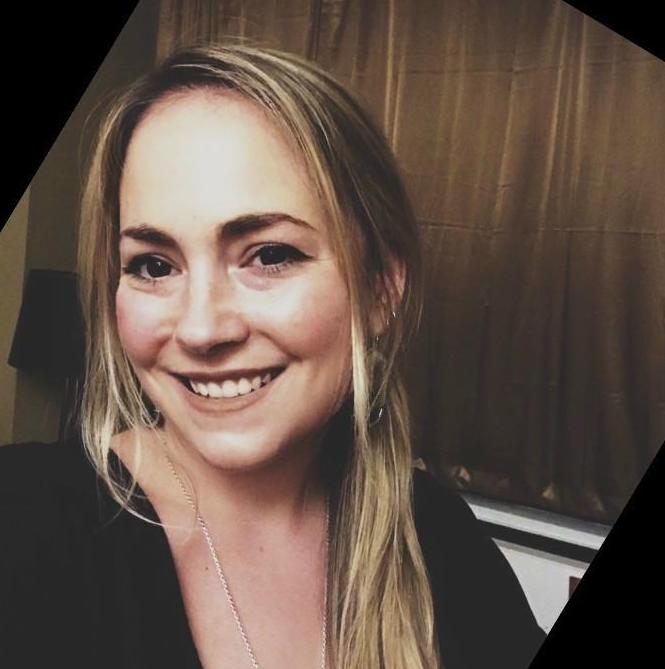
Marilyn Mead Brutoco Senior Marketing Leader, Winmo (now Founder, M+M Marketing)
Interviewed by Justin Cooke
Published

Marilyn Mead Brutoco is founder of M+M Marketing. At the time of this conversation she was a senior marketing leader at Winmo, the sales intelligence platform used by Ampersand, Hulu, Netflix, TikTok, and agency groups including Dentsu and Havas to identify advertisers entering the market and the contacts responsible for spend. Her career runs from Pepsi to Advertising Database to Winmo, and from writing and copy editing through product marketing into leadership of demand and growth. In this conversation she sets out why the core discipline of B2B marketing is ruthless simplification, why the buying committee needs different messages to different audiences inside the same account, why product reviews on G2 and Trust Radius have replaced the early sales conversation, and what marketers should be held accountable for.
Ruthlessly simplify the complex
You say the core marketing principle you operate on is ruthless simplification. Where does that come from?
If I had to boil my approach to marketing down to a single sentence: ruthlessly simplify the complex. Especially in publishing, ad tech, and technology. It is easy to get in your own way when describing what your product does. I started at Winmo as a product marketer. The product team would brief me on a set of features, always quite technical. My job was to explain why the features existed and what benefit they delivered. The release notes might say we now have sports sponsorship intelligence that links brands to the sports teams they partner with and in-venue programmes and we have an API and so on. My version: sell more sponsorships. We have an integration that helps you sell more sponsorships. The job is to give the reader the CliffsNotes and let sales talk them through the full novel.
Where did that instinct come from for you?
I started out as a writer and a copy editor. A lot of copy editing is sculpture. You begin with a block and you pare down. Good marketing and good positioning is the same discipline. Sometimes you have to kill your darlings, in writing's phrase. Sometimes you have to remove the things that feel important to you because they don't do anything for the reader. People have short attention spans. You have very little time to make the light bulb go off, so you cut everything that doesn't help it go off.
Marketing to the buying committee
B2B is not selling to one person. How does that change the marketing strategy?
In B2B at the enterprise level, you are talking to a committee of people who reach a consensus to buy something. It is rarely one person. So the starting point is your own product positioning, why you exist, what problem you solve, and then refining that problem statement for each buyer persona on the committee. For us, the end user is typically a media seller. They want a fuller pipeline of leads. So to them we market on increased lead volume and on knowing when advertisers are coming into market. A CRO or someone in finance hears a different message. The messaging is built per persona, and so are the channels.
Which channels go to which audiences?
The more direct-response channels, PPC and email, are typically pointed at the end user. The senior decision-makers, the CRO, the CFO, the president or founder of an agency, are reached through content. The end user often discovers the product themselves and then has to sell it internally, and it is not their job to convince their boss on financial grounds. It is our job to give them the content that makes the case.
What replaced the early sales conversation
B2B buyer behaviour has changed since the pandemic. What has changed in practice?
People are less responsive in some ways. They will fill in a form indicating interest and then disappear. But the headline change is that buyers want to interact with sales later in the process than they used to. Years ago someone would say I'm curious about this product, I'll call them up and speak to a salesperson. That is no longer the case. Buyers learn about the product through peer reviews on G2 Crowd, Trust Radius, and the like. They want to know what their peers think, not what a salesperson is telling them. They research independently for much longer. To meet that, we put an interactive demo of our product online, a click-through tour, not a polished product video. People can explore it on their own and come back to a sales conversation when they're ready. There are more touchpoints in the buying process before anyone gets to speak to a human than there used to be.
The line between marketing and sales has thinned considerably.
It is much thinner, and getting thinner. In B2B that is generally a healthy direction, because the two functions have historically sat too far apart.
What marketing should be measured on
Your team is held accountable on revenue. How do you stack the rest of the measurement?
Revenue first. We talk about web traffic and social engagement, but we start with revenue and measure backward. Then pipeline: how many times did we get the sales team at bat, opportunities created, MQLs. We measure each of those by channel because the channel mix moves constantly. PPC campaigns that crushed for six months will stop producing, and you have to go in and change them. You cannot set and forget. Tracking back to revenue is the way to know whether something is genuinely working, because there are activities that net you leads without generating revenue. You can convince yourself something is effective when it isn't.
What about the part of marketing that doesn't show up in the revenue line?
The other half of marketing's job is to build a brand that evokes positive emotion and to establish authority. Asserting a point of view as a thought leader in the sector. Those activities are not as quantifiable through revenue, and they aren't supposed to be. The mix is what creates success. Performance metrics on the direct-response side; brand and authority work on the other.
The ten percent experimentation rule
You ring-fence a portion of budget for experiments. What's the discipline behind that?
Mine is around ten percent. I have heard people say as much as thirty percent of their budget is experimental, but our margin for error is tighter. We don't have millions to throw at things and hope. Ten percent is set aside specifically as experiments to see what takes off, with the rule that we expect nothing from them. We don't build any forecast into the experiments. They are not a known quantity. Then we double down on what works. Many things do not work. But the team needs the flexibility, and the expectation, that they are running experiments.
Where do you see the most exciting next direction?
Product-led growth, from a SaaS perspective. The buyer enters a trial environment guided by tutorials and in-product messaging, then self-provisions when they decide to purchase. Sales is not going anywhere; product-led growth frees up the sales team to focus on the more complex enterprise accounts that genuinely need a human touchpoint, and lets the rest be self-serve.
The question for the board
If ruthless simplification is the B2B superpower, what share of our positioning is one clear idea versus a feature list nobody can repeat?