You cannot optimise what you cannot measure. Brand lift is the number that is missing.
Virginie Chesnais Chief Marketing Officer, Happydemics
Interviewed by Justin Cooke
Published
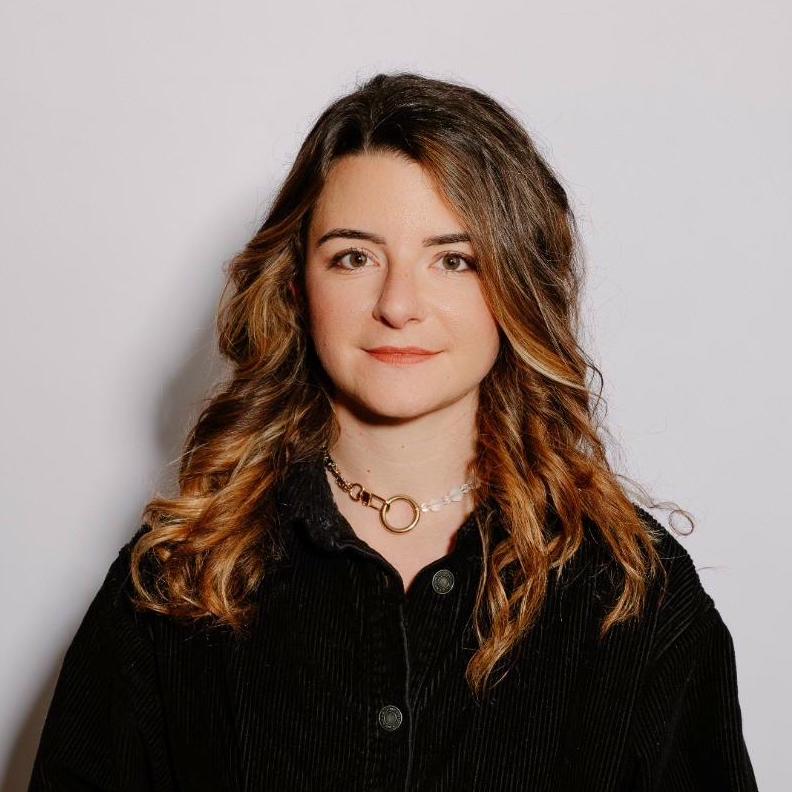
Virginie Chesnais is Chief Marketing Officer of Happydemics, the global solution for measuring and optimising advertising effectiveness across all media. Founded in 2015, Happydemics' flagship product is brand-lift measurement, partnering with media agencies, ad-sales agencies, advertisers, and publishers to provide full-funnel brand metrics (consideration, brand familiarity, purchase intent, preference) tied to campaign objective. Chesnais joined the business almost seven years ago after roles in communication and marketing including more than four years at Fiat Chrysler Automobiles (now Stellantis) in the finance and business department. In this conversation she sets out the trusted-third-party position and why it sits at the intersection of advertisers, agencies, and publishers; the ad-recall methodology that compares two pools of respondents (those who recalled the ad and those who didn't) to produce the uplift; the brand-lift framework's three-category structure (targeting performance, impact on recallers, creative diagnosis); the Google-Warc finding that more than half of campaign ROI appears 5 to 20 months after the campaign ended; and why the marketing function and sales function have to share the same KPIs to make the partnership thrive.
What Happydemics is, and why the trusted-third-party position matters
The proposition.
We were created in 2015. Our flagship product is brand-lift measurement. We partner with media agencies, ad-sales agencies, advertisers, and publishers, and provide them with full-funnel brand metrics (consideration, brand familiarity, purchase intent, preference) according to the specific campaign objective. We collect those KPIs from the targeted audience of the campaign. We measure, and we provide optimisation guidance so the campaign generates maximum value and creates meaningful impact among its audiences.
On the position.
Collaboration is crucial in this industry, and even more so with the fragmentation we now deal with (audiences, formats, media). Collaboration cannot thrive without trust. That's why we positioned the business as a trusted third-party partner for advertisers, agencies, and publishers. We sit at the intersection of all those players. Advertisers demand proof of impact; with billions spent on advertising across traditional and digital, they have to rely on data that is reliable and unbiased. Advertising is often measured by actors who sell it; that can no longer be the case. That's where we step in.
The methodology: ad recall as the constant across fragmentation
On the technique.
We collect answers among targeted audiences. We partner with a network of more than 100,000 publishers worldwide, which lets us distribute non-paid, clean, ethical surveys to those target audiences. We compare two pools of respondents (people who recalled the ad and people who didn't) and the difference between the two is what we call the uplift. That tells you whether your ad had an impact, and how it changed perception among the audience.
This matters because every platform has its own set of metrics. The discipline is collecting insight holistically so you can compare effectiveness across the media mix and follow the brand across all its touchpoints. Our methodology is based on ad recall. The product is data-agnostic; we draw on all the data we have access to (ID-based, cookie-based) but the consistent anchor is ad recall. That gives clients a unified framework to compare effectiveness across the mix.
The framework: three categories that work together
The structure of the brand-lift product.
The product covers three categories that work together: targeting performance, impact on recallers, and creative diagnosis. The diagnosis layer is is the ad interesting?, did recallers like it?, how is the format perceived? The analysis shows these KPIs are closely linked to impact. The more you refine the creative and the more interest the ad generates, the more consideration and purchase intent you drive.
The diagnostic pattern looks like this. Imagine strong ad recall but weak attribution: there's no real impact because the campaign isn't being associated with the right brand. That's a waste of energy, time, and money. Or strong interest but low consideration: the ad is interesting, but the message needs work to be more persuasive or clear. Once you understand that the three categories work together, the value compounds. The work becomes about making them work together, not measuring them in silos.
Long-term effects, and the Google-Warc number
On what brand-lift measurement is for.
We advocate a brand-driven impact approach: we're convinced branding campaigns have a long-term growth effect, and we want to link campaign success to tangible business outcomes. Brand metrics are actionable, and they answer the goal of the campaign rather than the easy proxy for it. If you run an awareness campaign, you should measure awareness. If you only measure clicks and impressions, you're not getting the whole story. You measure what's easy and not necessarily what matters.
There is research from Google and Warc showing more than half of the impact on ROI appears between 5 and 20 months after the campaign has run. If you only look at clicks and short-term wins, you miss the long-term effect. That compounds and compounds over time.
On Happydemics' own marketing.
We use the benchmarks to create content. The interesting moment is realising that going beyond surface-level metrics (short-term conversions, last clicks) and understanding how a campaign genuinely changes consumer perception uncovers insights that are game-changing across the mix. It gives you another view of the advertising industry that's priceless.
Marketing strategy: partnerships through co-created value, and KPIs shared with sales
On the go-to-market approach.
The trusted-third-party position doesn't just benefit advertisers. It benefits media agencies (they can strengthen trust with their clients with independent reliable data) and it benefits publishers (they can prove the effectiveness of their inventory). We partner with them to give them the data they need to prove the value they're generating, and they generate plenty of value. The role is to help them strengthen the relationships with their clients.
A specific example.
A few months ago I was with Amnet, the trading desk. They had an event about digital audio and invited us to talk with them on stage; they needed us to add the proof of impact that digital audio is effective. What worked was that we had a real conversation and created value for the audience, rather than running a sales pitch on stage. We were able to say what the unique strengths of digital audio are and how a marketer can put them to work. The audience was interested. It was a real success.
On team structure, and the relationship with sales.
One part of the team works on demand-generation strategy (four people). Brand manager and communications-and-events manager work alongside, making sure the partnership work is amplified.
We co-created the strategy with the Chief Revenue Officer. It takes collaboration and communication. My team generates the leads, so we need the sales team and they need us. The goal is to speak the same language with the same KPIs. Conversions between marketing and sales is a common problem in the industry between media and marketing teams; that's something we want to solve.
Repetition, culture, and the AI-and-data future
On growing client relationships beyond the first engagement.
When it comes to brand-lift measurement, I genuinely believe in the value of repetition and scalability. It's what gives clients access to consistent benchmarks, unified metrics, and the ability to continuously optimise effectiveness. Brand-lift measurement shouldn't be on and off. It should be always on. Once a partner understands that and the scale effects that come with it, something clicks, and the relationship becomes an everyday one.
On internal culture.
I think about being bold. Boldness is something we want to develop in the team, and that we trust. The team could always do more, together. We don't wait for something to be more polished before going further. That's a culture of experimentation and innovation.
On the trends.
I may not be very original, but AI. Used well, it will bring an enormous amount to the industry: enhanced creativity, recommendation, prediction. At Happydemics we're leveraging AI to enable our clients further. We're working on a product that will anticipate the impact a campaign can have on a specific audience before it launches.
Advertising is going cross-media and people-centric. Consumers demand transparency and privacy. AI can have real impact, but the impact only fully arrives if we change our approach to data and move toward solutions that are privacy-friendly and that genuinely work hard to resonate with audiences the right way.
The question for the board
If brand lift is the missing number, what share of our investment measures the brand impact versus only the click?