
Every senior marketing practitioner interviewed on this podcast in the last twelve months is deploying AI inside their function. The cascading-agent architectures, the autonomous CRMs, the operational mandate for adoption, the campaign duplication compressed from weeks to minutes, all of it is real, operational, and producing measurable productivity gains. The category has moved from experimentation to standard practice inside eighteen months.
What has not moved with it is the governance layer.
Across every conversation on agent deployment, a consistent pattern emerges. Teams are generating first drafts, optimising media plans, building audience segments, and drafting outreach at machine speed. Almost none of these organisations have a signed, version-controlled, board-visible framework that specifies which outputs require human review, which can operate autonomously, and who owns the escalation path when something goes wrong. The governance conversation is happening inside individual teams, at the line manager level, in Slack threads and verbal check-ins. That is not a governance framework. It is an undocumented liability.
For a C-suite reviewing the marketing function's agentic roadmap, the question is no longer whether to deploy agents. The operational case has been made and the productivity gains are real. The question is whether the governance architecture beneath the deployment is capable of catching the brand-safety, legal, and craft-erosion failures before they reach the board as a post-event investigation. Three independent practitioner voices, from Salesforce, Optimizely, and Infosys, have converged on the same warning. The organisations compounding value from agentic AI are the ones treating governance as capital infrastructure. The full operational case for agentic deployment is set out in our companion briefing, The Agentic Marketing Revolution.
The agent produces the draft. The human produces the release.
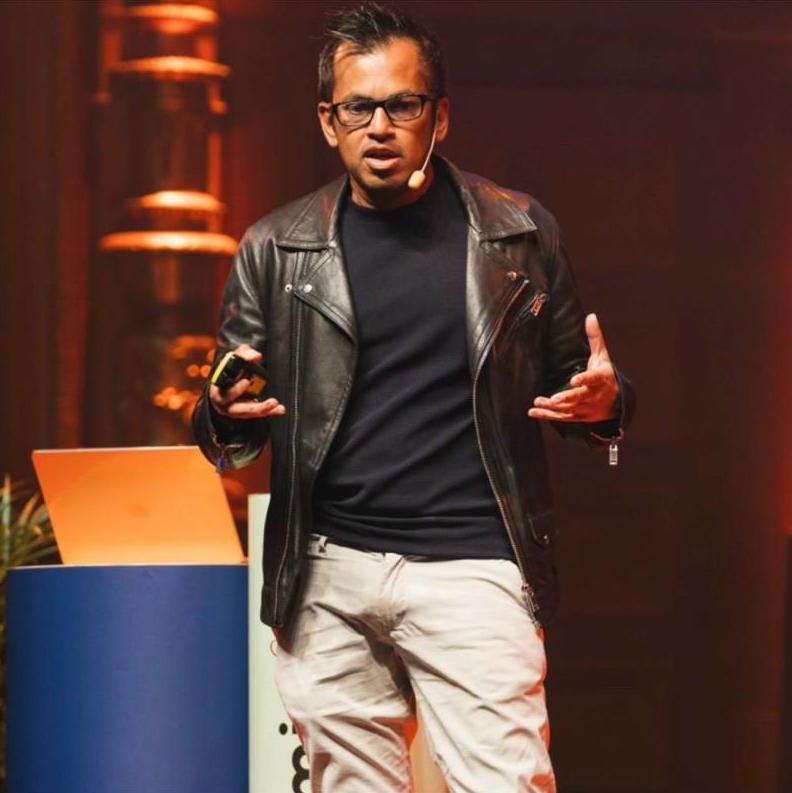
The clearest articulation of what operational governance looks like inside a functioning agent-augmented marketing organisation comes from Shafqat Islam, President of Optimizely and previously CMO. His team uses generative AI across every layer of the marketing function. Campaign ideation, taglines, briefs, blog drafts, decks, imagery, and outreach email. The boundary is precise.
“I say first draft intentionally because we would never put out content generated by AI. AI is not going to replace people or jobs, but if you are a person who does not use AI, you may be replaced by a person who knows how to use AI.”
Shafqat Islam · President, Optimizely · Recorded as CMO, Optimizely
The first-draft-never-published standard is the operational default this discipline requires. Agents generate the draft. Humans sign off the output. The organisation holds an auditable record of what was machine-generated, what was reviewed, and what was released under whose authority. That is a governance architecture, not a cultural preference. The CMO who cannot produce the sign-off chain for a campaign that subsequently causes brand damage is running a personal accountability exposure, not only an organisational one.
The Sign-Off Standard
The agent produces the first draft. The human produces the release. The organisation that cannot document who authorised the release is operating without the audit trail the board will require the moment something goes wrong.
The commercial behaviour this should trigger is procedural. Which outputs require human review before release? Which are cleared for autonomous execution inside defined guardrails? Which are restricted to human origination entirely as a matter of brand risk? The marketing organisation that cannot answer those three questions at named-owner granularity is carrying an unquantified operational liability, and the volume of agent-generated output inside the function is compounding the exposure weekly.
Every task delegated is a skill the team stops developing
The second governance force is harder to see on a dashboard but more consequential on the enterprise value line. Martin Kihn, SVP Strategy at Salesforce Marketing Cloud, surfaces the risk that most AI advocates avoid naming.
“If you have AI do all your writing, believe me, over time, your writing will get worse. People can tell. Coworkers can tell. It is almost insulting. They did not think I was worth putting thought and time into this communication.”
Martin Kihn · SVP Strategy, Salesforce Marketing Cloud
Kihn's framing identifies the governance gap the productivity conversation has been ignoring. When teams delegate all their writing to language models, the craft atrophies. When they delegate all research, the capacity for original insight erodes. The delegation is not neutral. Every task handed to an agent is a task the team stops developing the skill to perform, and the compounding effect of that delegation is the progressive de-skilling of the function.
The second-order risk Kihn names is the erosion of internal brand capital. When colleagues, partners, and customers receive communications that are obviously machine-generated, the signal is that the sender did not value the recipient enough to write the communication themselves. Inside an enterprise increasingly saturated with AI-generated output, the ability to produce work that reads as genuinely human becomes the scarce signal, not the baseline one. Organisations that allow craft erosion to progress without governance are liquidating a communications capital asset that becomes more valuable every quarter the erosion continues.
The operational consequence is that the governance architecture needs an explicit category for human-only work. Not as a nostalgic preference, but as a capital-preservation move. Which communications, content types, and decision categories are designated human-origination-only by policy? The organisation that has not made that designation is allowing the erosion to progress invisibly, at a rate the board will only see when a competitor's craft-preserved output lands with more authority than the organisation's own AI-augmented equivalent.
The apprenticeship is being automated. The next generation of CMOs is being decided.
The third force operates on a longer horizon but arrives at the P&L with equal force. Timo Weis, Global Head of Growth at Infosys, names the risk the productivity conversation has structurally ignored.
“We cannot outsource our brains to AI.”
Timo Weis · Global Head of Growth, Infosys
Weis's concern is the pipeline of future marketing leaders. The tasks that agents now handle at scale, data analysis, creative development, campaign structuring, audience research, are precisely the activities junior marketers need in order to learn the fundamentals of the discipline. If the entry-level work is automated, the mechanism by which the organisation produces its next generation of senior judgement has been removed. The pipeline of CMOs in fifteen years is being shaped, or not shaped, by the governance decisions made about agent deployment today.
This is the talent-side of the governance question, and the question most organisations are not yet asking. Which tasks do we deliberately reserve for junior development even when an agent could produce the output faster? Which rotations, stretch assignments, and craft-building programmes compensate for the entry-level work that has been automated? The organisation that deploys agents aggressively without answering those questions is optimising for this year's productivity line and under-investing in the judgement layer that will run the function a decade from now.
Six rows the audit committee is already equipped to read
The table below is a diagnostic. An organisation operating against more than two rows in the left column is running agentic deployment without the governance architecture required to defend the deployment in a board-level post-mortem. The issue is not whether the agents are producing value. It is whether the governance layer is producing the accountability record the organisation's exposure requires.
Table 01 From informal AI use to governance-grade architecture
| Legacy Practice | Governance-Grade Architecture | Capital Consequence |
|---|---|---|
| Informal team-level sign-off | Signed, version-controlled release-authority framework | Produces the audit trail required for post-event accountability |
| AI output blended into workflow without tagging | Tagged provenance on every machine-generated asset | Enables rapid isolation of contaminated content during a brand-safety incident |
| "Use AI wherever it helps" | Tiered deployment: autonomous, reviewed, human-only | Aligns governance investment with brand-risk exposure |
| No craft-preservation policy | Designated human-origination categories by policy | Protects communications capital from silent depreciation |
| Junior work automated without backfill | Deliberate apprenticeship reservations and rotation programmes | Preserves the judgement pipeline the next decade of leadership depends on |
| Governance as a regulatory box-ticking exercise | Governance as capital infrastructure | Converts a cost line into a defensibility asset |
This is governance capital. The term describes the class of organisational infrastructure that allows agentic productivity gains to compound without accruing the brand-safety, legal, and craft-erosion liabilities that the unbounded version of the same deployment generates. Governance capital is not a cost line. It is the structural asset that permits the rest of the agentic investment to be classified as durable rather than contingent.
The workforce is ready. The executive layer is the brake.
The uncomfortable operational observation in Kihn's analysis is that governance resistance inside most enterprises is coming from the executive layer, not from the workforce. His framing, in his own words, is that a lot of the sluggishness in AI adoption is coming from the top. Most teams now use AI in their daily life and are eager to employ it in their jobs. The hesitation at the top is typically legal risk, reputational exposure, or regulatory uncertainty.
The pattern is the inverse of the reported narrative. The workforce is AI-literate, eager to deploy, and frequently ahead of the organisation's formal position. The executive layer, navigating legal exposure, regulatory uncertainty, and reputational risk, is the layer applying the brake. The governance gap sits precisely at the intersection. Executives withhold formal deployment permission while individual teams deploy informally anyway, which produces the worst possible configuration. Active use without sanctioned oversight. The unsanctioned deployment accumulates the liability the executive hesitation was attempting to avoid, without the governance architecture that would have made the sanctioned deployment defensible.
The resolution is not to slow the deployment. It is to move the governance framework to the front of the deployment sequence, so the oversight exists before the output does.
The forty-eight-hour test every CMO should run on their own function
The CMO who can answer the question below with documented architecture is running governance capital. The CMO who cannot is running a contingent liability the board has not yet priced. The difference is not agent sophistication. It is whether the oversight layer was built ahead of the deployment or behind it.
The agentic investment is already in the numbers. The governance architecture needs to be in the numbers before the first brand-safety incident forces the conversation. The organisations compounding agentic value defensibly are the ones treating governance capital as a funded workstream alongside data unification and AEO. The organisations still treating it as a regulatory box-ticking exercise are the ones whose next board update will contain a sentence the CMO does not want to write.
The question every CMO should bring to the next audit or risk committee
"If a machine-generated asset released under our current deployment practice caused material brand damage next quarter, could we produce the sign-off chain, the provenance record, and the governance framework it was released under within forty-eight hours?"
Contributing Practitioners
The voices behind this piece
This analysis is distilled from long-form interviews conducted on The Business of Marketing podcast with three senior practitioners working across enterprise marketing technology, strategy consulting, and global growth leadership. Companion analysis to The Agentic Marketing Revolution executive briefing.


Companion briefing
The Agentic Marketing Revolution
This analysis builds on our executive briefing on how agents are restructuring commercial decision-making. Read the full briefing for the underlying research.
businessof.co/briefings/agentic-marketing-briefing Read the briefing →Share this article
Send it to a CMO
If this piece changed how you see the problem, it will do the same for your leadership team.
businessof.co/intelligence/the-governance-gap