Different Pots On the Stove
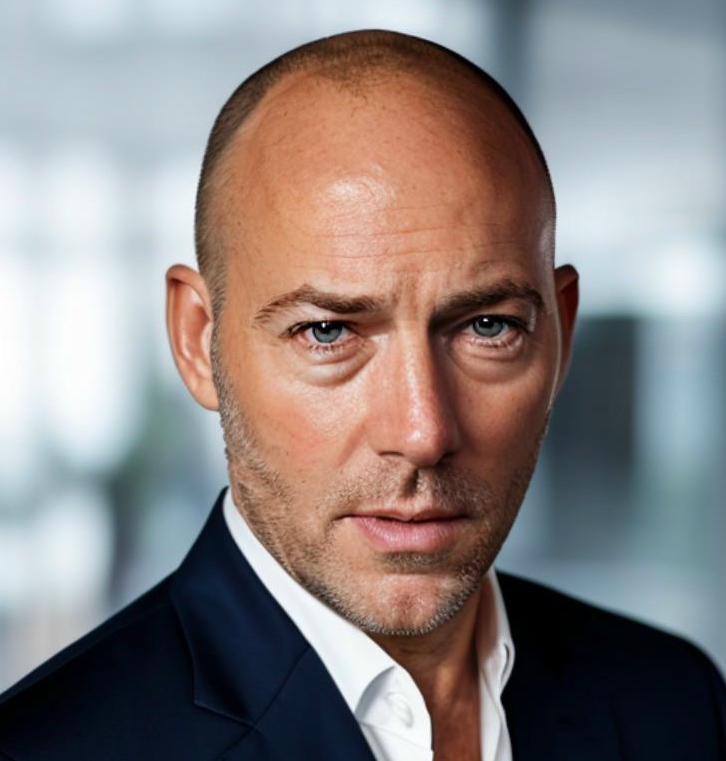
Timo Weis, Global Head of Growth at Infosys, is a German-Australian who has worked across three continents and moved countries seven or eight times. He has built global digital marketing organisations at Akamai and driven growth at Infosys across 56 countries. His marketing philosophy is built around one cooking analogy that has stuck with everyone who has heard it.
“If the leads don’t have the quality sales expects, those leads are worthless. The awareness campaigns fill the funnel before customers even appear in your CRM.”
Timo Weis is the Global Head of Growth at Infosys, the global technology services and consulting company operating in over 56 countries. He leads growth marketing across CPG, retail, and logistics, translating Infosys’s digital transformation capabilities into commercial pipeline and long-term client relationships. He joined Infosys in 2020 having previously built the global digital marketing function at Akamai Technologies.
Timo grew up in Germany, where he studied marketing and ran his first business in high school. After selling the business, he wanted to learn to surf and learn English, and settled in Australia for what he intended to be one year. He stayed for eleven. He started his career at Aegis Media in Sydney, moved through Adobe and MediaCom in Australia and New York, and then built out the global digital marketing organisation at Akamai. His career has taken him to Germany, Australia, South Africa, California, and New York.
At Infosys, he works across the company’s AI practice, Infosys Topaz, which includes over 12,000 digital assets and more than 115 models, as well as Infosys Aster, the company’s marketing capabilities platform covering brand creative, digital experiences, performance marketing, and marketing operations. He is a firm advocate for starting a marketing career in an agency, which he credits with giving him exposure to more clients, industries, and disciplines than any client-side role could have offered at the same stage.
“If you only focus on quick converters, in a year’s time you’ll have no leads because you didn’t tend the other pots.”
“Not every marketing initiative needs to have a positive ROI.”
The CFO conversation is hard, but Timo’s position is firm. If you only run campaigns where ROI can be directly attributed, you deplete the top of funnel and run out of pipeline. Awareness campaigns fill the funnel one and two years before a customer ever appears in your CRM. Cutting them to improve this quarter’s cost-per-lead number is the most common way marketing teams undermine their own results six months later.
“You need different pans on the stove: quick converters, six-month pipeline, two-year horizon. Drop one and you have a gap.”
One of the most persistent mistakes Timo has seen across every company he has worked with is the short-cycle bias in B2B marketing. Rewarded quarterly, both sales and marketing optimise for the fastest-converting leads and let the slower opportunities languish. The result is a pipeline that looks healthy for ninety days and then collapses. The pots-on-the-stove mental model is Timo’s corrective: you serve the quick converters and the two-year leads simultaneously, with different content and different channels for each.
“I would never run AI-created ad copy without a human review. Translation and localisation are not the same thing.”
Timo is genuinely excited by what AI can do for scaling creative, duplicating campaigns across markets, and automating the reporting that used to take days. He is also precise about where the boundary is. Any AI output touching the market needs a human reviewer. Language and cultural localisation is where the tools still fall short. And the skills that AI now performs, reading data, testing creative, building campaigns, are the same skills that junior marketers once learned by doing. If AI absorbs all of that work, the next generation will have nowhere to learn.
Stay close to the conversation.
New leaders and insights. No noise.