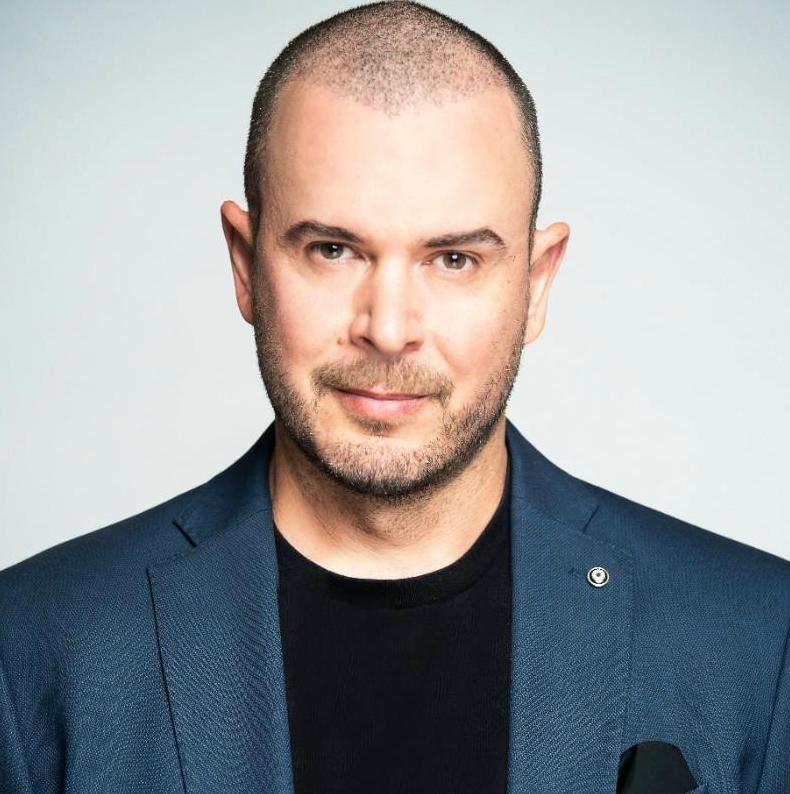
A to B Does Not Equal B to C
Tony Marlow was CMO of LG Ad Solutions for over three years and is now CMO of Genius Sports. A former CMO at IAS and Data Axle, research director at Nielsen, and head of B2B marketing at Yahoo, he has built his career at the intersection of consumer insights and brand storytelling, with a through line in CTV, digital advertising, and the science of what makes things work.
“I love the psychology behind marketing and using it to drive effectiveness. CTV is not your grandmother’s TV.”
Tony Marlow is CMO of Genius Sports, having previously served as CMO of LG Ad Solutions from September 2022 to March 2026. Before LG Ad Solutions he was CMO at Integral Ad Science, CMO at Data Axle, and VP Head of B2B Marketing at Yahoo, where he ran a marketing and product marketing operation of 120 to 140 people.
Tony began his career in strategic consultancy in Sydney, working on thought leadership projects for telcos at the moment they were educating consumers about what a phone could do beyond calls and texts. That early immersion in technology adoption and consumer behaviour shaped everything that followed. He moved to Nielsen’s online practice in Sydney, then accepted a mid-winter call to move from Sydney to New York in January 2010 to join Yahoo, going from running thought leadership for a research team to eventually leading a 120-person marketing division.
He describes three career pivots that shaped him: moving from Sydney to New York for the scale difference alone, the shift from insights professional to operator, and the first time he joined a C-suite and understood that his role was no longer just his team but the whole company. At LG Ad Solutions, the art-and-science thesis for CTV is his operating framework: CTV delivers the emotional impact of television with the targeting and measurement precision of digital, making it a genuinely full-funnel medium. His scaling lesson, that what gets you from A to B is never what gets you from B to C, is the insight he says he carries most consistently into every new role.
“What gets you from A to B is never what gets you from B to C.”
“You are there for the whole company, not just your own division.”
Tony’s scaling insight is specifically about the transition from successful startup to scaling enterprise. At IAS, the company had become great at being scrappy. What was needed to reach the next stage was operational discipline, global systems, and functional expertise that the scrappy version had never needed. The failure mode he describes is thinking the instincts that built the business are sufficient to scale it: they are not, and the leaders who recognise that early and build the infrastructure the next stage requires are the ones whose companies get there. It is not a criticism of what built the business. It is an acknowledgement that scaling demands different things.
“CTV is TV’s sight, sound, and motion with digital’s addressability and measurement. It is a full-funnel medium.”
Tony’s CTV thesis is built around the convergence of two historically separate advertising modes. Television was always the gold standard for brand building: reach, emotion, cultural presence. Digital was the performance engine: targeting, measurement, conversion. CTV combines both in a single environment. The living room screen carries the emotional weight of television. The data layer beneath it carries the precision of digital. For marketers who have been forced to choose between brand and performance, CTV offers a medium that does not require that choice. Tony’s art-and-science framing at LG Ad Solutions was an attempt to articulate that combination in a way that resonated with both brand and performance buyers.
“All marketing is storytelling. AI will be a powerful part of it, building canvases and testing creatives at scale.”
Tony’s position on AI and storytelling is more expansive than most. He does not resist the possibility that AI will change what storytelling looks like. He welcomes it, arguing that the ability to build, test, and personalise creative at scale is a tool for better storytelling rather than a substitute for it. The fundamentally human thing, understanding the psychology of the audience, knowing what makes people feel connected, constructing the narrative arc, remains where the creative professional’s value lies. AI handles the canvas. The human handles the meaning.
Stay close to the conversation.
New leaders and insights. No noise.