Gen Z is not a demographic. It is an entirely different way of experiencing the world.
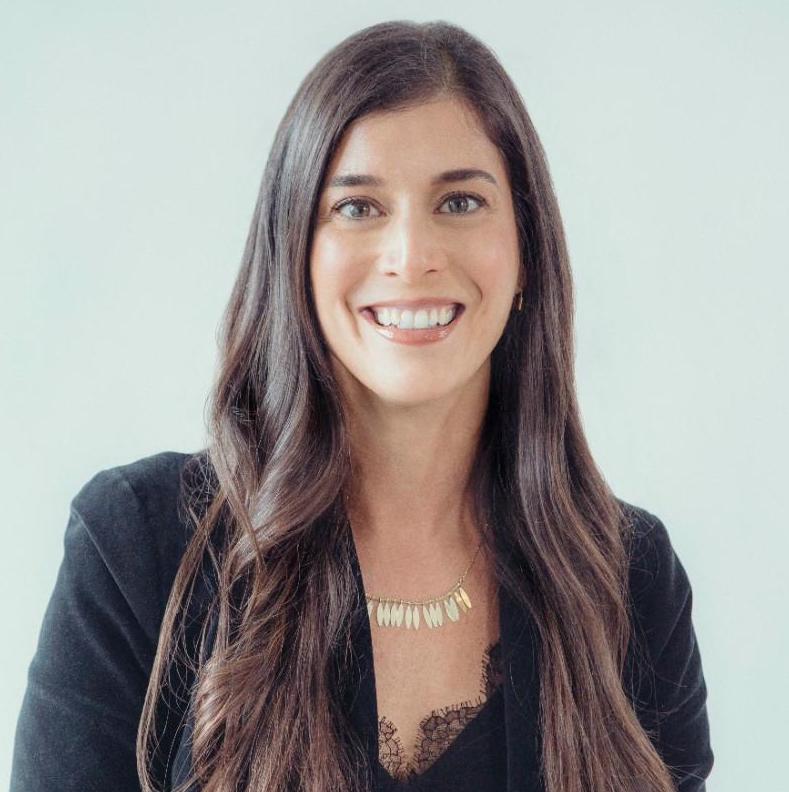
Aarti Bhaskaran Global Head of Research & Insights, Snap
Interviewed by Justin Cooke
Published

Aarti Bhaskaran is Global Head of Research and Insights at Snap, leading the global thought-leadership programme behind a $5bn revenue function. She has spoken at Cannes Lions, ARF, and WARC, and sits on the board of the Advertising Research Foundation. In this conversation she sets out the role of insights as the consumer's advocate inside a tech company; the creator-business evolution that came about organically on Snap; the convergence of AR and AI in the Imagine Lens (a text-to-AR-lens prompt); the consumer transparency finding that AI-generated creative works, but only when it's disclosed; the Forbes-estimated $250bn creator economy with 200 million people calling themselves creators; the we don't call them influencers, we call them creators distinction grounded in niche and community; the global-strategy-with-local-execution discipline for international markets; and the advice she gives her younger self: ask for what you're worth, take more risks, and treat AI as a tool, not a replacement.
What insights does inside Snap, and how the function has evolved
The setup.
The role of insights has evolved with how platforms have evolved. Insights used to be looked upon as validation, or simply a data provider. It's evolved to storytelling and the why. As platforms get more sophisticated and categories get more saturated, the incremental gains are harder. You have to dig deeper into who you want to target, why things are working, and how to make them better. That's where insights comes in.
The role inside a tech company: we're the consumer's advocate. So much of the build is internal-focused; people live in their bubble of expertise. Working with advanced technology (AI, ML, augmented reality), the focus on technical specs sometimes makes you forget the human who has to use the platform or the feature. We humanise what product is building. On the ad-sales side, it's easy to talk about impressions, CPM, CPA, but a cost per is a human action. You need to understand how and why this human is going to take an action. We're fact-checkers and the people bringing nuance into decision-making.
On how insight feeds product versus how it feeds go-to-market.
Insight feeding product can be quick and iterative as you build, sometimes very internal because you're building something top secret. Go-to-market is more robust on methodology, validating across multiple markets before we make a bold claim. With go-to-market we balance selling Snap with studying a topic advertisers care enough about to spend five minutes reading or listening. Attention is hard to get.
A worked example: the creator business came about organically
On product and insight together.
The creator business wasn't deliberately built. It came about organically because users started posting on Spotlight, showing behind-the-scenes, and creators from other platforms migrated over. The business grew. We started to understand how consumers interact with creators, what role creators play in path-to-purchase, what to train creators on as we monetised them through funds and Snap Score. Things creators would ask, plus things we needed to find out as we built. Insights and technical expertise scaled the solution together. It's now a sizeable business for the platform.
AR plus AI: the Imagine Lens
On the convergence.
What's exciting now is the convergence of AR and AI. Augmented reality is an overlay on reality. With AI you can make adjustments to that augmentation on the fly. Snap recently released Imagine Lens: a prompt-based lens generator. Make me look like a K-pop demon hunter; give me blonde hair. The system generates the lens and the image based on the prompt. That wasn't imaginable three years ago. The utility comes from how easy it is. Furniture in your apartment before you buy. A jacket. A watch. Glasses. Share it with a friend for an opinion. The buying process stays the same (we still ask a friend), but seamless.
AR usage is increasingly ubiquitous and accelerated during COVID. Around 70% of Gen Z have used AR or plan to. People often don't know they're using AR. If you see a product in 3D on Amazon, that's augmented reality. AR usage on the Snap app is now in the billions of lenses used per quarter.
The AI-generated creative test: it works, but disclosure is the principle
On the research finding.
We wrapped a study where we looked at AI through the pinhole of creative. The question: do consumers care, and can they tell the difference between an AI-generated creative or not? Roughly 90% of consumers in the US and Europe are using AI according to syndicated sources like GWI; purpose and frequency vary.
When we tested AI-generated creative (a static image, then a video, then an AR lens), they worked and not only on awareness and consideration. The creative also lifted innovative and different brand attributes. Where it varied was what the gen AI was used for (the background, the outfit, the music, rather than people). And disclosure mattered: people understand content can be AI-generated, but they want to know it is. Disclosure leads to higher acceptance. The same is going to apply to other forms of content and to work itself. I've written a brief powered by AI is met with more openness than picking apart the AI-generated bits.
A specific methodology principle.
Pre-launch there's a lot of A/B testing in certain markets. For go-to-market my team comes in to understand the why. With Ads in Chat as an example, the questions are: how has chat developed for consumers, what's the openness to ads on chat, what tonality should brands follow, when should ads appear, which verticals fit. We use controlled environments for testing in a sandbox.
We don't ask is chat doing better than video? That's not what we want to understand. We ask: what is the incremental value of a chat ad when added to a mix that already exists? Advertisers aren't tomorrow going to stop video to spend on chat; the question is the value chat brings on top, and whether it's worth the investment.
On separating hype from real value.
The proof is in the pudding. Beyond the why, we do a lot of effectiveness research. I never look at it as a replacement of; the question is the augmentation and the incremental value. A new format may add incremental value for advertiser A but not for advertiser B, depending on objectives, audiences, and outcomes. We always look at the right fit for the advertiser, and that separates hype from value.
AR lenses are a good example. They're thought of as an innovative ad unit you'd use from an innovation bucket. We've done so many studies (first-party, third-party, upper-funnel, lower-funnel) that always show the incremental value of lenses to a media mix. With that conviction and proof, we can make the case for it.
The $250bn creator economy, and the creators-are-not-influencers distinction
On the trend.
Forbes has estimated the creator economy is worth $250bn globally, set to double in the next four years. Over 200 million consumers call themselves content creators. We can't say creators are up and coming. They're here. They're mainstream.
The evolution is creators thinking of themselves as businesses, with agents and the kind of network infrastructure that used to exist only for sportspeople. Creators are getting more sophisticated about content strategy: over a third have specific content strategies per platform.
We no longer call them influencers. We call them creators because it's no longer about being a big celebrity with millions of views. It's the niche they satisfy and the engagement with the community they're building. It's going more community-based, especially niche micro-communities, which lets advertisers target very specific communities for a specific product or launch.
The symbiotic relationship between creators and followers means creators look to their followers for user-generated ideas, poll responses, and purchases. Creators are monetisation engines and another media channel. The demands on both will only increase. The content cycle will get tougher: what's the original content?
On the work to be done.
Common assumptions advertisers bring: we'll work with the creator to generate content and they'll push it across all their platforms; I want to work with this creator because they have so many followers, without checking whether they're a fit; I want the creator to create this content in this format and publish it. You can't be that controlled. The creator has ownership over the community and the style.
The conversation: have a broad guideline, translate the brief into a creator brief, let them co-create, put faith in them. Find the right creators (multiple, rather than one) for the campaign based on audience and goals (are you changing perception, are you launching). Not I want that person because I like them, I've seen them, they're famous. Put thought behind a creator strategy and don't just activate.
The next layer: repurpose creator content into paid media and organic media on the brand channel. Build a virtuous cycle of content, rather than a one-off campaign.
On where it has worked.
Elf has been a great partner working with several Snap Stars, some of them athletes (women's sports is a growing niche), with a very organic way to deliver product messages. Coach is another. We have a telco example where the product (an augmented 5G product) isn't easy to talk about in an ad; the creators talked about the product for their home and explained it in layman terms to their community. The lesson: translate complex messages into something organic, or pick creators who align with brands.
Global strategy, local execution, and Saudi as the surprise
On international.
A successful strategy is more global. You need consistency: people recognise the brand for something no matter where they are. That includes the brand essence, and the physical brand cues alongside it.
What you miss with pure global: local nuance. Markets develop at different rates. The brand is at different stages. The culture of different markets is different. As a global brand leading in the US, strong in the UK, growing rapidly in India, you need to allow localisation of global goals so you tap moments and culture in a relevant way and don't appear tone deaf. The local markets will always want to do things their way; they know their market. Pure local execution loses the uniform brand. Global push-down without local input never activates because it isn't locally relevant. The balance is doable if you understand local nuances.
Saudi is a great example. It's a large market for us; the creator economy is so advanced and massive that I didn't know about it until I started researching creators, and the local team said already did that two years ago. We look at pockets of success and see whether they transfer to France or the UK or the US, overlaying with legal regulations. Sometimes a value is universal and you just run with that.
The consumer changes she watches, and building a global insights team
Three.
Commerce. The path to purchase has become so complex that what we study one year is replaced by something new the next.
Content consumption. The move from polished to user-generated content is now into the genres and sub-genres of UGC and the best practices to capture attention. Attention shortens with age but processing speed increases; younger consumers take in more in the first few seconds. The design question is how you build for that, especially as we move into mixed media (video plus AR, fantastical content from AI).
Values. There are click-baity headlines about Gen Z not wanting to work or millennials killing the diamond market. The underlying values and motivations change every few years with the macroeconomic and socio-political environment. That influences what people consume, prioritise, follow, and shop. Understanding the underlying motivations is the work.
On the team.
Align business objectives (that's what justifies the team's existence) with individuals' personal objectives. Hire for skill sets and personality; I don't want the same type of people. I'm for diversity of thinking. On my team there's an expert in first-party data and coding, a qualitative researcher and ethnographer, someone from a media background, someone from CPG/FMCG, people who have worked in markets beyond the US. Every year we plan together so the team buys into the vision and we reassess workstreams and where we're investing.
On representation.
Research is feminised; many more women than men early on. After a certain level it tapers out. Analytics is the reverse: hard to find women managers and women leaders. I support that and try to give it a voice.
Early in my career, when I attended industry events, I'd look at the panels and think someone like me is missing. The choice was to wait or put my hand up. Putting my hand up led to other women saying that's what we want to do. Women are often told there's only space for one of you at the top. Moving through my career I realised there's a lot of space on the top for all of us. It's about pulling along more of us, not fighting.
On career advice.
Ask for what you're worth. I wish I had when I was younger; I learned to negotiate later in life.
Take more risks. Say yes at the beginning of your career; you don't know where it will lead.
Treat AI as a tool, rather than as a replacement. If you rely on AI you'll lose your analytical and strategic-thinking capability. The discerner of whether something is good or bad and the summariser should be you, rather than the AI.
The question for the board
If Gen Z is a different way of experiencing the world, what share of our targeting reads them by mindset versus by demographic alone?