300 million reviews later: trust is not a soft metric. It grows revenue.
Dana Kalfas-Bodine Vice President of Marketing, Trustpilot
Interviewed by Justin Cooke
Published
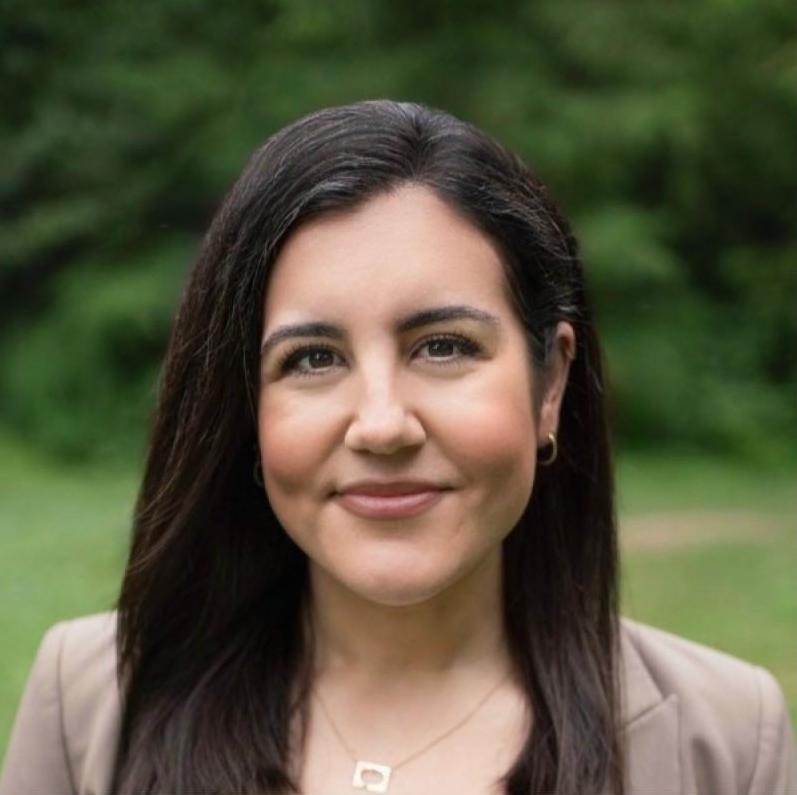
Dana Kalfas-Bodine is Vice President of Marketing at Trustpilot, leading B2B marketing, B2C marketing, PR, and the broader US function across the past two and a half years. Before Trustpilot she spent five years in fintech, payments, and financial inclusion, including time at Mastercard, and grew up on the digital-media side as advertisers moved from print to digital to video. Trustpilot was founded in 2007 with the thesis that trust is good for everybody, and the platform now hosts more than 300 million reviews across more than 1.1 million domains. In this conversation she sets out why the team chose high-customer-lifetime-value verticals (fintech, insurance, lending, mortgages) as the US market-entry strategy rather than retail or travel, the Forrester data showing a 400% ROI on the premium product and the 8x increase in purchase conversion from a single-point increase in trust score, the 3.3 million fake reviews removed last year (80% by AI), and why she'd hire a curious generalist over a specialist every time.
What Trustpilot is, and why high-CLV is the US entry
The proposition.
Trustpilot was founded in 2007 on the thesis that trust is good for everybody. We can help consumers trust the businesses and services they buy from by looking at authentic reviews, and businesses can drive value from those same reviews to grow. For consumers, we are a trusted source, an open platform where reviews are authentic. For businesses, we provide the insight to build trust, grow, and improve the offering, the brand, and the bottom line.
The scale.
About 800 people globally, with hubs in Copenhagen, London, New York, Denver, and offices opening in Hamburg and Milan. We just passed 300 million reviews across the globe, over 1.1 million domains, over a decade and a half.
Why the US market entry didn't go through the obvious doors.
In the UK Trustpilot is a household name. Down the tube, every other out-of-home placement carries the green stars; you drive down the road and the brand is everywhere. In the US, awareness is much lower. The strategy for the US, the place where we had permission to play, was in services, what we call high customer-lifetime-value categories: fintech, insurance, lending, mortgages, rather than retail or travel where excellent local players already operate well. The decisions a consumer makes in those categories are made once or twice in life. They're trusting a business with their savings for the next thirty years.
I was the marketer in fintech, and I was the target audience. To run a region where I know the audience that intimately because it is me was exciting. And after my work in financial inclusion at MasterCard and in the start-up world, Trustpilot is a way to democratise shared wisdom and experience. When my husband and I bought our first house, we were privileged to have a cousin in insurance and a mother-in-law with a long-standing relationship at a local bank. First-generation Americans, or those for whom English is not the first language, often don't have that. How do we level the playing field so everyone knows who to trust? They can read real experiences, separate from the proliferation of fraudulent and predatory services.
The data behind trust: 3.3 million fake reviews removed, 8x click-through, 400% ROI
The data.
We removed 3.3 million fake reviews last year alone. 80% of that we detected through AI and machine learning. The FTC passed a rule at the end of August banning fake reviews, which we embraced; we helped consult them and our coalition partners on ways to remove fake reviews. The data on the trust problem is real, and the brand needs to protect itself from it.
What we offer brands beyond hearing from their customers and a healthy voice-of-customer channel is real ROI. London Research showed Trustpilot branding on digital ads drives 8x click-through rate. Forrester research, commissioned by us, showed implementing our premium features (engaging in reviews, encouraging people to leave them) drives 400% return on investment, with business leaders seeing the payoff in under six months. A brand increasing its trust score by one point drives an 8x increase in purchase conversion. That moves marketing's discussion of trust from soft brand language with eye-rolls in the room to a hard business case.
The US campaign, and the buying committee
On the US strategy.
When I started, we hadn't run a big holistic campaign in the US for B2B specifically. The audience is marketers, marketing decision-makers, executives, and customer experience professionals. Our campaign launched last week, built on the Forrester report. The discipline is getting the proof points into the hands of the people who are us (the marketers) and providing full support at every level of the relationship. Trust-building doesn't end at signing the contract; it runs through every part of how the customer uses the product.
On the buying committee.
We run robust ABM. The committee on a Trustpilot decision is led by a mid-level marketer tasked with finding a review solution, but there's a senior buyer asking whether this can supercharge their ad creative, and a C-suite voice asking whether this is a metric they can bring into the organisation to drive morale and align the team. Customers have told us they keep their NPS, Trustpilot score, bookings, and revenue on screens for the team to march toward. We do the same at Trustpilot. We walk the walk.
Measurement, and demystification as the content strategy
On measurement.
In the US we look at awareness uptrack, and very specifically at market penetration in the high-CLV verticals. Less measurable but real is the uptick in marketers using Trustpilot branding in the US. I drove down to the Jersey Shore and took a picture of an NJM billboard with the stars. Friends and family who two years ago said that sounds interesting now say I saw the green stars, I'm checking Trustpilot. We have hard data too: visits to US pages are up year over year, consumer engagement with the product is up materially, bookings grew 23% year on year. We look at the traditional things and at the human things. We're constantly snapping pictures of our logos in the tri-state area.
The content strategy.
Our customers (Rocket Mortgage, SoFi, others) know they are holding the futures of millions of people in their hands. Our content strategy is to demystify, make it easy and digestible. When the FTC regulation rolled out in August, we communicated to every customer: here are the five steps you have to take, none of it pushing product, just being clear. If you have your own in-house review platform you will also be affected by these changes. We are the companion brand.
The dual-sided value, the 4.8 over the 5.0, and the negative review as opportunity
What makes Trustpilot structurally unusual.
Every marketer looks at their brand health portfolio: awareness, NPS, ad performance. NPS is incredibly important; nobody puts NPS in an ad. Trustpilot has the credibility with consumers where they understand it, expect to see it, and treat it as a real signal of business health. The dual-sidedness is unusual. The implication: if you do right by consumers, the business benefits when it engages on the platform. Consumers recognise the reviews, click on them, leave more reviews, and engage more.
The behavioural insight from the data team.
A trust score of 4.8 or 4.6 is more trusted than a perfect 5. The 5 doesn't pass the sniff test. People want to see strengths and weaknesses; they want to see that the brand is vulnerable, like a person.
Every negative review is an open opportunity. If a brand answers, follows up, engages deeper, and doesn't run from it, the consumer often comes back with a stellar review and becomes an advocate for life. Brands arrive saying I have a trust score of 2.5, what do I do? The answer is you have an excellent opportunity. The return on responding to negative reviews comes back tenfold. Increasing a trust score by one point drives 8x in purchase conversion. It's the right thing to do, and it's commercially the right thing.
The C-suite signal.
Beyond marketing and customer service, the C-suite has a real pulse from the reviews. An influx of a very specific question about X can identify a misfiring button on the app, or something going wrong in the customer-service operation. We deliver those insights directly to enterprise customers.
Hiring the curious generalist, and the Copenhagen-London sensibility
The hire she looks for.
I love a generalist. Marketers are some of the most wonderful ninjas in the world. They can cook, present, wash up, build an ad out of two things rubbed together. I look for curious, flexible people who bring (or look for) joy. We spend more time with our colleagues than with our families these days. Joy is critical. There's no school you can go to or background that makes you the best marketer. I love the people who break the mould and are different. Diversity matters, every kind. No cookie-cutter anything.
The superpower over the last few years.
Treating ambiguity as an opportunity. It's nerve-wracking. It's stressful. The uncharted path is one we can lead and chart ourselves. We don't know how to measure this; we don't know how to tell this story; this product change happened, how do we communicate it? Each one as an opportunity for someone to make a mark, rather than something to deal with. And being totally human about it.
On culture.
I've worked most of my life in New York or US-based companies, many in New York with a very full-on New York culture. The Copenhagen and London sensibilities inside Trustpilot look at the whole human being. What makes someone a great marketer might be going home to cook a recipe they saw in the paper. I get more out of that person the next day because they had the chance to pursue a passion. Trustpilot takes trust and being totally human in your whole self seriously.
We have specific OKRs and specific goals. I'm there to guide my team and to be guided by them. The path each person takes to a goal is going to be different; the tools they need and the way they need to be spoken to is going to be different. Within reason, we will accommodate. With regular check-ins, with the numbers on the screen.
Social proof, and trust as infrastructure
On social.
We're on all the channels. LinkedIn is a major focus because the B2B decision-makers are there. What we're finding and digging into is the performance of Trustpilot star ratings inside people's social creative. There isn't one purchase path for a mortgage decision. We advise our customers that social has to be part of the mix, social in the traditional sense, and also that the social proof Trustpilot provides is itself a social channel: real customer experiences, real words from a true customer. Putting that into environments where audiences watch influencers (TikTok, LinkedIn) adds another layer of social truth alongside the traditional creative.
On 2044.
A world that knows what institutions to trust and has the tools to interrogate what's new. We're at an inflection point where new is scary, especially in regulatory environments where the government doesn't always know the ins and outs of tech, and people still struggle with terms and conditions, pop-ups, and the difference between what's happening in the UK versus the US. People should be able to feel confident that they know when they're being marketed to versus when they're being talked to, and that their voice has an impact. The conversation between individuals and brands can be closer and more authentic. Not Sunday Sunday Sunday, buy the used car. Working out how to get the best deal for a mortgage, with the mortgage lender working out the best way to make that work for the business and do the right thing.
The question for the board
If trust is a revenue metric and not a soft one, what share of marketing investment builds it directly versus assumes it as a by-product?