How the 49ers build the Faithful: 90 million global fans and still growing.
Stephanie Dittmer Rogers EVP of Marketing, San Francisco 49ers
Interviewed by Justin Cooke
Published
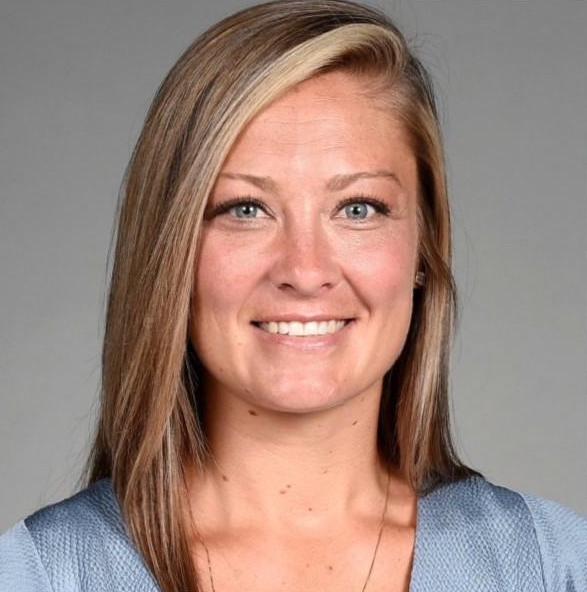
Stephanie Dittmer Rogers is Executive Vice President of Marketing for the San Francisco 49ers. Her remit spans three areas: live and in-game entertainment at Levi's Stadium (the video boards, the halftime acts, the corgi races, the DJs); content (video, photo, audio, creation and distribution across channels); and integrated marketing (fan engagement, brand, the graphics team, international marketing, influencer marketing, campaign building, flag football). The 49ers are the third-largest fan base in the NFL in the United States and the number-one fan base in Mexico. In this conversation she sets out the History of Innovation North Star that anchors how the team updates a storied brand; the $200m two-year stadium investment that makes Levi's the only stadium in history to host the Super Bowl and the FIFA World Cup in the same calendar year; the consistency, competition, community three-pillar framework for international market entry (UK, Mexico, UAE); the brand triangle (oval, faithful, 49er gold-miner) and the gold-mine tunnel that the players run through onto the field; the teamwork, no ego, great attitude leadership principles she runs the team on; extend the touch point as the executional mantra; and the I got your back / IGYB mentality from the locker room that has migrated into the marketing department.
What the role covers, and the goosebumps moment
The three verticals.
Live and in-game entertainment: everything inside Levi's Stadium on game day and at our other events, from the video boards to the halftime acts (corgi races, DJs, the quintessential American sports-entertainment environment).
Content: a primary mover of business now. Video, photo, audio, the teams that create it and distribute it across channels.
Integrated marketing: fan engagement, brand, graphics, international marketing, influencer marketing, campaign building, flag football. The goal across all three is to grow, honour, engage, and celebrate the faithful (the name of our fan base). We're the third-largest fan base in the NFL in the United States and the number-one fan base in some global markets.
On the framing.
We have a North Star: History of Innovation. The team's namesake (the 49er) came west in search of gold and built the Golden Gate Bridge and the rest. San Francisco and the Bay Area have always been innovative, first then through the Gold Rush and now through Silicon Valley. Our football team's history is also innovative through the coaching, the GM, and the staff and players.
History of Innovation is how we approach the work: honour the tradition, honour the legacy, build on it, and continue to make it great.
On the personal.
Sitting in the production meeting that our head of live and entertainment runs before every game. The intensity and pride that team takes in building out the perfect game-day show. Total pros who thrive under pressure on a very stressful job.
The moment the national anthem ends and the flyover happens. Goosebumps now talking about it. I pinch myself every game.
A career from Iowa to the AJGA to the 49ers, and fandom as identity
The path.
I grew up in a small town in Iowa playing sports with all my cousins. I always believed I could keep doing that as a career. As I got into high school I realised it could be a career. Marketing found me. I thought I wanted to be a lawyer and realised I have too much sass for that; sass shows itself better in marketing.
My first full-time job was at the American Junior Golf Association, whose mission is to get kids college golf scholarships. I ran the content team. Signing Day every year required new ways to tell the same story; we crafted fun ways to celebrate each kid's lifetime achievement. That was when I realised the power of content to connect people and to celebrate, and the creativity in the content world. From there it's been digital, and the connection through online and offline experiences.
On marketing a sports team versus marketing a consumer product.
The unique thing about marketing a sports team is fandom being part of identity. People talk about fandom in their daily life. In global football, I'm from this city and I'm a fan of whatever club is often the first thing someone tells you. Our job is to figure out how to connect that fandom throughout the entire identity and the entire day. How does the brand come to life in ways meaningful enough to talk about at the dinner table or the water cooler or the school.
It's less transactional than consumer brands. The connection is the discipline. Sports teams are spoiled with dedicated fans, and we want to keep that conversation going 365 days a year (the season is 17 or 18 games). Storytelling around the team, the players, the staff, what's happening at the stadium when nobody's there: we did a behind-the-scenes piece on our recent $200m construction work that fans loved. Fans want to feel they own it, that they know the background and the insider notes. Long-term relationship, year-round storytelling.
On the discipline.
The NFL has a robust proprietary measurement system covering everything from intentional actions (likes, comments, engagements) through secondary fandom (tune-in, following teams, fantasy engagement). We're looking at content engagement rate, content reach, organic impact across spend, and the year-over-year split between primary and secondary fans. The goal is for the total fan number to grow and for the primary-fan number to grow every year. We look at this across every country the NFL measures.
The growth signal: massive growth within the Latino, female, and youth populations. We're the number-one fan base in Mexico. Even five to seven years ago American sports weren't as welcomed internationally as they are now (and global sports weren't as welcomed in the US as they are now). Audiences are more open to watching, learning, and becoming fans of a sport they don't yet know.
The $200m stadium investment, the Super Bowl and the World Cup, and the community legacy
On preparation.
A coffee-and-treats joke aside, we've gone on a two-year $200m stadium investment to keep Levi's a destination for world-class sport and entertainment. The stadium is around 12 years old; technology evolves quickly inside a stadium. This past off-season we gutted the production room top to bottom, added 4K LED video boards four times the size of the previous ones, a third layer of LED, and full-colour LED sport lighting. Plus work in the suites.
Levi's is the only stadium in history to host the Super Bowl and the World Cup in the same calendar year. On any given day that's either the most audacious or the most crazy idea. We're proud of it.
The marketing team's role is operational alongside tactical: the team will be in the room helping to run the show on Super Bowl Sunday. A lot of people work in sports their whole career without working on a bucket-list event of this size. I keep reminding the team it's hard work and a special year in their careers. Take the moment to breathe, celebrate each other, be proud, and we'll have a great story to tell after.
On what these events mean.
Legacy is tied to the community. In the first ten years of Levi's Stadium being open we hosted dozens of world-class events (Super Bowl 50, the Eras Tour, Beyoncé), creating around $1bn of economic impact. In 2026 alone we will create $1bn of economic impact in one year. That's the deep tie to the Bay Area.
It's not only the game or the match: we're putting football fields in communities that don't have them. We'll create flag-football opportunity for youth who currently don't have the means or the travel or the opportunity to compete. Both the NFL and FIFA's governing body are doing similar community work. Legacy isn't selfish self-promotion. It's the responsibility we have to our community to do good. Our ownership is deeply dedicated to that, and they show up day in, day out.
Consistency, competition, community, and the brand triangle with the gold-mine tunnel
On the UK, Mexico, and UAE work.
The NFL has a global-market expansion programme letting teams secure marketing rights in countries that resonate. We chose three: the UK (our owner, Jed York, also owns Leeds United, so the connection was natural for storytelling, community work, and youth opportunity), Mexico (a large, dedicated Latino fan base; the Bay Area is a melting pot with a strong Latino connection going back through its history), and the UAE (we secured the rights in April and went there in June for an immersion trip).
Three pillars run through the international work and through the broader marketing strategy. Consistency: present, invested, connected to the market through consistent outreach and programming. Competition: build flag-football programming for kids, and celebrate and support adult flag-football programmes where they exist (as in the UAE). Community: be part of every community we're in the way we are in San Francisco, through charitable giving, watch parties, cultural moments, and holidays.
The pillars drive the decision-making. How they come to life is dictated by the local market and what they tell us they like. None of us are too proud to get better. We listen, we ask for feedback (good and constructive), and we learn.
A specific worked example.
This past year we unveiled a new brand look-and-feel built over 12 months. We honed in on what does the San Francisco 49ers mean and represent? and built the brand triangle. Three points:
The Oval (the iconic 49ers logo): 80 years of history of the team, the coaching, the players, the championships.
The Faithful: our fan base.
The 49er gold-miner: our namesake, the 1849er and the Gold Rush.
We've started telling the story of the gold-miner through the lens of being a football player. The on-field manifestation: most stadiums are putting big things on the field (the Vikings have a giant ship, the Baltimore Ravens have an on-field moment). Our new entry has the players running through a gold-mine tunnel. The real story is on the interior. It ties to the work in the gold mines, the weight room, the film room, internally in themselves, before coming out on display. Cheeky and marketing-forward, still an authentic manifestation. The discipline: we don't want to be anything anybody else is. Authenticity gets thrown around a lot. It matters.
On the generational-versus-new fan question.
Many fans in our base don't know the names Joe Montana, Jerry Rice, or Steve Young (which is hard to fathom as a core 49ers fan; those names are on the Mount Rushmore alongside Ronnie Lott). They came in over the last 5 to 10 years because we've been very successful. The work is telling the historical story without alienating new fans and making generational fans feel recognised, connected, and celebrated. And it's making sure generational fans come along with the new ways of telling that story.
Teamwork, no ego, great attitude, and IGYB borrowed from the locker room
On three non-negotiables.
Teamwork is everything. Teamwork makes the dream work. It comes from trust and respect.
No egos. It's human nature to have ego, especially in creative work. Ego means disrespecting the people around you who are trying to make you better. We can't have ego because we're not too proud to get better.
Great attitude and solution-oriented energy.
With those three foundations, brainstorm broadly, be creative, no boundaries after that point. The way I lead is by example: I'll throw out the craziest idea and say this is the dumbest thing anybody in this room has ever said, and I'm going to say it and somebody will make it better. That comes from vulnerability and trust.
If you're not getting told no, you're not trying hard enough. The cultural component matters as much as the executional component.
On the discipline.
The mantra to the team: extend the touch point. Whether you're a creative, on the live team, in influencer marketing, or in email marketing, how is each piece of work coming to life in every possible way? Not only within marketing and across the organisation.
The brand event we hosted in August was a showcase of the creative team's work and a showcase for the ticketing team, the live events team, the private events team, the suites group, the media team, and the football group.
On the parallel with the players.
The team has a saying: the standard. The San Francisco 49ers standard. The oval on the helmet. The name on the back. The name on the front. We think about the standard all the time too.
The other saying is I got your back (IGYB). The marketing team has started talking about it because it captures teamwork. Teamwork makes the dream work. You hear it after games: players have a bad game and reporters ask what about so-and-so? and every single player says it's a total team effort. They never let one man stand alone in the good or the bad. They give each other flowers, celebrate each other, and protect each other. Sports teams with one or two stars who think they're better than the rest usually don't succeed.
We work hard behind the scenes. We're in the Adobe Creative Suite versus the weight room. We're in the production room versus the practice field. It all goes back to IGYB. Coach Shanahan brought that to life inside the team. Fans watching the content now will start to see it.
On bringing yourself to work.
There's probably a lot I didn't do the right way: no balance, working until I was falling asleep on my computer, sacrifice. I don't regret any of those memories; I don't know that I would have got here without them.
The advice is less about how you work and more about how you bring yourself to work. If you want to work in sports and entertainment, it's hard work and there will be sacrifice. Have a great attitude. Be a problem-solver. Be willing to go above and beyond. Do the hard work. The minute you stop being starstruck by working in sport is the minute you should find a corporate job. It's a really blessed world to be a part of.
The question for the board
If 90 million global fans grow from a club identity, what share of our brand work builds a community of belief versus a transaction history?