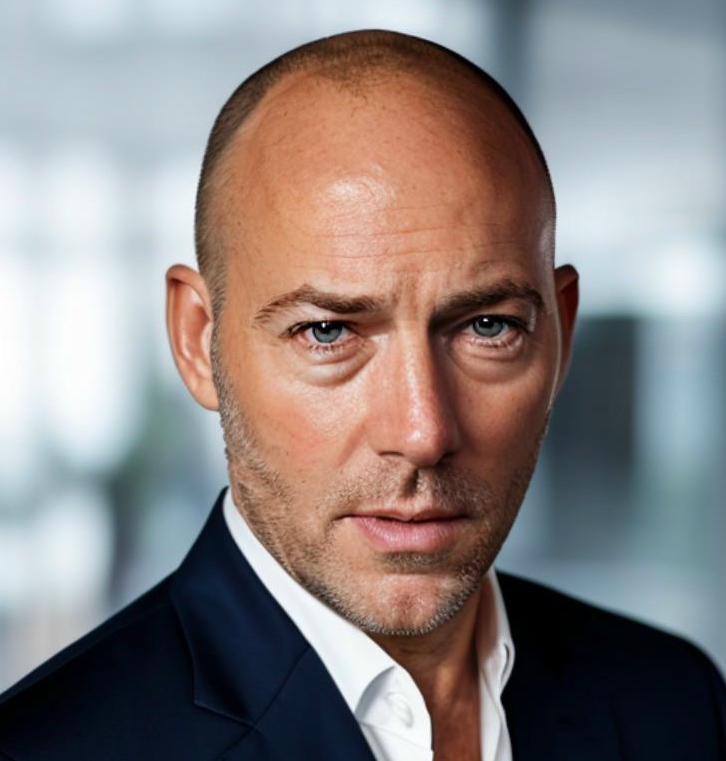
The persona is dead. The buying group is the new unit of B2B marketing.
David Keene European Chief Marketing Officer, Wipro
Interviewed by Justin Cooke
Published

David Keene is European Chief Marketing Officer at Wipro, one of the largest Indian-headquartered service integrators. He started his career as an engineer and has spent senior tenures at Google, SAP, Salesforce, and Oracle, with several start-ups along the way. In this conversation he sets out why the buying committee has replaced the persona as the unit of marketing in enterprise B2B; why the term campaign is dead and programme is the right level above it; why marketing needs to engage with the account before the RFP arrives; why he wishes the death of third-party data would hurry up; and his contrarian take on AI: that he is excited about it because it will kill bad content.
From persona to buying group
On the cultural resistance inside marketing.
Marketers have been trained to think in personas. When you ask a marketer about an activity, they describe a piece of content or a campaign or an event built for one persona. People default to it because contextualising for one is easier. When the buying decision is complex you are targeting many people, and the discipline is figuring out how those personas fit together as a group rather than treating them in isolation.
We still fall back on the ideal buyer or ICP, and the BANT-style qualification framework is breaking down because that simple decision-making model is not the world we live in any more. The starting point is to move the organisation to thinking about the customer at the macro level. Most organisations I look at still put their product groups at the centre, or structure go-to-market around how they are organised, rather than how their customers are organised.
Why campaign is dead and programme is what sits above it
On the terminology.
Campaign is a dead term. Programmes sit above campaigns. A programme is built around a specific customer pain in a specific industry, and runs across the year. Inside the programme you identify the moments that matter, build upper-funnel content for nurture, start to identify the accounts coming in (often using de-anonymisation tools, including AI that maps laptop names connecting to your website back to account structures), target the named account list, work with sales to map the people you are seeing, and bring in tools like Sales Navigator to build the structure.
On the roles people play in the deal.
You move from targeting personas to identifying the roles people play in the deal. Sponsors. Detractors. Coaches. You start to think about activity and tactics, from display ads through to specific pieces of content that move someone from one state to another or nurture them through their relationship with your brand.
If you are reading the RFP, you have already lost
On where the deal really gets won.
If an organisation has formulated the problem, decided how to fix it, formed the buying group, and written the RFP, the criteria have probably been shaped by the vendor with the relationships in place. Unless you are that vendor, you have already lost the engagement.
The discipline is engaging before the RFP arrives. Build relationships with your target accounts. Understand where you win and where you lose. Identify what is repeatable. Bring those points of view in early enough to influence how the RFP is written, or, better still, to bypass the RFP entirely.
On Challenger selling.
The technique I would point to is Challenger selling, and how marketing aligns to that methodology. You are looking for a point of view on industry that aligns back to real, complex pain points individuals in the customer have. That moves you away from let us just sell to the CEO. CEOs delegate. CIOs, CFOs, CTOs delegate. Teams are put on these activities. Sales cycles are long. The discipline is sequencing the markets you go after.
What to measure, and what not to celebrate
On metrics.
Measure yourself around opportunities created, win ratio, and revenue. For services, book-to-bill ratios. For SaaS, lifetime value and churn. Move away from the interim celebration of we got a lead, good job, well done with no view on whether it ever closes.
Marketing should engage with the customer throughout the buying process, including beyond the top. Marketing can be lazy about saying we are getting clicks, views, the numbers are up, but I can get lots of views on anything. That is not the problem. The question is whether it turns into something real.
On brand as values, not colours and fonts.
Your brand book and brand standards need to be built around your values. Putting values at the centre lets you be genuine and live your brand. The brand is not the colours and the font. Those are a representation of your values and your mission. Understand what you are there to do, what your values are, then turn that into the brand and communicate it effectively. Through assets, tonality, graphic design, and, more importantly, through behaviours.
The death of third-party data, and AI killing bad content
On third-party data.
The death of third-party data. I know it is a geeky thing to be excited about. All my B2B friends get regular emails from data vendors offering full lists of buyers in a specific space for a specific amount of money, all fully legitimate. It is not legitimate.
We need to kill third-party data and move to a permission-based world with first-party data, where people identify themselves and say yes, we want you to communicate with us, because what you are putting out is genuinely good. I wish it would hurry up. Google keeps pushing it back. Selling data to people is a bad thing to do.
On AI killing bad content.
I am excited about AI because it will kill dumb content and poor content. There is so much content on the internet that is terrible. If AI can write the poor content for us, we will have to do a better job at what we do. The work is to use the tools and the AI platforms to build genuinely fabulous content that engages. AI will not do that. If AI automates the basic things, we as people can focus on doing less with more, not more with less.
The question for the board
If the buying group has replaced the persona, what share of our targeting reaches the full committee versus a single champion?