The best marketing teams can read a report and tell you exactly what to do next.
Timo Weis Global Head of Growth, Infosys
Interviewed by John Horsley
Published
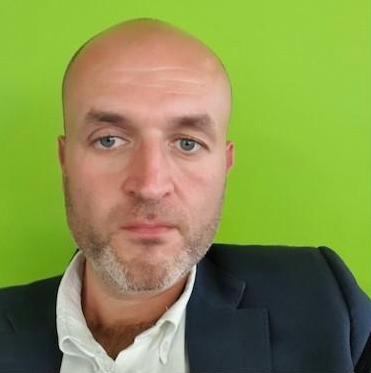
Timo Weis is Global Head of Growth at Infosys, the global next-generation digital services and consulting firm that operates across 56 countries with 40 years of experience in IT solutions, business consulting, and outsourcing services. Born in Germany, Weis has moved continents seven or eight times, having originally moved to Australia to learn English and to surf, where he stayed for 11 years, before stints at Aegis Media in Australia, Adobe and MediaCom in New York, Akamai client-side, and now Infosys. In this conversation he sets out the SQL-over-lead measurement discipline he applies to every new role, why the marketing function should have different pans on the stove for prospects in different stages of conversion, the cross-functional tiger team he stands up for end-to-end attribution, why translation is not localisation, and the AI use cases at Infosys Topaz with 12,000 digital assets and 115 models running.
A multicultural path, and why the agency is the right first job
How did the path lead from Germany to Australia to New York?
I moved continents seven or eight times. I was born in Germany, studied marketing there, ran my first business in high school. After I sold it, I wanted to be somewhere I could learn to surf and learn English. Australia had the easiest visa. My plan was a year. I stayed 11. I started in agency at Aegis Media in Australia, moved to Adobe, then to Adobe New York, MediaCom New York in between, then client-side at Akamai building their global digital marketing team, then into consulting at Infosys.
The agency-first advice.
For someone in their early or mid-twenties coming from university, the agency is the best place to learn the fundamentals of marketing. There's no other path that gives you exposure across so many clients, industries, and countries. It's hard work. I wouldn't miss the time I spent at Aegis or MediaCom; it gave me the experience I have now.
Hiring the analytical-creative unicorn, and diversity that delivers
On building high-performance teams.
The most important thing is that people have an understanding of data and can read data the right way. Marketing for me is about data. One test versus another, determine what works best, do more of the best, and apply the learning from what didn't work to the other initiatives that didn't get tested.
So I ask questions that show me whether the person is street-smart. A marketing degree is great; it's not necessary for the teams I recruit. What's necessary is that I can hand them a report and they can tell me what to do next. Or give them two creative variants and they tell me which they prefer and why. The right or wrong answer matters less than the thinking. I want to understand whether they understand what's important for the target audience.
The ideal unicorn.
Analytical and creative. Rare. You get lucky sometimes and find them.
On the culture of innovation.
You need diversity. In Australia I worked with people from across APAC, Europe, the US, South America. One of the best work experiences I had anywhere; the inputs came from everywhere and every person had a different way of thinking. The combined approach produced the best campaigns. The other balance that matters is gender. For B2C campaigns especially, if you have an all-male team marketing to a female audience, the work doesn't land. The team has to reflect the audience it's marketing to.
The SQL discipline, and the tiger team for end-to-end attribution
The first question Weis asks on every new role.
Whether we're using the right metric. Most of the time the marketing metric doesn't align with the sales metric. A marketer can create plenty of leads; if they don't have the quality the sales team needs, those leads are worthless. The discipline is to optimise toward SQLs (sales-qualified leads), or, if the sales cycle is short enough, toward revenue. For most of the businesses I've worked in the sales cycle is one and a half to two years, so revenue is too far out. SQL is the closest measurable metric sales wants you to optimise to.
The cross-functional tiger team.
To make end-to-end tracking work, the best approach I've seen is a tiger team across every business unit with leadership buy-in. One person per unit, working through the tracking and the data plumbing needed for a lead-form click in one system to flow into the CRM and be tracked across every touchpoint of the funnel.
Why not every campaign needs ROI: awareness, retention, and the CFO
On sustainable growth marketing.
Not every marketing initiative needs a positive ROI. Awareness campaigns fill the funnel and inform prospects about products and services. At that stage you make sure you hit the right audience with the right search terms and the right content, and you run always-on. With a one-and-a-half to two-year sales cycle, the awareness campaigns fill the funnel well before prospects are visible in CRM.
Then comes consideration and conversion. Every form completion, white paper download, video view, chat session, call engagement, event attendance gets a value based on the model your marketing analytics team has built. With that in place you can run attribution and funnel budget into the activities producing the most value.
On existing customers.
Companies sometimes make the mistake of not marketing to existing customers, on the basis that sales should do that job. We have a 98% retention rate year-over-year at Infosys, and the discipline is to keep valuing the customer and keep informing them about new services and initiatives. Marketing belongs in the retention phase as much as in acquisition.
On the budget pressure from finance.
It's hard to sell to the CFO that you have campaigns running without a demonstrable ROI. The argument is that without the upper-funnel work, the lower funnel runs dry. B2B buyers don't behave differently from B2C buyers any more. They research at home, on their phones, sometimes on personal laptops, and you can't track every activity. For the core terms you want to be known for, all the content, all the publications you want to appear in, you have to be there all the time.
The pans-on-the-stove model: different cohorts in different stages
On the temptation to chase quick wins only.
If I could use magic I would only generate leads that convert quickly. That would be ideal. The reality is the target audience is in different stages of the funnel. Even inside a single buying group, different people are in different stages. One of my ex-bosses said it well: you need different pans on the stove. One pan for the quick converters. Another for those who'll convert in half a year. A third for the longer-cycle people who'll convert in eighteen months to two years. If you focus only on the quick converters, in a year's time you'll have no leads, because you didn't take care of the other pots. The dessert gets served first because it was already in the fridge; the meal still needs the rest of the courses to land. Drop one of the pans and you have a hole in the meal at the moment it matters.
Translation is not localisation
On marketing across 56 countries.
Some countries you can market to similarly. Australia is closer to England and America than it is to Japan or China. The hardest to market to are Japan and China; most of the time I've used agencies there because you need an in-house team that understands the audience, not one bilingual person sitting in another country. You need the whole team, in market, to understand and to market.
On Europe and language.
English-language campaigns work in Germany. I wouldn't run an English campaign in France or Italy. In B2B specifically, many terms are in English anyway, so an English sentence works in some markets where it wouldn't in a B2C campaign. With AI you can scale landing pages and SEO across markets more easily. But not every business can afford 20 different languages for Tier-1 and Tier-2 countries. There's a real cost to genuine translation, and even AI translation and Google Translate need a native speaker reading through. The discipline is keeping the human in the loop. I would never put out ad copy created by AI without someone reviewing it first. There's a real difference between translation and localisation and the nuances.
AI inside Infosys, and the silo that costs visibility
On where AI is genuinely working in marketing.
We have Infosys Topaz, our AI practice, with over 12,000 digital assets and 115 different models running, used for clients and for us. The most exciting application is scaling creative for thousands of audiences and thousands of pieces of content, which used to be the bottleneck on the creative team. You can now automate the creative scaling. Marketing has become much harder to get your head around at the audience and content level. The compensation is that the scale problem is solved.
The thousand A/B tests in parallel are interesting too. Ten years ago you could run a handful; now you can run hundreds at once and the system automatically tells you which has reached statistical significance. The quality of marketing will be much better in the future because so many more tools are available, and the personalisation can now extend to the individual, to the account, to the industry, to the stage of the customer experience.
The concern.
I'm cautious about AI displacing the entry-level learning. Many of the activities AI is now used for are the things that teach new marketers from the ground up. If we just let AI run free with creative and optimisation, the people coming out of university into agency or in-house roles won't have the chance to learn how to read data or evaluate creative themselves.
On measurement and the cost of silos.
In a previous role, I ran campaigns for a large laptop manufacturer where business, consumer, and public sector campaigns ran in silos. There was no way that someone searching for a small-business product wasn't sometimes converting on an enterprise product, but no tracking was in place. The brand terms were owned by the consumer team, so a search for the brand term followed by conversion on an enterprise product gave zero attribution to the enterprise team. The attribution models were wrong because the silos hadn't been broken. You have to make sure A, everything is aligned with sales and B, everything is tracked across every marketing activity.
What is exciting, and the recommended resources
On the trends.
AI and machine learning in marketing. The scaling-creative piece, the audience-segmentation piece, the personalisation at industry-and-individual scale, and the predictive piece (a campaign's performance modelled against historical data). I'm very excited about the future. We just have to use it the right way, with the human in the loop.
On the resources.
Read blogs. Sign up for newsletters from the major ad publications and read them when you have a few minutes on the train. Do courses, especially on AI. There are free courses; there are MIT and Stanford courses available online. Doing them online lets me do them in my own time, which is the constraint for someone in my role.
The question for the board
If the best marketing teams turn a report into an action, what share of our analytics produces decisions versus more reports?