Performance, story, feel. The three things that never really change in marketing.
David Shing Independent Advisor (formerly Digital Prophet, AOL)
Interviewed by Justin Cooke
Published
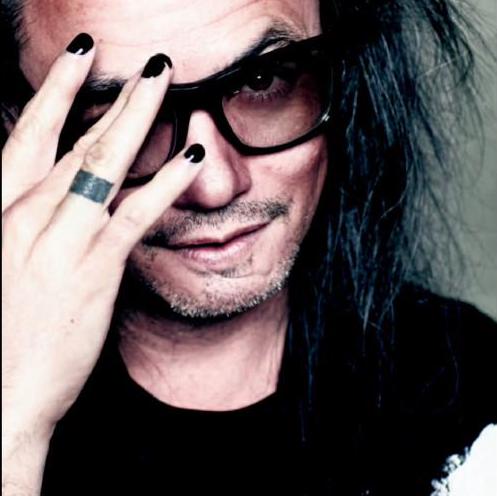
David Shing, known across the industry as the Digital Prophet from his decade in that role at AOL, is one of the most distinctive voices on the future of marketing, a designer by training and an independent advisor on brand, creativity, and platform behaviour. In this conversation he sets out why every buzzword cycle the industry chases (metaverse, NFTs, blockchain, and now generative AI) sits on top of three anchors that have never moved, why affinity has replaced authority as the engine of influence, why niche has become the new mass, and why creativity sits at the heart of his work now in a way it has at no point in his career.
The buzzword cycle and the three anchors that don't change
Every year there's a new term of art. This year it's generative AI. How are you thinking about the cycle?
This time last year we'd have wanted to have this conversation in the metaverse, walked away with an NFT version of it, then put it on the blockchain. This year it's AI. The reality is none of these things are new. Blockchain has been around since 1991. Artificial intelligence has existed in some form for decades. What is new is a graphical user interface that lets a consumer engage with the technology, and then everyone thinks the thing they're looking at is the next thing.
There are still only three things that genuinely matter, and they don't change. They evolve, but they don't change. Performance. Story. Feel. Walk around any conference floor and you hear performance everywhere. We have the best data on the planet, we do this, we do that. Great, that's a performance metric. But what's the story? Why would I want to be with you, believe in you? That's what this industry is supposed to be the architect of. And the one most people don't focus on is feel. What do I get when I feel a brand? Eight billion people in the world have eight billion different ways of feeling a brand in the context of the environment they encounter it in.
You've said the answer to channel proliferation is choosing fewer of them, not more.
When you and I entered the industry there were five or six environments worth worrying about. Now there are fifty. Pick one to start with, get it right, and amplify. That's what media is supposed to do.
Designing for affinity, and the end of platform authority
You've called the move from authority to affinity one of the bigger changes in how marketing works. What do you mean?
We've lived in a model where platforms held authority. They give you the guardrails for expression, which is fine but feels homogenised, and they hold authority because that's where the audience is. Inside those places, the way authority gets created has changed. It's affinity now. If you tell me you've come across something I should check out, it's probably more meaningful to me than something put in front of me by a platform. I don't care whether it's a social ad, a platform ad, or open web. If we have affinity, you become an incredible influence to me. We need more of that. I've been saying for ten years that niche is the new mass.
You're a designer first. Where does design sit in this picture?
At the heart of it, design. The first entry a person has to a brand is some element of design. Then comes the creativity. Then comes the media that amplifies it. And all of it comes down to context. Build good content, put it in smart places, easy to say, incredibly hard to do. If it's design-led, that's the thing I look at first, because it's going to attune to the audience. Then the deeper question: does the product, designed this way, reflect my own value? That's the affinity question.
Who's doing this well right now?
Pepsi at 125 years, with Todd Kaplan, is in the middle of a brand reboot at the scale you don't see often, for what is essentially a dollar product, a can of soda. The emotional content the team is building around it is doing a remarkable job. Nike and Adidas, both, on the collaboration question. They understand that two creators together do better than one, that multiple brands can come together and create more value than either could alone. Brands that think in those terms will succeed. Treat your brand like a portfolio. Do lots and lots of littles, and if one becomes contagious, put media behind it. That's the inversion of the traditional approach: one big idea, all the air sucked out of it across every channel, then a panic when the channels underperform.
Niche as the new mass, and the intention economy
The algorithmic feeds on platforms like TikTok make every person's experience unique. What does that mean for marketers used to talking to a single mass?
If you spend any time on TikTok, the things you'll groove out on are completely different from the things I'll groove out on. That's the value of these places, that they let us create affinity, and let us create feel. Look, colour, design, the elements of truth. And the second question is what they do to help connect. Because otherwise we're just passing through, and it's getting more and more passive.
I used to say attention was the new economy. I've moved on. It's intention now. If I rip my phone out to avoid a conversation, or to continue a conversation, I've made an intention. That's different from attention, which is just swiping through life. The technology question is how we support intention rather than maximising attention.
The same algorithm that creates affinity can also push you into a silo. How do you square that?
Whenever there's connection there's always good and bad. I'm not going to dump on the algorithm. If you spend too much time on topics you aren't interested in, you'll see more of them. That's not the machine understanding you the human, it's the machine understanding you the person who's touching this. The algorithm doesn't understand your psyche. It's trying to model it from patterns and habits. Part of the corrective is using intuition and gut as well as head.
Where AI fits, and where it doesn't
On generative AI specifically.
When somebody says they have an AI engine that learns, I ask what it's learning. Most of the time, the honest answer is it's machine learning, and the intelligence is doing an interesting calculation that says predictive. Anything that helps me navigate better decisions that feel more contextually relevant is welcome. That feels humanised. Where the technology becomes personalised or customised in the traditional sense, it still feels clinical. The hope is that as the physical layers of technology get better, face recognition, fingerprint diagnostics, the new ways we open and close devices, that quality starts to move into the algorithms of data technologies as well, and we start to feel something more humanised. We're not there yet. The platforms still feel broadcast-style, not narrowcast. Open the discovery tab on most of them and it's all over the place.
On the timing of any new platform.
I get pitched on startups regularly. The recurring problem is that everything is a little Uber-ish, a little Spotify-ish, a little the-next-big-thing-ish. The success of those aspirations is timing. In 2006 the ringtone market was valued at around six billion dollars; today, if my phone rings I'm deeply disturbed. We change quickly. The platforms that rose during the pandemic did so partly because people had nothing else to do. TikTok worked at the moment kids needed a place to release. Vine had a similar concept and didn't survive. Timing matters.
Why creativity isn't dead, and where the polymath wins
A more hopeful note. What is genuinely exciting right now?
I graduated design school in what was effectively the last generation of traditional graphic designers, the people who could tell you the difference between Bembo and Garamond at sight. The school after mine had computers and I had to teach myself. I came out of an industry where people were telling us design was dead. Design has never been more beautiful. Design is creativity. So I am celebrating the creativity of this moment.
The line I'd put on it: creation should be easy, but to be creative isn't. That's the difference. The platforms have made creation easy. The work of being genuinely creative remains hard. And the people I see succeeding in this moment are the polymaths, the people with many curiosities rather than a single specialism. The platforms exist for them now. The opportunity is real.
And the cost of democratisation?
Democratisation brings homogenisation. The challenge is that the genuinely distinctive people, the ones who are flamboyant or fluid or unconventional, have an extraordinary way to stand out at this moment. Anyone can become a hero on these platforms. The harder question is sustainability. Career-long creators, particularly ones using AI to amplify, need to make sure the tools they're using are sustainable and used for good. That's the work.
The question for the board
If performance, story, and feel are the three constants of marketing, what share of our investment honours all three versus optimising only one?