Digital transformation fails every time it stays inside the strategy department.
Dennis Claus VP of Strategy, Apply Digital
Interviewed by Justin Cooke
Published
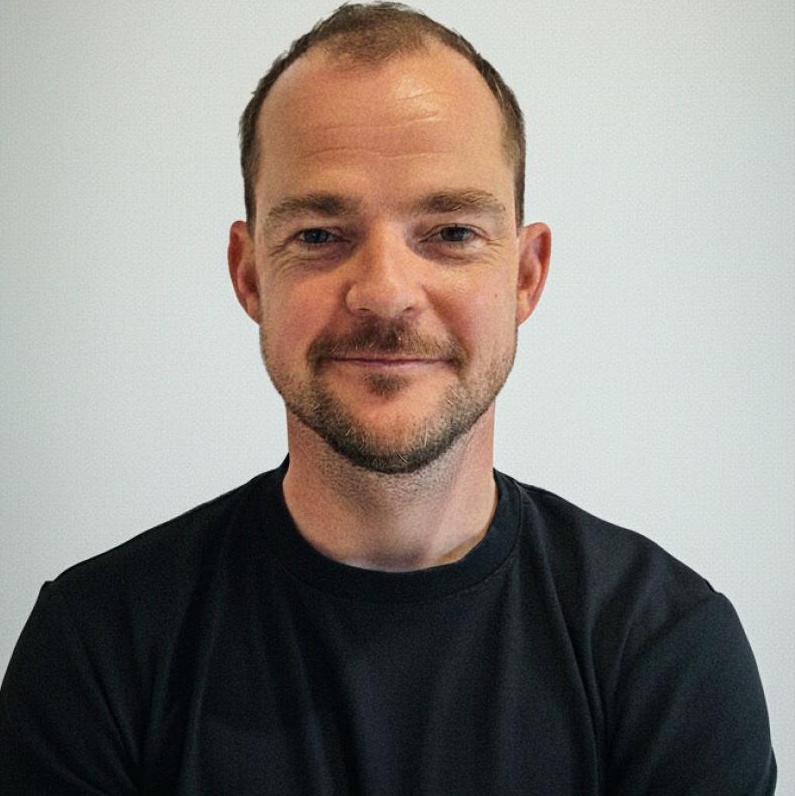
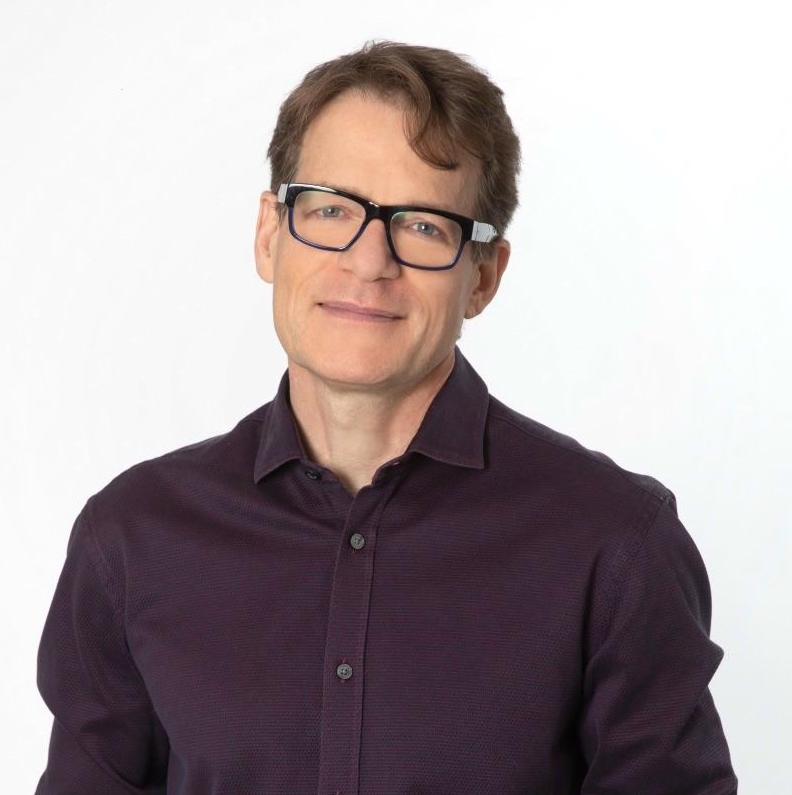
Dennis Claus is Vice President of Strategy at Apply Digital, the agency working with a roster split between sports and entertainment franchises (a global American sports organisation, Fanatics) and consumer brands including Kraft Heinz, Coca-Cola, Lululemon, and Renishaw (the £4.5bn UK precision-measurement manufacturer). Claus is a statistician by trade. His career runs from data consulting in Belgium (where he led the business for a startup that became a major company), to R/GA New York where he worked on global marketing for Samsung for several years, to Amsterdam and an innovation lead role at a $4bn apparel company, and now into Apply Digital where he combines the data, marketing, and strategy work into real digital-experience delivery. In this conversation he sets out the fandom in the small moments principle that applies as much to Kraft Heinz as to a sports team; the personal versus personalisation distinction; the three-Es framework (empowerment at the executive level, expertise via subject-matter councils, execution as a shared cultural responsibility); the applied expertise turn; the Tastemaker gen-AI build with Kraft Heinz and Google that required no upskilling for the marketers using it; the marginal gains parable from Dave Brailsford and UK cycling; the return purchase metric he lives by; and the take your time advice for those starting out in an industry chasing instant gratification.
A career he calls a pirate's path, and the two-client-types model
The setup.
I decided to do something in advertising at 18. I called my dad and his immediate reaction was you're going to join the army of salespeople. What attracted me wasn't selling. It was telling great stories, delivering value for people, and turning creativity into a craft I could live from.
The career has taken the scenic route. I'm a statistician by trade. I started in data consulting in Belgium, leading the business for a startup (now a much bigger company) where we helped companies evaluate innovation and test new concepts (second-screen TV, streaming platforms, similar work). Then I moved to New York to start the office there and was hired by R/GA, where I was assigned to global marketing for Samsung for several years. After that, Amsterdam, where I went from data and marketing into leading innovation for one of North America's largest apparel companies and built their DTC capability. Now Apply Digital, combining everything I'd learned. We can think along, strategise, and also build.
The proposition.
Apply Digital works with a mix of two types of clients. On one side: sports and entertainment franchises and large sports organisations (American and very global, names I'm not supposed to name on the podcast), and Fanatics. We build ecosystems for fandom. Fandom needs to be earned over time, and that happens in the small moments. Creative agencies focus on the Barbie partnerships and the big cultural campaigns (which I've done and love), and you need a system to keep fandom going and to fuel it over time.
On the other side: consumer brands like Kraft Heinz, Coca-Cola, and Lululemon. That's why the company is called Apply: we apply what we learn from sports and entertainment about fandom to consumer brands and even B2B customers. At that intersection we deliver better results by thinking beyond a one-off digital campaign and building the ecosystem that drives conversion, increases loyalty, and ultimately creates fans for the brand, whether it's a sports team or a beverage brand.
Personalisation is what a brand would tell you. Personal is what your mum would tell you.
The principle that shapes the work.
We talk a lot about personalisation. We'll finally be able to do it. Personalisation doesn't mean personal. The example: you get a letter with your name on it and some keywords we know about you. You see the data behind it. You see how the trick is done. That doesn't feel personal any more.
You need to engineer the emotion, because personalisation is a functional tactic that AI lets us do much more of. The real magic is in making it feel human and meaningful. If it's something a brand would tell you, it's personalised. If it's something your mum would tell you, it's personal. That's the bar we set in the work.
On digital transformation.
The Chief Media Officer at JPMorgan Chase said something on a panel that stuck with me: we talk about digital, just get on with it. I'm from Belgium, from the west of Flanders, where we grow up with our feet firmly planted on the ground. Over-engineer it and you end up with fragmentation and conversation, rather than clarity and action.
At Apply we have a concept of one team. R/GA had the same. It's all in the collaboration and the fluidity of the system you've built. Spending time rejiggering org charts misses the point. The way we think about it: build an operating system for the company. Like Windows or macOS, it keeps everything going. With an operating system you have more interaction between divisions and people, better exchange of ideas, and a state where stuff gets done rather than constantly being overthought.
The three Es: empowerment, expertise, execution
On how to make innovation work.
I talk about three Es.
Empowerment at the executive level. You can't be a CEO who says go and do AI without changing the company culture and how people are incentivised. Setting that vision is level one.
Expertise underneath it. We're firm believers in creating councils of subject-matter experts. AI, fandom, whatever the company needs to deal with: making one person responsible doesn't work. The experts need to know what they're talking about and how to turn it into a roadmap with priorities.
Execution is a shared responsibility across the company, which works only if you've built a culture of innovation and collaboration.
I led an innovation lab for a $4bn company and we shut it down after three years because we didn't figure out how to make innovation part of the fabric of the company. That's where it failed. We all fail at some point and learn from it. Real change needs to be orchestrated, and orchestration is different from putting an extra box on an org chart.
On the boardroom.
The best CMOs I've worked with are the ones who want to learn (the global CMO at Samsung is one). They are students of marketing and students of business. They want to learn from whoever is around the table. The boardroom should be like a classroom.
You also need focus. Most successful C-suite leaders are well-educated, then understand how to use the new opportunity to solve a real problem. They aren't running after AI for its own sake.
On the three-Ls picked up from another guest.
The three-Ls (listen, learn, lead) apply to us too. We work with Renishaw, a £4.5bn UK precision-measurement manufacturer. Around for 52 years. The internal question was why do we need to do digital transformation, business is up, things are good? You realise you have to change the language: we're not doing digital transformation, we're building you a better website. Then the education: why are we doing this, isn't it good enough? Because it makes your life easier, you spend less time on figuring out the price of a new product and more time relationship-building.
As an agency, listen to the nature and culture of a company. The era of buzzwords is coming to an end. Nobody really knows what they're doing right now, and only together can you figure out how to make progress.
Applied expertise, Tastemaker with Kraft Heinz, and the connect-the-dots skill
On what expertise means today.
Traditional expertise meant knowing more about something than someone else. Real expertise now is applied. You need the versatility to take what you know and rapidly see how to use it on the problems around you. The best speakers here are the ones who are truly doing the work. Trend-watching reports are inspiring and they're inspiration, rather than expertise. Expertise needs to be rooted in I've tried it, I've probably failed a couple of times, and from that I've learned. Pragmatic, rather than academic. Because of the acceleration of change, if you want to be an expert, roll up your sleeves and get out there.
A specific worked example.
Apply Digital built a custom gen-AI system for Kraft Heinz with Google called Tastemaker. Kraft Heinz is particular about how ketchup flows out of a bottle, how the cheese on macaroni should stretch. The models are catching up rapidly and they're not perfect, so we built a custom model.
When it was time to open the system to marketers, we realised we didn't need every marketer to become a prompt engineer (just like the previous wave didn't need every marketer to become a coder). The platform requires no upskilling because the experience is intuitive. Building it is almost like building a Squarespace site.
The lesson: lower the threshold for people to participate in innovation. We have this idea that everyone needs to learn new hard skills. You don't. Fit the innovation into what already exists.
On the skills today's marketers need.
We've moved from generalists to specialists. Now you need to be a generalist a little bit more, at least hybrid. The skill is doing more than one thing. As a statistician I can go into a meeting, look at the data, and immediately understand how it connects to the creative work, because I've had big creative projects. What are the implications from a technology perspective? Holistic thinking is the most important skill. You don't need to be an expert in every little bit; you need a thorough understanding of how numbers work, how tech works, and how to bring insight and inspiration into your day job.
Long-term brand, short-term performance, and the fandom-plus-return-purchase metrics
On the balance.
You need to constantly prove value, and you need to manage expectations. The first problem is no clear articulation of what you're trying to achieve: we'll build brand and we'll be famous and we'll also drive incremental revenue. The second is education. The Samsung pattern: brand investment or performance marketing investment, and everything is brand and everything is performance. Speaking to that from a system point of view (with the data) and a storytelling point of view (with the inspiration) is what builds the momentum for both to be achieved and appreciated.
On the discipline.
The first is fandom (intangible, hard to measure as an ongoing metric, and you can survey and you can talk to people, and you'll feel the difference). The trap with all these new tools is that digital has become generic and transactional because everyone can do it. There's a democratisation of capability where startups have tools not that different from big companies'. The experience becomes a competitive advantage: what you sell, how you sell it, how you follow up and support.
The second is return purchase. You can measure preference and other things, and the strongest signal is are you able to get people to come back over and over again? That speaks most to long-term relationships.
On AI.
The more radical the change seems, the more you need to question it. We all know Gartner's hype cycle, and we've just landed in the trough of disillusionment a little bit. There's reporting that the great majority of AI investments aren't yielding ROI. Six months ago every client was when can we get going on AI? Now it's should we wait and first solve critical business problems where AI may help? That balancing act is healthy. Challenger energy: not contrarian for its own sake, and not the agency or leader who follows the hype blindly.
On scale.
Make it smaller. Massive programmes are not the answer. Dave Brailsford coached the UK cycling team to gold by making 1% changes (a famous one: the floor of the bus was white because if you don't see the dust, you don't clean the bikes as often). Apply the metaphor back: the change is overwhelming and can be debilitating, and if you think about the ten smallest things you can start with and build the flywheel from there, that's the momentum.
Three principles, take-your-time advice, and changing the narrative
On the closing framework.
Don't lose sight of the fact that AI is a tool to achieve the same goal: deliver meaningful experiences to people. Have fun at the job rather than being stressed.
Trust your gut. After a while you can see something happening and recognise this is very similar to what happened six years ago. Everything comes in cycles (Ray Dalio in Principles made this point).
Think less in terms of milestones and more in terms of momentum. What can you set in motion? Less finite delivery date and more are we getting better and better and managing it over time?
On instant gratification.
Impatience is something I suffered from too. You chase titles, you chase projects, you want to work with the big brands. There's an instant-gratification impulse in the air. The advice: take your time. Things will pass, things will change. With the years you realise not everything has to happen yesterday. You need to take your time to improve yourself. Especially when there's so much change and everything seems to be moving fast, slow down and figure out the right path forward.
On the industry.
Nick Law, now Chairperson of Accenture and a good friend, said something when he left R/GA that stuck with me: how amazing is it that we are in a business where we get paid good money to think creatively and to make people's lives better? For all the bad things you can say about advertising and sales, most people in this business want to create something they're proud of, that people will love. That shouldn't be forgotten in the serious talk about metrics. Have some fun. The work will be better with a bit of perspective on what really matters.
On where the industry will be three years out.
In 2028 we'll be talking about how we had to course-correct. The massive bets on AI, the rounds of layoffs. A friend of mine is a voice actor; that work disappeared and we're starting to see signals of people calling him back: can you do this project? The pendulum swings. We'll probably look back and say we still needed a few more humans. The conversation will be about the balance between technology and human input, and how we get there successfully.
The question for the board
If digital transformation fails inside the strategy department, what share of our transformation is operationalised across functions versus designed in a deck?