The TikTok sound is the most heard audio in human history. They made it.
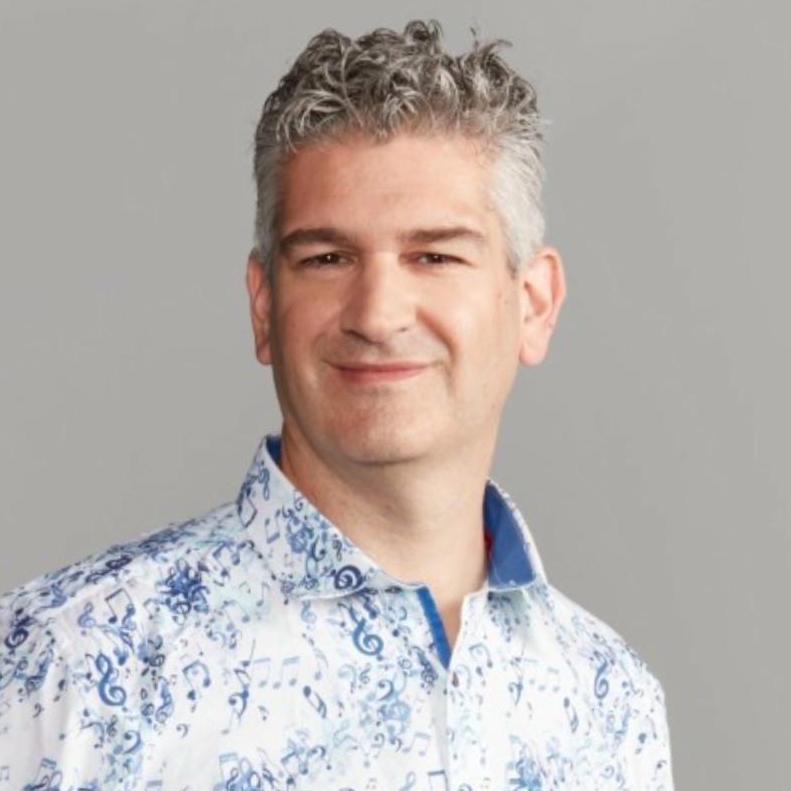
Henry Skelsey Vice President of Product Marketing, Songtradr
Interviewed by Justin Cooke
Published

Henry Skelsey is Vice President of Product Marketing at Songtradr, the global music solutions provider serving businesses, agencies, rights holders, musicians, and fans. Founded ten years ago by musician and producer Paul Wilshire to help independent musicians manage their work in the digital age, Songtradr has grown through 11 acquisitions in eight years, including Massive Music, Big Sync Music, Resonance, Musicube (the German music-AI company), 7digital, and most recently Bandcamp. Skelsey's career runs through Walmart China launching Sam's Club e-commerce, management consulting, and a series of B2B and B2C tech growth and marketing roles before joining Songtradr just under two years ago. In this conversation he sets out how the team in London designed the TikTok sound (almost certainly the most-heard sound in human history), the Music IQ research-to-product path he uses to turn bespoke client work into scalable offerings, the brand-equity discipline of acquiring infrastructure businesses like 7digital, and why curiosity is the single quality he hires for above all others.
The TikTok sound, the founder, and the mission
For people unfamiliar with the business, what does Songtradr do?
Songtradr is a music solutions provider for businesses, agencies, rights holders, musicians, and fans. Whatever music problem you have, whether choosing the right song for a holiday campaign, composing a sonic logo, understanding your sonic brand identity, or capturing your sonic essence as it's exposed to your customers, we are the partner. On the rights-holder and musician side, we help them capture the value of their rights and make sure they are paid appropriately and that their music is being marketed correctly to the world.
The scale of the work today.
We work with the largest brands in the world. The example I keep using: we designed the TikTok sound. The sound end of every TikTok video came from us. Our team in London worked very closely with the TikTok team to capture their essence, and that's now, I believe, the most-heard sound in human history.
The path to where Songtradr is.
Paul Wilshire, our founder, is a very successful musician and music producer. The original thesis was helping independent musicians manage their work in the new digital age. The mission has grown into maximising the value of music for all. We've made 11 acquisitions in eight years across the music space: Massive Music in created services, Big Sync Music, Resonance in Australia, Musicube the German music-AI company, 7digital, and Bandcamp almost exactly a year ago. Bandcamp is the world's leading e-commerce marketplace for independent musicians, their music, and their merchandise. Our goal there is to help independent musicians achieve the career with their music they want to achieve.
From bespoke research to scalable product: the Music IQ path
You came in 18 months ago to simplify the proposition. Where did you start?
When I joined, we had eight brands in market. That's a lot to manage, with overlapping product lines and overlapping identities. The discipline since has been how to bring those together, simplify, and clarify to the market, particularly as we've continued to make acquisitions, what we do and how we serve customers best, and how every acquisition is additive to the overall mission.
The honest version: we haven't got it completely right yet. We're working on it. Direct, purposeful communication with our customers and with the market has been the most effective. We start every conversation by listening. We make sure salespeople, executives, and marketers are physically in front of potential customers as much as possible, positioned to ask the right questions and understand what that customer needs. We tailor from there.
The product-marketer's tension, and the way through it.
A fully customised solution for every client is a product marketer's nightmare. It's hard to replicate and scale, and replication and scale is the bread and butter of growth marketing. Once we've had enough successful engagements (and we now have), we look for the parallels and the patterns and productise.
An example: Music IQ.
We've had a research team running for years that does a study for every client to understand their historic music use and how that use has translated into a sonic brand identity in the marketplace. A great many brands haven't got it right. Some have. Some are being out-competed sonically. Once we have that data, we can tailor the offering: new sonic logo, new sonic strategy, custom-composed tracks. That work follows a fairly replicable path. So we've productised it into an off-the-shelf Music IQ offering with a set process, an operational team and model, predictable revenue and costs, a clear narrative for the market, and a place in the wider product line.
The 96% statistic and the Music of series
On the science behind sound's commercial impact.
The statistic every brand in our space comes back to is from a MasterCard study around the launch of their sonic logo about ten years ago: brands that use brand-aligned music consistently in their marketing are 96% more likely to be remembered than brands that don't. Building from that, we've started launching our Music of series, research pieces on music use by brands in various industries: Music of Beauty, Music of Beer, most recently Music of Sports Apparel, looking across Nike, Adidas, Under Armour, the advertising, the music used, how it has performed with audiences, and whether the brand has a consistent music identity and consistent music use supporting it. The findings can surprise people; the brands assumed to be the best at this aren't always the ones doing it best, because music has been such an afterthought for so long. Music and sound is often the last thing thought about in an advertising campaign. We argue it should be the first, because that's where the most powerful emotional connection to a brand is built.
Product marketing as the translation layer, and the curiosity niggle
On where product marketing sits.
Product marketing is a relatively newly defined field; the term has only really been around for a handful of years, although the function has always existed. We sit between the sales team and the product team as a translation layer between the technical product managers who really understand what the features are and why, and the sales team that fundamentally doesn't have time to go to that level of detail. We help product craft the narrative, the messaging, the material. We work with sales to understand market response and bring it back to product to inform the roadmap.
On hiring.
Curiosity. I want people with an aggressive curiosity to understand why certain things happened. A click-through rate on a recent email campaign was above benchmark, above goals: fantastic win. I want that to niggle at the back of their brain enough that they go and dig in. What happened? Why did this happen? What are the pieces that went into this that made our customers or potential customers react this way? That kind of independent investigation is the difference between someone executing and someone learning.
The mistakes-allowed culture, and the Songtradr testing problem
On embedding the culture.
Start with leadership willingness to allow mistakes. Experimentation does not work without the willingness to make them, learn, and keep going. Leadership has to be aggressive in stating we will run experiments that don't work, and that's just as important as the ones that do. Be credible in saying it. That makes people comfortable going out and learning.
Next, make sure people are equipped with the understanding of where it's worth testing and where it isn't, which means measuring the right metrics. Teaching to the test is the US term: you always optimise toward what you measure, so the metrics being measured have to be the ones that genuinely drive the business. In a lot of cases, the first experiment you run is whether your metrics are set up correctly.
An example of the experimentation work.
None of our products are static. Everything has sound or music attached, and it's almost always attached to moving content (with the exception of in-store radio). The challenge is capturing that motion and that visual aesthetic for a product that, by the nature of the unit being a single asset, isn't itself moving. We've tested landing pages, social media content, websites, emails, looking at what gets the message across that yes, this isn't an inherently engaging unit, but we want you to turn the sound on, and we want you to understand what we're trying to tell you. Very complex; we don't have it right yet. We're getting closer with every experiment.
On 7digital, and the post-acquisition org question
A specific acquisition discipline.
When we acquire a company like 7digital (one of the originals in digital music infrastructure), our job is not to destroy the brand equity and the trust they have built. If you walk through a mall or use a streaming platform or are on a social media outlet, the music has probably come through 7digital's pipes. They underpin the digital music space. The most important thing for an infrastructure company is that it works. At whatever scale, it has to work how they say it's going to work, report accurately, do that safely and compliantly, and maintain trust.
So when we bring 7digital into the wider Songtradr brand, the integration forces an evolution on both sides. The wider Songtradr brand and the other portfolio brands have to incorporate that level of trust. The 7digital brand evolves into a position where it benefits from the expertise of the other Songtradr brands, opening their services up to existing 7digital clients while strengthening 7digital's own technology. Songtradr gets a halo from the inherited trust.
On integration.
Organisational structure has been studied endlessly and nobody has truly figured it out. When people come into Songtradr through an acquisition, we look at what they were doing previously, but more importantly at their skill set, their work, and their interests. If someone says I've been doing this for years but it has never been my passion, I'd love to go back into the part of marketing I started my career in, that's an important signal. After an acquisition, you want institutional knowledge to stay, and you want those people to be engaged and excited about the new opportunity.
The marriage of organisational need and individual want is where culture lands. Culture is never static when you acquire a company. There are new inputs, it evolves, and being deliberate about where the culture goes is the most important part of integration. There is no box that says reorganise the marketing function this way. A great deal of post-acquisition trouble comes from believing there is one.
The Bandcamp question, AI, and where this is going
On AI in the business.
Musicube, the German music AI we acquired, ingests digital tracks, breaks each into four-second segments, and analyses each segment against an enormous number of data points (PhD-level music data points like genre, instrumentation, vocalist gender). That unlocks a new level of understanding of every track. We classify every piece of music against the algorithm, with full rights and permission, which then enables a level of discovery and search that hasn't existed before. There are several hundred million pieces of music digitised; searching across them all has been almost impossible. With the AI, instead of going back to the same 15 tracks, the brand has access to a far wider body of music that may perform better, and the artists who would otherwise be buried under the mountain of content (typically from underrepresented groups) get a chance to be discovered.
On rights, and on Bandcamp.
Everything we do with AI has to be with the full permission and support of rights holders. When we ingest music, we do it after we have the permission of the rights holders. The big fear when we acquired Bandcamp was this is going to be training data for your AI. That is not the case. The opportunity is to give Bandcamp musicians choice. If someone wants to pay for the use of a track, we'll help manage the transaction, protect the rights, and ensure fair compensation. It will never be an obligation. It will always be a choice that the musician makes with full knowledge of what they are agreeing to.
On 2044.
AI will transform marketing. The specific path is unknown. There will be more data and better systems for analysing it. Whether the decisions are made by humans or by AI is a mixture I expect to land somewhere in between. The fundamentals don't change. Marketing and sales are about human empathy. You're building an empathetic connection with your customers, communicating that you understand their need, and that is why you're asking them to spend their valuable time on your product. Technology will try to get in the way of it, but it can't successfully remove the human connection between the brand and the customer.
The question for the board
If audio is the most heard but least planned brand asset, what share of our brand build owns a sonic identity versus relies on stock?