B2B and B2C is a false divide. People are people everywhere you look.
Linn Frost Co-Chief Executive Officer, The Social Element
Interviewed by John Horsley
Published
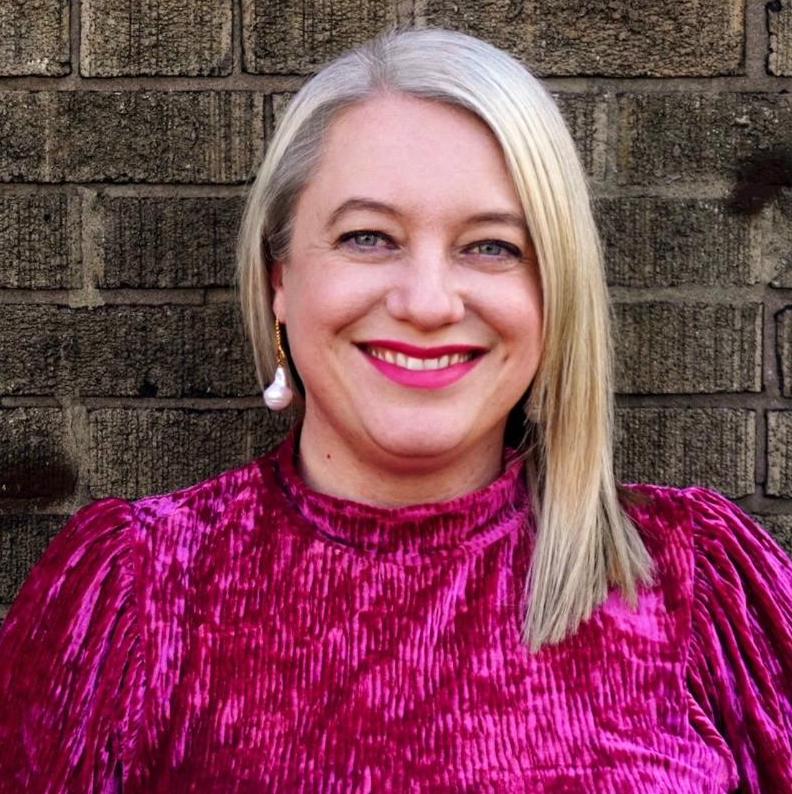
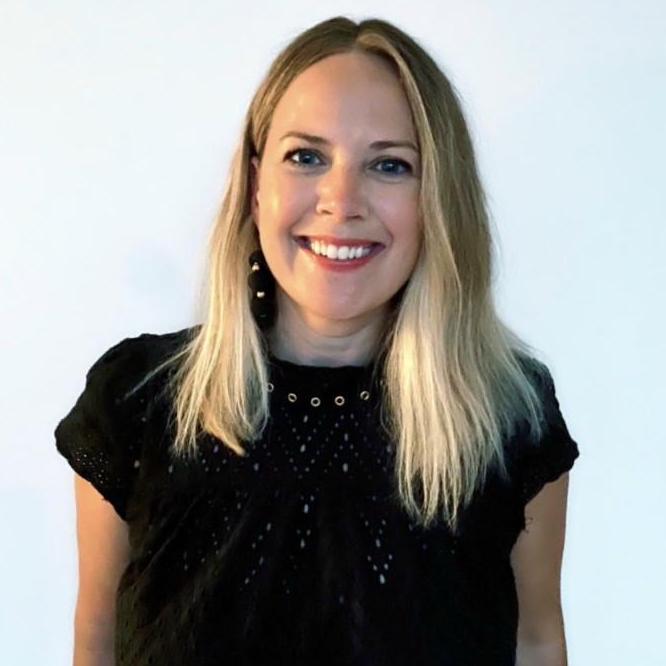
Linn Frost is Co-Chief Executive Officer of The Social Element, a 22-year-old social media agency founded by Tamara Littleton before Meta existed, originally to moderate the early online communities of the BBC and others. Frost trained at Ogilvy (working alongside Rory Sutherland), spent time at Y&R, ran a small creative agency, and held senior client-side roles at Virgin where she rebuilt the marketing function for Virgin Red. She joined The Social Element to add strategy and creative to what is now a full-service social agency, and during the conversation describes the launch of the firm's Make Social Better programme at Cannes. In this conversation she sets out the case for being a social brand rather than a brand on social, why the brand should be treated as a human with friends, why she runs blind hiring and asks candidates to deliver a mood board of their life, the social currency measurement framework her data lead is building, and why she'd take attitude over five years of relevant experience every time.
A 22-year-old social media agency, before social media
The Social Element pre-dates the platforms most people associate with the discipline. Where did it begin?
We're 22 years old. We started before Meta existed. Tamara Littleton was running community at the BBC, saw that online communities needed someone to moderate conversations, and saw the immense opportunity to engage there. She left to found the agency. We had the phone off the hook because no one else was doing it; the best lead generation we ever had was simply being the only people in the space.
Twenty-two years later, social media has exploded, and what we are seeing is people finally realising the immense power of it. With that power come two sides. Social mirrors society, but it magnifies it. The reason we exist is more relevant today than ever, and we launched Make Social Better at Cannes around exactly that question: how do we hold the platforms and the actors in social accountable for the responsibility they carry, and how do we equip brands to navigate it so they can really benefit from the tool that it is?
From a brand on social to a social brand
Your fundamental change in framing.
This isn't about a brand saying we want to be on social media. It's about a brand being social. With advertising in the old structure, you looked through a telescope at your audience and took a linear path: build the emotional TV ad, do the channels, repeat. That isn't the world any more. Consumers have a choice. They can choose what they consume, they're overloaded, and the brands that will prevail are the ones that have an actual relationship. Community is built around shared ideals, shared values, shared interests; think of fandom. Investing in your community means talking to them at every touchpoint, using social to have a genuine daily conversation. Social lets you be in your audience's lives every day, and you have to make sure that conversation is genuinely valuable.
On B2B versus B2C.
I don't separate the approaches. I've worked on both sides; marketing is marketing, people are people. The trap B2B falls into is the jargon. We instinctively slip into it. The question is what do you want to say to people, and how do you create something of value for them.
The diagnostic Frost uses with every client, and listening at the dinner table
A test she runs in every session.
We ask people tell us who you follow and why. Don't say a brand, because people don't actively choose to follow a brand. You see the richness of who people choose to follow: humour, inspiration. Then we say, now think about how you're going to talk as a brand. And as soon as they do that, everything changes. They become human and multifaceted, because the social media they use is full of humans.
On using social as research.
Think of your brand as a human. If I'm going to socialise, I'm a human being. I have friends. Who are my friends? Which brands are my friends? What do I talk about? You create a playbook of who you are, not a generic persona on a page. Then you go and listen. For Adobe, we love people that have imaginations, so what other brands spark imagination? Those brands are at your dinner table. Listen to the conversations their audiences are having. You're meeting humans similar to you, listening to the things you've decided you'd be talking about. I like chocolate ice cream, so I'm going to go find other people talking about chocolate ice cream. The gold is when you have conversations where you aren't mentioning your brand and the audience does.
Make Social Better, and the case for paying it forward
On running The Social Element's own community.
I hate my inbox being cluttered, and I cannot bear stuff being thrown at me for no reason. So Make Social Better is a community, not a sales channel. The only criteria for joining is that you believe social can be better. We chose one channel (Instagram), because that is always our advice: if you're starting from scratch with limited resources, don't try to do it everywhere. We do a simple weekly round-up of what brands are doing well and what's new, in the platform's native format. The email to the group said we will not bombard you, follow the Instagram, you'll find what you need there. The principle is mindfulness of people's time. If they're truly interested, it's our job to make the community engaging and the content valuable.
On business development.
The best way to build the agency has been having a reason for people to talk to us beyond buying us. A taster workshop. An event. The Cannes panel we ran was on what matters to us, Make Social Better. We picked people who were interesting for the panel, not people we wanted to sell to. If you show up and create an emotion and a compelling story, people will tap you up when the time is right. You don't have to push; you'll only put them off.
The principle is paying it forward. You put yourself out in the world, do useful, valuable things for others, and shouldn't expect anything in return. It normally comes back tenfold at the point you don't expect it. The criteria for everything we do: we inspire, we add value, the participant walks away with something of value. We run a Genuine Human podcast to hear people's stories, and a Genuine Human Dinner to bring people around the table. At no point do we sell. That's a track record people remember 18 months later, when they need an agency.
Social currency: the measurement framework
On measurement.
Our data and insight lead, Victoria, calls herself Sexy Science, because she loves data. The framework we're building says social brands will be more valuable than non-social brands. So we measure your social currency. We set strict criteria to evaluate where you are when you meet us, and then we measure against the same criteria over time, so we can demonstrate the change in social value from one period to the next. You have to commit to the baseline measurement to make it work.
Victoria calls social media the world's largest focus group. The richness of data and insight is enormous; the discipline is being set up well to use it. Social isn't fast or cheap. Measurement isn't fast or cheap. You have to invest.
It's a bit like brand econometrics. Brands tell themselves they can't afford it. If you do it, it's worth its weight in gold. The false economy is to spend the same sixty thousand on activity that won't be measurable. Pay for the measurement, do the activity, prove the value.
Blind hiring, the life mood-board, and attitude over experience
On hiring.
We do blind hiring. People apply without education filtering. We choose people without filtering by a fixed set of criteria. If you gave me someone with five years' experience in the same role I'm hiring for, or someone with an amazing attitude and determination, I would choose the attitude every time. You cannot teach attitude. Someone arriving with the right attitude who wants to work hard will be a sponge, and you can teach and nurture them. Without that attitude there isn't much to do.
We've also started asking candidates to deliver a mood board of their life. Not a strategy. Tell us your story in mood board form. Some focus on passions, others mix passion and work. The colours, the imagery, the choices, all of it is a soft portrait. There's no right or wrong answer. It's a values-based way to understand whether we'll gel. Everything in life is values-based; if you're valued and the values align, you can't really go wrong.
AI, the cocktail of tools, and what she'd change about the industry
On AI.
AI is going to transform the engagement and moderation core of our business. AI tools are being trained to be empathetic; the reason human moderation has always been required is that AI didn't understand nuance and sarcasm. The exciting question is how to combine the best technology with the best humans. There is no single tool that does all of social. We use what we call a cocktail of tools, which is expensive. The work we're doing now is identifying which combination gives us the right information.
On what excites her about the industry.
I came in to solve problems through creativity. That hasn't changed. The campaigns that move me are the ones with incredibly good creative work coming from an amazing strategy and an insight, that make you feel an emotion, that solve a business problem. The risk is that the industry goes into a formulaic place. Social pulled us back to a time when we created fun content people enjoyed and remembered. In the 80s I used to play a game with my brother guessing who the advert was by; we enjoyed it and remembered it and found out who the brand was at the end. That's far more interesting than having to show the logo in the first three seconds.
On what she'd like to see change.
I'd love us to stop fighting so hard for the marketing budget. Marketing has always had to justify the spend; the product team rarely has to do the same thing. It would be wonderful if a business said I can't operate without the marketing team, I want to give them as much money as possible, instead of marketing having to keep on fighting and proving. So that we could just go and do some really fun, whimsical work because the business knew it would create value.
The dream brief, and the advice
On the brands she'd want to work with.
The brands that really value your expertise. I try to be that client too. Then on the brief itself: legacy brands that don't yet realise the beauty of being a social brand. W.H. Smith is the recurring example. The brands that don't have a social relationship are going to be irrelevant. The reason I joined Virgin was the brief: Reignite the Virgin Brand. There is no better brief. I want a meaty problem we can come and solve.
On the way in.
In an ideal world you'd land on a grad scheme on either side, but they're hard to get on. I went in via a PA role at Ogilvy. I was dyslexic; I would never have made it through their grad-scheme filter, and I'm personality-based, so my CV alone wouldn't get me a job today. So my route was sheer determination. Make friends with HR, badger them, work the pitches, get exposed to the best talent. Rory Sutherland was my planner. James Murphy was my head of account management. I spent two years sitting in a room watching and listening before I really said anything. There's no better learning. If you can get into the agency considered to be doing the best work, that's the foot in the door.
On the resources.
The IPA Effectiveness Awards. I used them for every interview prep. Brilliant, Contagious, IPA, Cannes Lions. Understand how people have solved problems through creativity. The Effectiveness papers especially, because they include the measurement piece. If you're client-side or agency-side, you need to understand how to sell creative work to a CFO so you can do really cool stuff. Even if you've been in the industry for years, go back and look at award-winning work and understand why it won.
The question for the board
If B2B and B2C is a false divide because people are people, what share of our work speaks as a human versus as a corporate voice?