Sustainable advertising is both an ethical choice and a commercial one.
Joseph Worswick VP EMEA & Global Head of Sustainability, OpenX
Interviewed by John Horsley
Published
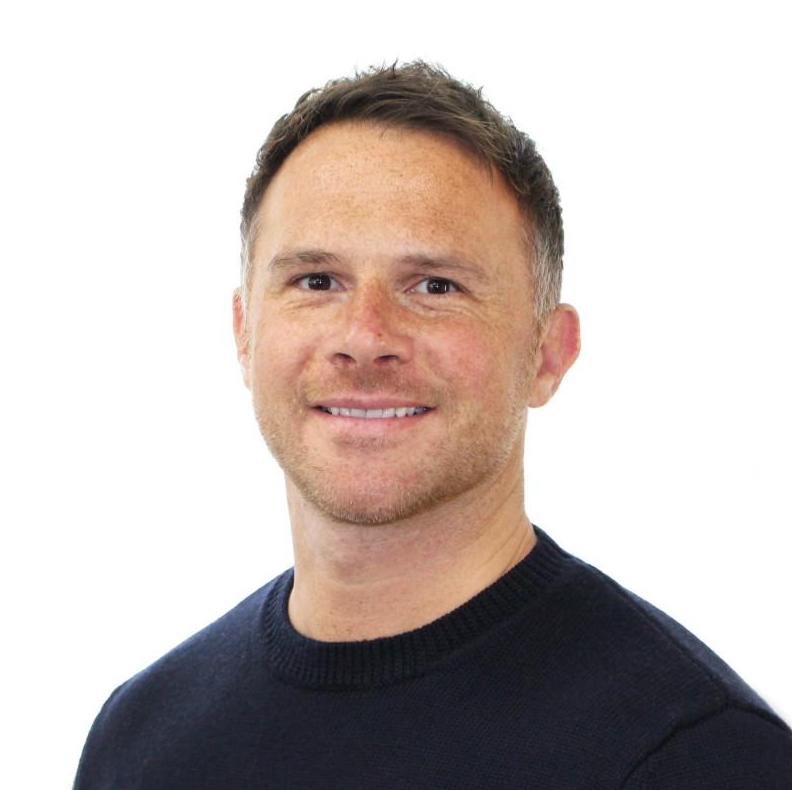
Joseph Worswick is Vice President EMEA and Global Head of Sustainability at OpenX, the global omnichannel SSP working with buyers, supply, demand-side platforms, and data partners across the programmatic supply chain. Worswick wears two hats: leading the EMEA buyer development team (and some global commercial relationships) and spearheading sustainability globally, both internally as a working group across the company and externally through education of the wider market. Before OpenX he spent over a decade at MiQ, including four years living in the US launching the West Coast business, and started his career at Unanimis. In this conversation he sets out the OpenX decisions that have built the SSP's trust position (no resellers in over five years, MFA eradicated from the exchange, carbon-neutral certification), the lead-measures-over-lag-measures discipline he carries with him, the corporate offsite in Nashville where the team built bikes for a local charity rather than going to a closing dinner, and the three-list exercise his uncle put him through before he chose to join OpenX.
The role, and four client sets at the intersection of programmatic
Where Worswick sits.
OpenX is a global omnichannel SSP. We work with both the buy side and the supply side on programmatic supply needs. My role wears two hats. I'm VP of EMEA, managing the buyer-development team that engages with brands and agencies on supply needs, and I look after some of our global commercial relationships. The second hat is heading up sustainability globally, both internally as a working group on everything we do as a corporate entity to be as sustainable as possible, and externally educating the market on what brands could be doing in their businesses and in their advertising.
On the client set.
OpenX sits at the intersection of four types of customer. Publishers who we help monetise inventory. Agencies and brands my team works with on buy-side supply needs. DSPs (we work with over 180; I didn't know there were that many DSPs until I joined). And data partners we work with to enrich inventory with interesting and powerful data sources so brands can reach the right audience and publishers can monetise.
Third-party validation, no resellers, MFA eradication
On why third-party validation matters.
What OpenX strives to do is do things the right way. When we talk about partnerships, we work with third-party entities that can assess and validate what we do as a company. We're one of the founding partners with AdNet Zero on the sustainability work. We work closely with TAG on transparency. We work with Jounce on the industry-wide work to eliminate MFA. Best-of-breed technologies and partners for the business, and partners who can verify that what we say is true.
On the premium-supply discipline.
Over five years ago we stopped onboarding resellers and made it a number-one business priority to have direct connections with publishers, so advertisers can be sure they're getting as direct an access to inventory as possible.
The MFA work has been similarly disciplined. MFA (Made For Advertising) is a slightly subjective term, but it refers to sites intentionally created purely for monetisation. With the growth of AI, MFA techniques are scaling. In the last couple of years we've completely eradicated MFA from our exchange; public reports rank us very well on the metric. The discipline is built in two layers. The traffic-quality team runs rigorous human-level and automated checks whenever a new supply source is onboarded, categorising the supply before it goes live. In real time, our own technology continually scrapes the entire exchange looking for trend signals that suggest MFA, with all MFA excluded by default from inventory packages we build for buyers; it's the buyer's choice if they want to accept any of it back in.
The two reactions to sustainability, and premiumness through curation
On the honest assessment.
Sustainability has been around outside the advertising industry for a long time and is a topic humans need to consider. Inside the industry, the two reactions are familiar. The first is lean in: someone interested because of personal values or because clients are asking for action. The second is the sceptic. That isn't a bad thing. It often means a bad experience, an incomplete understanding, or a sense that someone has brought the topic in for the wrong reason and they need to learn more.
Education is genuinely important on that side. There's a lot more we can be doing as an industry. The next two years are going to be important for legislation, which will trickle into advertising.
On the trend.
I moved to OpenX to get closer to the supply side. There is a great amount of data and insight on that side that brands would value if they could use it appropriately. Curation has come up a lot recently, and the term risks falling into buzzword territory if not articulated properly. The interesting parts of curation: using data to genuinely understand whether this is the right supply for the brand's needs, and (in the SPO bracket) whether the way the inventory is being bought is the right way for the brand. The same site on different aliases might require a different strategy. In a different region the same site might require a different strategy again.
AI is the natural pairing. It isn't new, but its use cases are becoming super-practical and very accessible. The plethora of data available, what we can do with it, automation of workflows, reliance on machines rather than humans where appropriate for reliability and scale: combining those two worlds with premiumness, quality, and transparency is what's really interesting for us.
Lead measures, control your controllables, and the MIQ principle
The framework Worswick carries with him.
A great boss in the US (during the four years I spent there launching our West Coast business) introduced me to lead and lag measures. A lag measure is a result. Did I hit my number at the end of the quarter? You don't know that until the quarter is over; it's a look-back. The thing I can control is the lead measure. How many meetings am I having, how many briefs am I getting, what's my win rate, which products are selling.
The second part is control your controllables. I can't control the end result. I can control everything leading up to it. I always say to the team: can you control this? If not, don't worry about it. Move on. Focus on the things you can control, which in most instances are lead measures.
On culture, and the principle that stayed with him.
I started at Unanimis as a graduate. I went on to spend over a decade at MiQ. One thing the co-founders Lee and G would say is look after your people and then your people will look after your clients. They lived and breathed it. I've always tried to take that into any form of work. At OpenX the people are very smart and they genuinely care about each other.
Nashville, bikes for a local charity, and care over technical brilliance
A specific story.
Last week we had a commercial offsite in Nashville (which is partly why I look a little tired today, jet lag). Day and a half of content (tools and solutions to take back). Then a corporate bonding exercise unlike any I've done. A local charity came in. We split into 15 groups. We built bikes. The bikes were donated to local families the charity supports, for their kids. Every person I spoke to walked away pumped. The content of the offsite is one thing; you want to believe in the product and the people. To know the company invested in flying us to a city and spending a quarter of the time on something for a local community is genuinely something.
Every time I walk away from these offsites I've built relationships with teams in other countries I wouldn't otherwise have had. The relationships then turn into work together. Use the example at the next offsite, and demonstrate why building cross-team relationships matters.
On hiring.
You can learn a lot about our industry; you can't learn the attitude to want to learn and to care. If you go to a client and try to sell them the product you've been taught to sell, you probably won't do very well. If you go in intrigued, learn about their business, bring that back to the company, have conversations about what we can do to solve their challenge, and follow up because you genuinely care about delivering, that goes miles further than technical brilliance. You can have someone technically amazing; care can't be taught the same way.
On failure as a learning discipline.
I'd prefer the team to hold their hands up and say that didn't work, I'm going to try something different. Fail fast. Try not to do it many times. Learn the first time, maybe the second. I personally learned more from failure than from success. I go to sleep at night thinking about the two, three, four, five, ten percent I could have done better that day, rather than the sixty or seventy that went well, then adopt a different strategy and pivot.
The three-list exercise, and the career advice
On career choices.
When I was assessing different roles before coming to OpenX, my uncle made me write three lists. First, what you're good at, irrelevant of whether you like it. Second, what you like and are passionate about. Third, factors outside of work that, if they were part of the work environment, would be a 2x, 3x, 4x increase in happiness. The exercise was to find an opportunity that ticked all three. At OpenX I get to deploy the skills I've used for almost two decades, I'm focused on technology and people which I love, and the company's culture fits where I am in my life with a young daughter.
On the next generation.
Be curious. The second piece: work across as broad a spectrum of the industry as possible and find out what part of it excites you, where you can drive value, and focus there.
The third piece is don't be scared of failure. A silly saying I had at university: you don't learn from what you haven't done, you learn from what you have done, whether it's good or bad. Put yourself in those situations and you'll figure it out.
The fourth, which keeps you sharp: be out in market as much as possible. People get senior and get internal and lose perspective. The industry moves quickly. Talk to friends at competitors, talk to clients, talk to people outside our direct industry (I have friends in finance who are interested in our industry; their lens on it is genuinely useful).
The question for the board
If sustainable advertising is both ethical and commercial, what share of media spend measures carbon impact versus only reach?