In a crowded B2B market, storytelling is the differentiator nobody can copy.
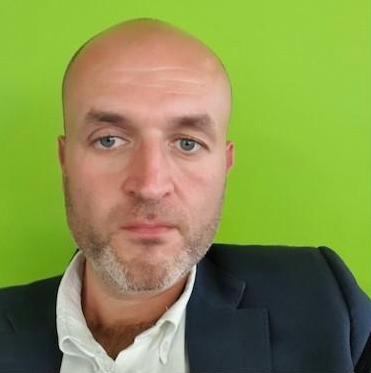
Maria Scheglakova Marketing Director EMEA, PubMatic
Interviewed by Justin Cooke
Published

Maria Scheglakova is Marketing Director EMEA at PubMatic, the independent ad-tech company building infrastructure for digital media trading between buyers and publishers. Her 18-year career has run from luxury alcohol brand marketing in another country, through London-based media agencies serving clients including Paramount Pictures, London Business School, and HSBC, into independent consultancy work across fashion-tech and fintech, and now nine years in ad-tech marketing leadership. In this conversation she sets out why she doesn't believe in the funnel and prefers a circular model, why eighty-page research papers are the wrong format for the question they are trying to answer, the case for marketing teams that learn the sales pitch as well as build the comms around it, and what ruthless transparency looks like inside a multifunctional team that runs across more than thirty markets.
A B2C beginning and a B2B insight: it's all just marketing
Your career has gone B2C to B2B. What has the move told you about the relationship between them?
I bring a lot of B2C experience into B2B. The gulf between them is much smaller than people think. People still imagine B2B marketers sending gazillions of personalised emails from Salesforce all day. That's not what it is. There is so much connectivity between B2C and B2B. The problems are the same. You're trying to find the unresolved, urgent, unworkable pain a customer has, and address it. Marketing in B2B, like marketing in B2C, needs a story to work for the long term. Then you align that with the commercial team to drive the tactical work: sales enablement, account-based marketing campaigns, events, customer engagement, continuous PR, content tailored to each customer group.
Circular marketing, not the funnel
You don't really believe in the funnel.
I think of marketing as a circle, not a funnel. Channels each have a role to play, and the discipline is the circularity. You find new customers at industry events. You build the conversation through email, social, content. The model is a sustainable cycle in which each channel feeds the next and the team is always iterating against what it's learned.
An analogy you keep coming back to.
I'm not a football fan, but my son plays football and cricket, and I see similarities in how we play marketing. There's a form of football called tiki-taka, named for the continuous passing, where the team plays as one and the goal is shared. We pass ideas to each other and build on top of them. None of us is the same. Different experiences, ethnicities, languages, levels of seniority. The diversity is the asset. The discipline is the passing.
What the team plays for: ruthless transparency and the brave brief
On the qualities you hire for.
Creativity, braveness, honesty, and kindness. The kindness matters because we learn as much from failures as from wins, and it's important to recognise what we could be doing better without that recognition becoming a punishment. We sit down together after a piece of significant work and ask what we'd do differently next time. Sometimes I'll ask the team straight: if you were me, what would you do? How would you run this team? How would you work with the commercial team? I did the same a few months ago with what would you do if you were Chief Revenue Officer of PubMatic? Some great ideas come from the people who have just joined the business. You don't need to have been somewhere ten or fifteen years to make a solid recommendation. That openness is what makes the work move.
A specific example.
One of the team came out of a brainstorm and said it would be great for us to do sales training. I know we don't sell every day, but if we understand how the sales team pitches, we can be much better with our marketing recommendations. So we're moving from being a comms support team for commercial to being a genuine commercial partner. That came out of a brainstorm that ran into an ABBA concert evening and a few holograms.
Structure: flat, multifunctional, distributed
On the team structure.
The team is flat and multifunctional. We don't have an events person, a product marketing person, and a content person. We can all do all of it. That creates fluidity but it also lets every team member contribute ideas across the brief. People are distributed: Milan for Southern Europe, Hamburg for Central and Northern Europe, London for UK and MENA. The team runs marketing for more than thirty markets, which makes understanding the local culture and customer structure essential. The product team sits in the US, which means we collaborate through task forces and structured comms; we're slightly remote from them, but we benefit from their hackathons and the innovation that comes through them.
Where AI is, and what excites her more
On AI.
I should say AI but I don't quite believe in it as the answer. There's exciting tech, and the team uses a range of AI to support efficiency. What I'm more excited by is human creativity and the ability to apply those technologies in service of marketing that means something. AI lets us in principle personalise content to a hundred customers individually, but it also lets us create overload. So the discipline is relevance. The future of marketing will be more about creativity and craftsmanship than about technology in its own right. Technology gives us the insights to iterate and build new stories for new customers; the human work is what makes those stories worth telling.
On where storytelling earns its keep in B2B specifically.
In B2B, in ad tech especially, the competitive set sits close together. Product propositions can look very similar. Marketing is the secret sauce that differentiates. Storytelling is the base of the work.
Effectiveness, sustainability, and the metrics that don't tell the whole story
On measurement.
Effectiveness is different for the CTO than it is for the CEO or the CMO. The team is business-outcome focused. We want to be part of whatever the company sets out to do, and we work alongside the commercial team rather than separately from them. We're constantly iterating, looking at the marketing strategies and the business outcomes together. A recent event gathered a group of high-profile clients and led directly to two commercial deals. That's the closed loop. Beyond that, the discipline is resource optimisation and avoiding duplication. If you run a remote or hybrid team where everyone has an individual function, the risk is duplication. The corrective is what I call ruthless transparency: share everything with each other, build on top of each other's ideas rather than alongside them.
Sustainability has become part of how the team measures itself.
We started looking into sustainable marketing a couple of years ago. We began with the operational side and then extended into the experiences we deliver, the gifts and merchandise we send out, how we buy and deliver, how much of our marketing is digital versus offline. All those small choices add up, and sustainability has become part of the effectiveness measurement.
Content: the eighty-page problem
On content design.
The first question is who we are creating it for and what's in it for them. I spoke recently to a company that said they had incredible content. I went to the site and found a stack of research papers, each about eighty pages. I love reading; there's only so much I will take from eighty pages. The question to ask is who is the audience and what do I want them to take away. If the takeaway is three or four bullet points, you don't need eighty pages. The risk with AI is everyone replicating each other and producing identical content. Being different is important. We focus on relevance: how-to guides, future-of-innovation pieces, the questions our customers want answered and can't get answered elsewhere. The content that earns the highest engagement is the content that solves the questions people couldn't otherwise answer.
On social.
LinkedIn is a powerful tool. You can have an excellent piece of content on the website, promoted through a newsletter, and not really know if it's been read. A snippet of it on social, shared continuously, drives engagement back to the longer piece.
Selling to the user, and selling to the buyer who pays
On the buying committee.
You have to market to multiple layers. The user, the person using your platform every day, cares about functionality and the work the platform does. The senior decision-maker, the person paying the bill, may not care about the user-interface detail; they care about the vision, where the business is going, and the gains and risks of joining you or not. It's all about gains and risks. What do I gain? What's my risk if I don't? The marketing for each is different even when the product is the same.
What's next, and the advice she'd give
On where this is going.
Personalisation continues, and the hope is we focus on personalisation with meaning rather than overwhelming people with it. There will be many more technologies to choose from. My son will be using audio formats more than visual digital screens by the time he's sixteen, and the opportunity for B2B in audio is interesting; right now most of it is on the consumer side. Sustainability across the full cycle of marketing will be more important. And the human craftsmanship is still the most exciting part of the work; the advertising and media industries contribute significantly to the broader economy, and remembering why you are in the industry is part of why the big industry moments exist.
On the advice for someone starting out.
Ask questions. No question is too small or too big. I always say just ask. You may think senior people know it all; we don't. Experiment. Test. Iterate. Just go for it. Bring your powerhouse to the game, whatever it is.
The question for the board
If storytelling is the only differentiator in a crowded B2B market, what share of our content tells a story versus repeats the category language?