Spotify Wrapped started as an email. That is what personalisation at scale looks like.
Kirsty Fraser Senior Director International and Lifecycle Marketing, Movable Ink
Interviewed by Michael Nutley
Published
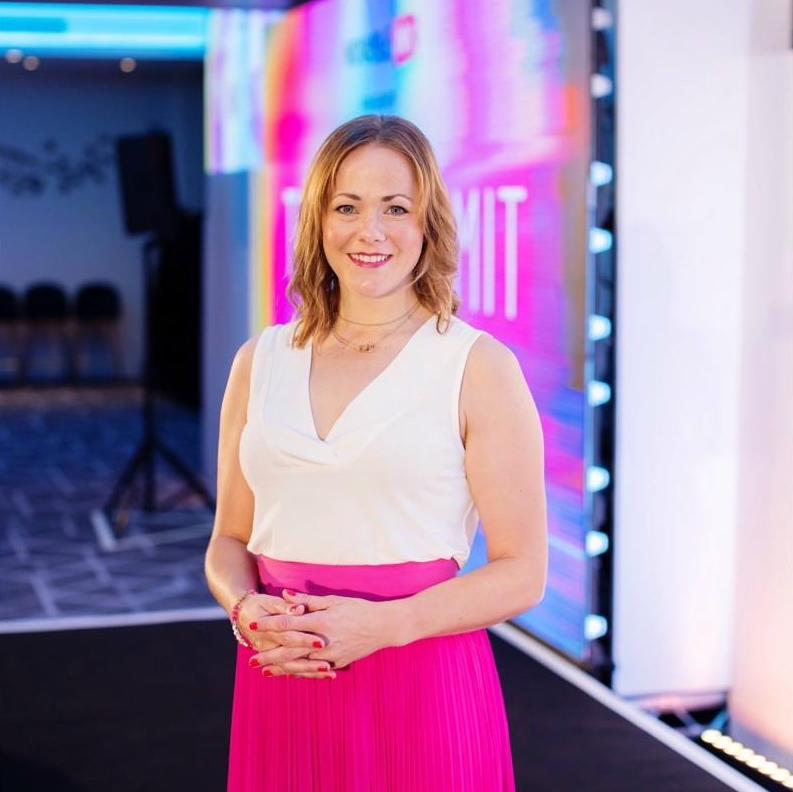
Kirsty Fraser is Senior Director of International and Lifecycle Marketing at Movable Ink, the personalisation platform that activates first-party data inside emails and mobile experiences for global enterprise customers including Tesco, Boots, Estée Lauder, and Accor. She has spent more than fifteen years in B2B marketing, with a particular focus on growing US-based SaaS companies into European, Australian, and Asian markets. She has been at Movable Ink for six years. In this conversation she sets out the truth behind Spotify Wrapped (it started life as a Movable Ink email); why B2B marketing has finally remembered that the buyer is a human; why she has spent eight months on data foundations before being able to prove the impact of the work; and why client advocates have become the most valuable channel in markets where the brand is not yet established.
The truth behind Spotify Wrapped
On what Movable Ink really does.
We are very much focused on personalisation, and we activate our clients' data to create personalised content across their customer experiences. The bulk of the work is personalising the creative inside emails and across mobile, using AI and automation. We work with global enterprise companies, primarily across retail, travel, financial services, and beauty. Tesco, Boots, Estée Lauder, Accor are typical scale.
Spotify Wrapped started with us. It started in email, and the year-in-review we built grew bigger and bigger. We do that for many of our clients now. The discipline is making someone see, through their own data, how they engage with a brand and what they have delivered for that brand over the past year.
On starting with less data.
You use whatever data you have. If you only have the first name, you do name personalisation. Starbucks wrote the name on the coffee cup. Nice, simple, effective. You can pull contextual data: weather, location. If you are an airline customer about to fly somewhere, the email knows what the weather is going to be at the other end. If it is going to be sunny at the weekend, Tesco can move the message to barbecues.
You can start small and grow. We run polls to collect missing data: do you like shoes or boots? Then we serve content against the answer. Everyone has to start somewhere.
The value exchange
On the principle.
Why should I transact my personal information to you if you are not going to use it in a way that is relevant to me? The trust is built by showing you are going to collect the data and use it in a way that is relevant and timely. That is the value exchange. Without that, personalisation just becomes intrusion.
The buyer is a human
On the bigger picture in B2B.
B2B marketing used to have a stuffier image. We were very corporate, and we forgot there was a human at the end of the communication. The more I meet our clients, the more I realise they are just like me. We talk about marketing, and we also talk about getting Taylor Swift concert tickets. It is fine to be human in B2B marketing without being unprofessional. Humans buy from humans. They want to build a relationship and trust.
On the lifecycle marketing function.
In B2C, lifecycle is a common role. In B2B, it is much less so. We work with B2C clients every day, and I have the privilege of learning from some of the biggest, smartest marketers in the world. I wanted to build a team that genuinely looks at what the experience is for our prospects and clients, supporting them at every touchpoint.
We are early. We are focused on top of funnel right now because we already have a strong client programme in place. The aim is to understand the full path, from researching us when we do not know about the prospect, through to becoming a client, with marketing supporting at each step. Drinking our own Kool-Aid.
The eight-month data clean-up nobody talks about
On the foundation work nobody celebrates.
We are doing a big data clean-up. When I look at where we are in B2B, I think are we behind? You see new tools and brands doing new things. But when you talk to other B2B marketers, everyone is in the same position. Everyone is on the data project.
We are eight months into rebuilding our foundations, working closely with RevOps, the Salesforce team, sales, and the outbound team to understand their pain points. We are cleaning the data, then building out email nurtures that talk to each of the audiences inside our ICP. It has been frustrating because we have not been able to prove much of the impact yet, but it will land this year. AI conversations sometimes wave away the data question as if it happens over a weekend. It does not.
On engaging earlier in the buyer cycle.
No-one picks up the phone any more. When our BDRs say they have genuinely called a prospect, it is a big thing. So much research is done before any conversation. Whether the conversation arrives as an email or a website enquiry, getting in front of the buyer earlier is challenging.
There are tools we are exploring that show intent signals, but the discipline is knowing where to be present for buyers and communicating to them before they engage. The other channel that has come into its own is client advocacy. We make sure our clients are happy so they talk for us. Marketing is a small world. People move. The contact you are talking to now may not be the right fit, but if they had a great experience with our brand, they will think about us when they are at the next company with a budget.
On AI: from panic to grown-up conversation
On AI in marketing.
AI represents a huge opportunity. The conversation has moved on from last year. Last year was the panic, the AI-washing, brands saying we have AI in our tool because they wanted to be on the trend. This year is more grown-up. Marketers are taking a step back and being thoughtful about it. They are embracing the technology where it fits. You do not have to use it, but you do have to understand it.
I am using it mostly to clear the boring admin work: summarising meeting notes, drafting starting points for a blog or presentation I do not know how to begin. I call it banishing the blank. Give it some talking points, then write the piece myself. I certainly do not let AI write it.
The question for the board
If personalisation at scale starts with a moment people want, what share of our customer comms feels essential versus optional?