Social-first news built for the generation that grew up inside misinformation.
Lotte Jones Chief Commercial Officer, The News Movement
Interviewed by Justin Cooke
Published
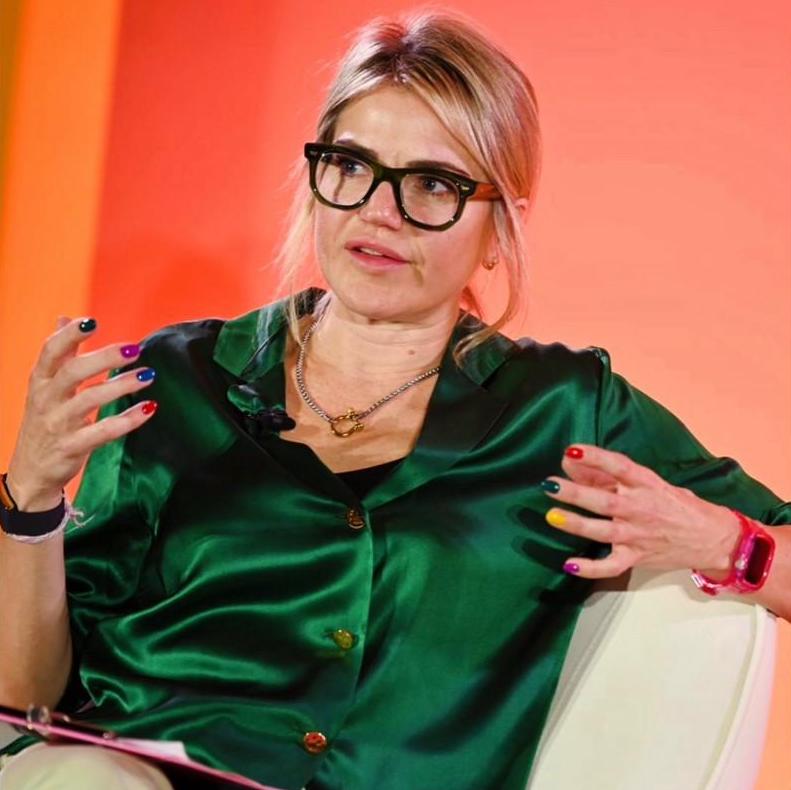
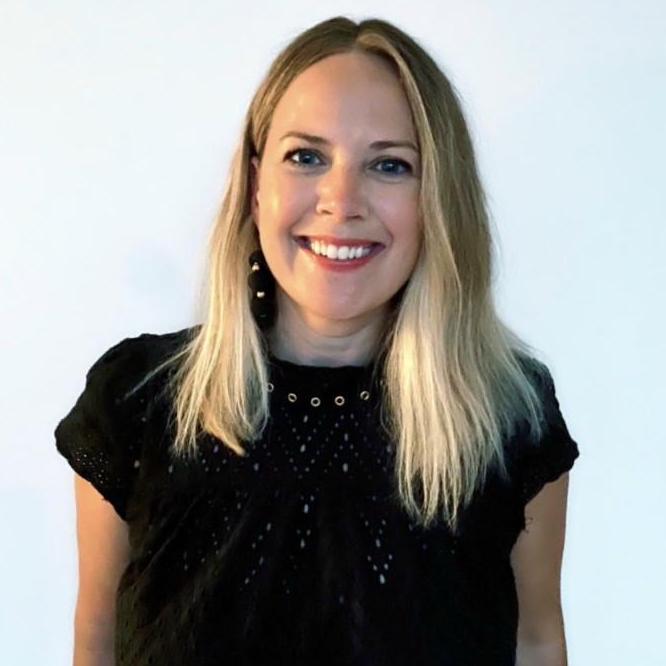
Lotte Jones is Chief Commercial Officer of The News Movement, the social-first news company founded to fuse the rigour of journalism with the immediacy of social, originally for a Gen Z audience and now reaching well beyond it. The business operates two newsrooms across London and New York under its TNM brand, and oversees The Recount, a US political feed. Jones grew up on the agency side, started in the third sector, ran corporate comms for many years, founded her own consumer agency, and sold it to Teneo in the US, where she advised C-suites on big reputational turnarounds before joining The News Movement. In this conversation she sets out the brand-partnership rather than subscription business model, why the team has moved from a single global movement toward community-led movements, why the AI tool the product team built has been nicknamed top story turtle, and why the church-and-state separation between editorial and commercial sides feels unnatural at the size she's running but matters anyway.
What The News Movement is, and how a story gets made
The proposition.
We're a social-first news company. Two newsrooms across London and New York for TNM, our predominant news brand. We also oversee The Recount, a political feed in the US with months to go before the election. We were founded out of frustration with the proliferation of misinformation online, and as a result wanted to fuse the rigour and the editorial craft of journalism with the energy and the genuinely exciting nature of social media to bring news to a new generation. The original focus was Gen Z. In a world where everyone overhears everything, we now have followers across age groups, well beyond the UK and US.
On the newsroom.
The newsrooms skew Gen Z. We hire many journalists straight out of journalism school, partly to recruit them while the craft is still strongly instilled in them, and partly because they bring the perspective of the audience we're trying to reach. There's an element of talking to the audience through themselves. We cover breaking news (Trump being shot), world politics, geopolitics, all the way through to demure trending online, with verticals on themes such as sex and relationships that are particularly pertinent to the audience. The newsroom skews slightly female-leaning.
Every morning, the team pitches ideas to the editor, schooled in research, fact-checking, and the impartiality required for our storytelling. The visible output is a path with the journalist. When Russia invaded Ukraine, we did a minute-long explainer that started by showing where Ukraine was on the map. We don't assume prior knowledge.
Distribution: platform-by-platform, not recycling, and differentiation from the Vice era
On distribution.
Every social platform: X, Instagram, TikTok particularly, YouTube. Just because we produce something for TikTok doesn't mean we recycle it onto Instagram and vice versa. YouTube is where we do longer-form documentaries; we recently released one about the drunk problem in Philadelphia that took months of preparation. That wouldn't work on Instagram, where things need to be snappy and creative.
Snap is a good example of a platform where we encourage our journalists to do the talking. Grace Weinstein at The Recount has a large Snap following. We can't take credit; it's her doing her thing and being allowed to be as creative and as herself as she can be. Behind-the-scenes footage at the DNC or RNC, meeting Trump supporters, outtakes. The immediacy of the dialogue she has with followers shapes how she shows up for news storytelling. We allow journalists the freedom to express themselves personally in those domains. When the same people show up under the auspices of The Recount, they work closely with Jessica Cohen, our editor, on craft, balance, and the non-partisan, fact-checked rigour that has to underpin political work. Despite looking spontaneous, there is enormous stage management before the creativity comes in.
Where The News Movement sits relative to the precursors and the legacy outlets.
Early Vice was delightfully feral, and the weirder and more wonderful the story the better, but it was largely inventing news alongside covering it. What we tend to do is hold a mirror up to the world our audience is navigating in their early to mid-twenties. There's a seriousness and a grounded nature to our storytelling that's probably more akin to traditional masthead journalism. The vernacular of news on social is changing: on the WSJ, Washington Post, and Guardian feeds, you increasingly see journalists telling stories rather than the static-tile-and-swipe format. We were one of the first to do that. Journalistic rigour is at the core.
The business model: brand partnerships, not subscriptions
On how the business runs.
The lazy logic for a news brand is to put up a subscription wall and hope for the best. Young people and the way social media is built don't lead to that outcome. So for us the model is creative brand storytelling that doesn't sell at the audience but enters a conversation with them.
A specific example: we worked with Telus, the largest mobile operator in Canada, known for a social-capitalism principle (old-money giving back to the communities they operate in). We worked with a Canadian creator who went to community initiatives and brought the stories to life in ways that didn't feel patronising; it didn't feel like dad at the disco, and the conversation was about community rather than selling network. Those are the stories we're built to tell.
On where we are going.
We're not ad-funded in the old sense. We're experimenting with micropayments as an alternative to subscriptions, and our B2C product launch in 2025 is a major focus, particularly now that audience figures are starting to substantiate it. To date, the model has been holding the hands of brands and businesses that want to tell powerful stories online. We also work with the platforms themselves; one major project last year with Snap trained creators in journalistic principles, then sent them out under our training to tell news stories on the platform.
Church-and-state separation, and what good hiring looks like
On structure.
The division between editorial and commercial exists for good reason: it prevents partiality. In a small intimate team, creating that separation is hard, almost unnatural. What we are achieving (I think) is a newsroom that can comfortably overhear what we're doing commercially without feeling biased, and a commercial team that's sensitive to the craft of journalism. The frustrations that exist in traditional media don't exist for us in the same way. Journalists and commercial colleagues work alongside each other as colleagues without the tension.
On the commercial side, I deliberately don't keep sales and marketing in fixed lanes. They cross-pollinate. My marketing and sales teams are here together; they co-produced our panel. They can speak each other's language. Just because you started in sales doesn't mean you can't end up a CMO and vice versa. The closer the two functions, the better.
On hiring journalists.
I defer to Becca Hudson, our Editor-in-Chief at TNM, and Jessica Cohen at The Recount on the specifics. What I observe is that a natural hunger for culture matters: news-hungry but culturally savvy, following the right people. Our journalists are as book-smart as they are street-smart. Bright and engaging, but also you'd want to go for a beer with them. That dichotomy is rare.
There's also an earnestness and seriousness with which they handle their work, particularly when starting a proper career. We've fostered a culture that respects that and has a lot of fun. There's a fluidity, freedom, and transparency in how we communicate business and editorial decisions that the team has told us feels supportive.
The skill side: attention to detail, the discipline of fact-checking, the awareness that a raised eyebrow can imply partisan bias. The hardest balance is the newsreader mentality with the face and energy of a creator. Striking that, and bringing the audience with you, is an element of performance that few people can hold together.
What three years has taught her, and the audience she didn't know to expect
On the bigger lesson she did not expect.
I came to this cold, and the thing I had never quite joined up is the role of preserving journalism in safeguarding democracy. We talk about brand safety in advertising; brands are spending less with media because they feel it's risky. As a result, media is suffering as an industry, and as media looks down the precipice of we have to innovate to survive, democracy is threatened because power is not being held to account. The rigour of journalism (the structure that needs to be applied for journalism to do its job) has been a huge eye-opener for me, watching it from inside.
On what she's learning about Gen Z.
There is genuine optimism. Despite the hopelessness of the narrative in the news I overhear, this generation has a can-do attitude (which sounds Enid Blyton, but it's the right phrase). Portfolio careers, side hustles, yeah, I'm going to do that. The world is available to them in a way I didn't grow up with; I didn't grow up with the internet at all.
They also suffer from a cultural perception that they are all hemp-wearing activists. That isn't the case. Many would like to shop with brands that do better for the world; many want to live more sustainably. On the flip side, they find it expensive and can only afford so much. So a lot of them can't. There are paradoxes within this generation that we rub up against, both as storytellers and as employers.
AI in the newsroom: top story turtle, and why it isn't replacing humans
On AI inside the business.
Journalism is an art, and people need to be in it. There are safety nets and ways AI can support without supplanting the work. Our co-founder and head of product, Dion Bailey, has led the charge on AI in the newsroom, drawing on his years at Dow Jones. Our CEO, Raman Bahaishi, was CTO at Dow Jones. We have two strong brains motivating an excellent product team.
A young creator on our product team was playing around with an AI code piece and unlocked a way to track and identify pockets of conversation gaining traction online. The algorithm had to be trained; it initially delivered sports results and things we wouldn't cover. With training, it started to identify stories before they happened, particularly in current culture. A Taylor Swift gig where she trips over (hypothetically) is the kind of thing it picks up almost instantly. Eyes are still needed to decide what is news and what isn't, but as a tool in the box, it has been able to identify some strong lines. The journalists rely on it comfortably. We've nicknamed it top story turtle. It doesn't take the human's job; it makes the human's job easier.
On what this means for brands.
Imagine Target waking up each morning to a report identifying how each of its categories is being talked about online. The press office evaluates the emerging stories. The social team and marketing team can combine and say this is worth jumping on, or there's a customer issue here. The many ways AI can aid business and creativity is where the relationship with brands gets really interesting.
From movement to communities, the metrics that follow, and the growth that is organic
On the change in framing.
We started as a single movement focused on the preservation of democracy through tackling misinformation. As we've listened to our audience and watched culture change, even in the last three years, young people, and all people, identify more with community than with global action. Going into 2025, our emphasis is on building communities of insight, understanding, action, and intelligence. What each will look like once we drill in is what's still being worked through, but it's the right move for how culture is heading.
On measurement.
A lot of the basics: follower count, likes. As we grow we're starting to look at a metric we're calling the movement metric, which encodes the ingredients and levers we want to pull for any single story. It's also a way of bringing journalists into the measurement question, so they know what the point of their story is going to be. Is it likes? Is it growing a conversation in the comments? Is it real-world action?
An early example was a story on pap smears, encouraging young UK women to attend their appointment. The story came from a letter one of our journalists received from the NHS herself, and the campaign drove sign-ups at the NHS up by 20%. That real-world action is a potent area to experiment in. For brand work the metric depends on the client. McDonald's coming to us isn't going to be measured on burgers sold; it might be on perception of their sustainability policy. We need to be judicious with the numbers we put forward.
On scale.
We're reaching around 500 million a month across all platforms. About half a million followers on TikTok, all organic. We've dabbled in paid amplification, but as a startup we haven't had the budget to materially move the dial. Growth has come through people liking and sharing the content. I cannot wait to light a fire under it with paid technique, but the discipline is being open to what our followers will tolerate. Two days after a story is gangbusters, it's irrelevant. So we have to move fast and be inventive with the social and performance marketing tools we have available.
The question for the board
If the generation that grew up inside misinformation reads news socially, what share of our news investment meets them there versus on legacy sites?