AI is the new paintbrush. Most marketers are still looking for the canvas.
Mitali Israni Senior Director of Marketing, Pantheon
Interviewed by John Horsley
Published
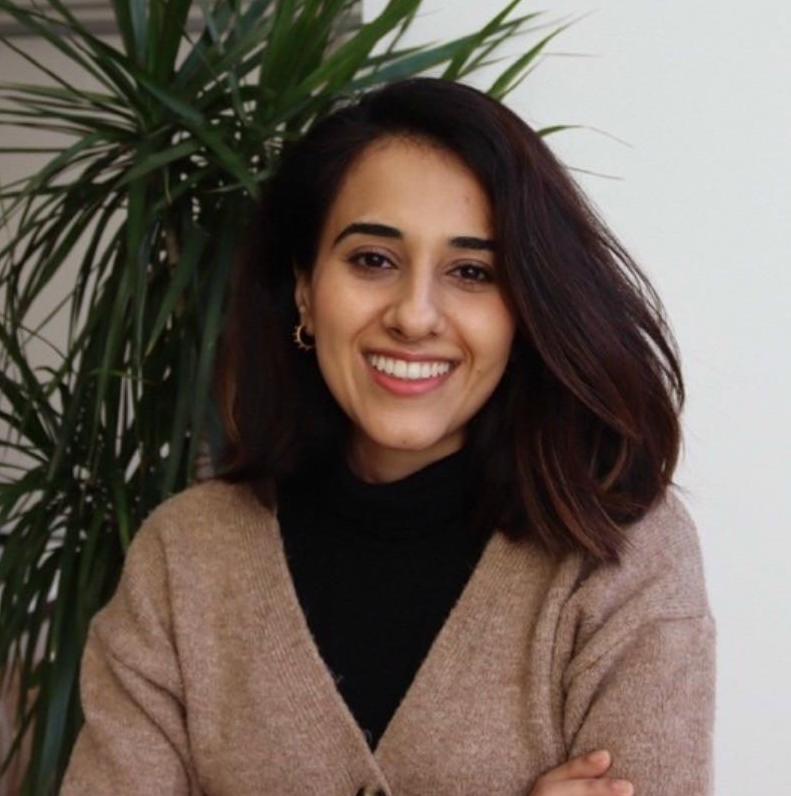
Mitali Israni is Senior Director of Marketing at Pantheon, the Silicon Valley website operations platform. Her career runs across journalism, investment banking, and B2B marketing leadership at hyper-growth SaaS companies including dbt Labs and Medallia. She advises VEED.IO, the AI-driven video platform. She has lived and worked in Mumbai, Hong Kong, and London, and now leads marketing across EMEA, APAC, and LATAM for Pantheon. In this conversation she sets out the revenue marketing as profit centre, not cost centre principle; the one-view-of-the-funnel operating cadence shared by marketing, sales, and partnerships; the discipline that sales is a team sport and it doesn't matter who sources it; the 60% higher close rate signal from partner-sourced deals; the global-guardrails-local-execution model for international expansion; the AI is the powerful new paintbrush, the human is the artist framing; the progress-over-perfection hiring bar at hyper-growth companies; the budget-reserved-for-experimentation line item; and the myth she would kill: marketing is a cost centre.
A career across journalism, investment banking, and B2B SaaS
The setup.
Journalism is about taking complex stories and compressing them into easy-to-digest news. Investment banking taught me analytical rigour and a commercial foundation. B2B marketing is the intersection: compelling stories that connect directly to pipeline, revenue, and enterprise value. That's the sweet spot for a long-lasting career.
The global experience (Mumbai, Hong Kong, London) shaped my leadership style. Silicon Valley companies trying to move international need a global playbook. Build for scale with a global mindset and decentralised execution. That's what I've applied in EMEA expansion at dbt and now across EMEA, APAC, and LATAM at Pantheon.
Revenue marketing as profit centre, not cost centre
The definition.
Revenue marketing is when marketing is measured as a profit and growth centre, rather than a cost centre. In traditional companies, marketing is a cost centre. As a revenue marketer you're driving profit growth and net-new business with direct accountability to commercial outcomes. Shared goals with sales and other go-to-market teams. Full-funnel ownership: from awareness at the top, right through to influencing the buying stage through ABM. Lead-gen, MQL, all the way to closed-won. The mandate goes beyond building leads to ensuring revenue.
On the current debate.
It's a feedback loop, not a trade-off. Anchor creativity in the big idea so the brand stands out. Back the campaign with data. The two work together. Brand campaigns can be measured and still be creative.
Marketing, sales, and partnerships rowing the same direction
On collaboration.
All three teams rowing towards the same revenue goal. Sales is a team sport. It doesn't matter who sources it. Marketing, sales, and partnerships work in tandem to build pipeline and close deals. One view of the funnel and joint operating cadences across all three. You're not doing it in silos; you're jointly reallocating resources for regions that aren't performing and segments that aren't producing.
On the metric.
Pipeline contribution (a combination of sourced and influenced). Marketing also plays a bigger role driving awareness in key target accounts, especially in an ABM mindset. Drive awareness in target accounts, build engagement, and report on pipeline created.
On the change in go-to-market.
Most B2B companies' go-to-market is moving from field-led to a combination of field plus partner-ecosystem-led. You move to borrowed credibility: work with SIs and ISV partners to access new segments and accelerate deal cycles.
At dbt and at Pantheon, I've seen great success: investing in co-marketing campaigns is close to 50% of where my budget goes. International is the case in point: there's only so much a Silicon Valley company can do direct. Working with agency partners, GSIs, and hyperscalers pushes reach much further. Most hyper-growth companies invest a lot in their alliances motions.
60% higher close rate, and where the friction lives
On the challenge.
Big partners' organisations are complicated to navigate. You need the right access to the hyperscalers and GSIs to know where to plug in. Also: connect to the why. You give in order to get. You need to add value to the partner's key accounts. What doors are you opening for them? When it becomes a true partnership rather than a take-relationship, that's when the success follows.
On the measurable signal.
A deal sourced by a partner is roughly 60% more likely to convert to closed-won. A channel or partner referral is highly vetted and qualified. To make partnerships measurable, invest in them and track beyond attribution. Also see the value the partner ecosystem brings: opening new segments, connecting into new people higher up the ladder, connecting you to exec teams. Move beyond attribution and you see the full value.
Global guardrails, local execution
On running a global campaign.
Global guardrails around brand. Local execution: linked to local pain points, local speakers, localised content, and sometimes language requirements (campaigns in DACH or in France and Southern Europe). The brand message is global; the execution is local. Global companies expanding internationally face different pain points and different maturity: the US is a few years ahead in market maturity, so the playbook used in the US needs adjustment for DACH or Southern Europe markets. How do you build consideration when adoption is at an earlier stage? And the cultural nuances don't translate: UK to Germany to France are all different.
AI is the powerful new paintbrush. The human is the artist.
On the current stack.
AI investment is going into the MarTech stack for automation and content efficiency: improved lead scoring, ABM tools like 6sense to identify high-intent accounts, personalised experiences. From my advisory work with VEED.IO (video editing software), video is a key channel of marketing and AI makes customer testimonials and product marketing easier to ship.
AI lets marketers be more insight-driven, more efficient, faster. It doesn't take away the marketer's role, the leadership skills, or the brand and creativity. AI is just a tool to do work faster, more efficiently, and at scale.
On the framing.
AI is the powerful new paintbrush; the human remains the artist. AI takes marketers closer to creativity because it automates the mechanical: drafting, editing, generating images. The cognitive load is cleared so the marketer can focus on what they're good at: strategy, the big idea, the emotional hook, what makes the brand unique.
On where the human element holds.
In-person events. Industry conferences, roadshows, field events. AI gets content out faster for these, but the human element doesn't get replaced. People still buy from people. A great deal of decision-making happens before the human interaction (often 70%), but in big enterprise deals in the millions, the in-person element is still required. In-person events will continue to be popular, and marketing teams will continue to invest budget there.
On AI and communication.
AI makes the marketer faster, but the message still needs to come from you. The output is only as good as the prompt or the input. The right inputs and prompts matter. AI makes the process faster: email comms, copy, even a keynote script can be fine-tuned with the right prompts. The core message and value proposition still need to be linked to what the company is genuinely saying.
On predictive insights.
AI helps with predictive analytics, understanding the prospect and customer buying experience. It tracks the performance of marketing dollars in a smarter way. With predictive analytics you can invest dollars in the right channels, engage people who are genuinely in-market, and avoid wasting budget on accounts or contacts that aren't ready to buy. The buying experience becomes much more personalised.
Building high-performing teams in SaaS
On leadership.
When I lead, I connect the team's work to the goal they're contributing toward. Sales is a team sport. Marketing, partnerships, and sales need to be moving in the same direction. Shared goals, shared success, and shared plans build high-performing teams in SaaS.
On career growth.
When you're an individual contributor, a lot of the work is execution-driven. While you're executing, think about the why. Think about the strategy and how the execution links to commercial growth. Ask questions. Take risks. Speak to other leaders.
Most leaders are happy to mentor and coach people on career growth. You're in charge of your own career: if you don't ask, you won't get the mentorship. Sometimes career growth is the ladder up; sometimes it's a breadth of experience. You might have to go horizontally to go vertically.
On the hiring bar.
Can they multitask? Are they analytical with a commercial mindset? How do they work in a matrix organisation (marketing works with partnerships, SDRs, sales, leadership)? Cross-functional capability matters.
On the budget for experimentation.
Make success clear. Set the key goals. Celebrate the wins. Champion the team in front of sales and leadership; that matters for morale. Give autonomy and the budget for experimentation and creative. At Pantheon some percentage of our budget is held aside for experimentation, so the team has the autonomy to do bold and different things.
The mindset at hyper-growth: progress over perfection. Hire people who adapt to that quickly. It's not the end perfect campaign that matters; it's the scale and speed of progress.
Rapid-fire
The myth she would kill for good.
Marketing as a cost centre. It's a strong revenue-generating engine.
The skill every marketer needs to master in the next five years.
Learn to make your job easier with AI. Upskill yourself; courses and tools exist.
A brand doing great marketing in 2025.
Figma and Canva. They've shown how to scale an enterprise tool while still maintaining community and product-led growth. Strong PLG focus doesn't always translate to enterprise; Figma and Canva have done a great job (Figma's recent IPO is evidence).
The question for the board
If AI is the new paintbrush, what share of our marketing team can already paint with it versus is still searching for the canvas?