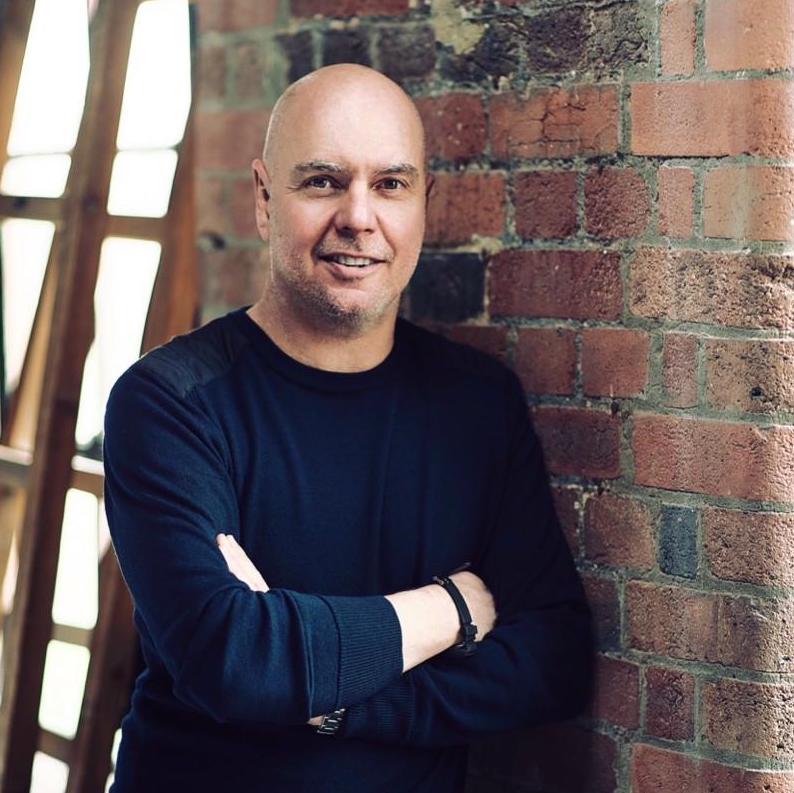
Leading Google Pixel's B2B marketing while building a Korean food brand from scratch.
Yondjé Choi-Cornez Head of Partner Marketing, Google Pixel B2B
Interviewed by John Horsley
Published
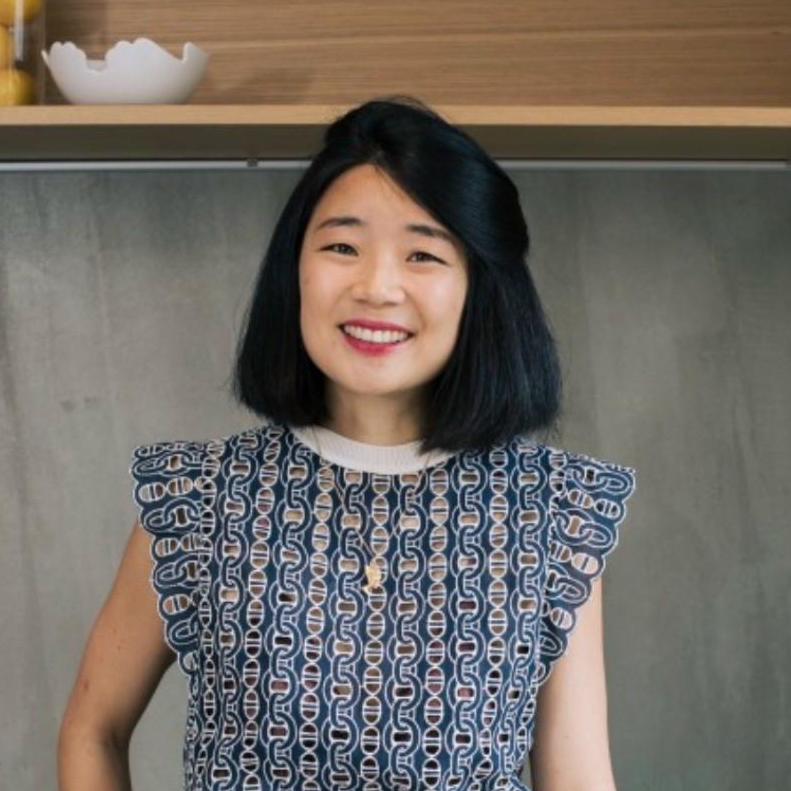
Yondjé Choi-Cornez is Head of Partner Marketing for Google Pixel B2B and the founder of OMA, the direct-to-consumer Korean food brand built around a seaweed bone-broth ready-to-eat product. She is French-Korean, started her career in Paris at a French telco, joined Google in Dublin (the European HQ) doing Google Ads sales for the French market, moved to New York for a sales role managing the Samsung account for eight years, and now runs partnership and marketing for Pixel. In this conversation she sets out the partner marketing as bridge between sales and marketing model; the let the partner talk about you principle that runs through the work; the insights, integration, joint value proposition discipline for choosing partners; the playbook handoff between marketing and sales (with the welcome flow and the second-touch sales reach-out); the cross-cultural reading she developed across France, Korea, and the US; the OMA origin story (Korean for mother, the soup mothers consume after giving birth, ready to eat in two minutes); the metadata over data principle from CPG observation work; the advice she would give her younger self that lateral moves are fine if you keep learning; and the you don't have to be good at your hobby to enjoy it observation that has changed how she approaches her surfing, wine, and acting.
A career from Paris to Dublin to New York
The setup.
I'm French-Korean. I started in Paris at a French telco, then joined Google in Dublin (the European HQ) for Google Ads sales for the French market. I moved to New York for a sales role managing the Samsung account, then into partnership and marketing for Pixel. Before joining Google I wanted to start my own company doing Korean kimbap, but my dad said just join a corporate. Looking back I'm happy about the path: after almost 15 years of experience you're more equipped to build something on your own, and there's so much learning and so many great people you meet along the way.
The cultural reading she has developed across three continents
On the international muscle.
Growing up in Paris I always compared French and Korean culture. Adding the US perspective shows the cultural differences and the common ground. Understanding where people come from and how they work matters. I worked partnering with Samsung for eight years across the US and Korean HQ. Get the basics right: Koreans appreciate documentation and presentations sent ahead of time to build trust. Those little things make the difference when starting a new relationship.
In the US, building trust and being friends with the partner matters in a slightly different way. Understanding the focus difference from the beginning saves time and builds efficiency.
Partner marketing as the bridge between sales and pure marketing
On the function.
Partner marketing isn't widely known as a unit. It sits between sales and pure marketing: building relationships with partners and letting them have a voice about our brand and product. You don't want to hear all the time from the brand or the product about its benefit and value-add. Let the partner talk about you. That's truly valuable whether you're CPG, tech, or B2B SaaS. The partner's testimony is a great signal.
On go-to-market.
Look at insights and data first: where is the market going, who in our ecosystem is going to make the difference for us to differentiate? The market is saturated with services. B2B decision-makers want seamless integration. Whether SaaS and Oracle integrating with a cloud solution or similar, the buyer wants the solution truly integrated for the employee.
The discipline: pick the partners we can integrate with, articulate the joint value proposition that differentiates both of us, look at the consumer needs and the decision-makers we're influencing. Build the go-to-market with the right channels (events work well for building connection and letting customers try the product). Then generate and qualify leads, nurture them, share them with the partners.
On the handoff.
A clearly defined playbook is essential. Is the event marketing-defined or marketing-initiated? Everything is done hand-in-hand with sales. We have a welcome flow: the lead from an event triggers a thank-you-and-onboarding communication, then the second touch is where the sales team comes in and starts to build a relationship with the customer.
AI as must-have, not nice-to-have, and the ecosystem question
On partner marketing in the AI era.
It's a company mission everywhere. Across tech, AI is a must-have, not a nice-to-have. Marketers feel overwhelmed: the pressure to use it, to be more efficient, to get faster campaigns done. A big learning curve. Critical to be ahead of it.
The talent dimension: younger generations want to work with the best AI tools. Being equipped attracts the best talent.
On the joint proposition that scales.
The ecosystem works where the joint proposition is uniquely differentiated. iOS and Android have different value props. What's truly unique to our ecosystem and how does it make the company or user more productive, more efficient, more secure? That's how you differentiate and scale from SMB to enterprise.
OMA: the Korean seaweed bone broth she launched while at Google
On the founder story.
OMA means mother in Korean, and grandma in German. It's a Korean seaweed-soup, bone-broth-based product. The soup has so many nutrients that mothers traditionally consume it after giving birth for recovery. I looked at the market: roughly 67% of Americans struggle with digestion. Americans on average spend around 50 minutes preparing, eating, and cleaning up after a meal. So there's a digestion problem and a need to eat fast.
OMA's mission is a Korean seaweed bone broth ready to eat: add water and it's ready in two minutes. The seaweed has more fibre than kale, which helps with digestion and bowel movement.
I had this soup myself after giving birth. It truly helped my recovery. I started making it for friends, then saw the potential to make it accessible to women and to everyone: something delicious, convenient, and good for your body.
On the corporate marketing that built OMA.
The knowledge gained in sales and marketing across 15 years has been amazing. Media, ad tech, the evolution of digital channels. Building OMA as a DTC e-commerce brand required all of that.
When I started in the corporate years, social media at scale didn't exist. The corporate experience taught the funnel: brand awareness, consideration, close, nurture, follow-up, subscription, continue the conversation. The further pain points, what they want to hear, what the product does to address them: the muscles built on the corporate side are now applied to the brand I built.
Going the other way (founder back to Google), starting a project from scratch as a passion project teaches you in detail why decisions are made: the P&L, where the budget comes from, which teams to influence to genuinely build the thing. SEO, SEM, the balance between conversion on a website and how paid ads work with video production: the 360 view becomes natural. If you want to become a great marketer, building a brand applies all the learning to the real world.
Multicultural teams, and the brand-versus-buyer gap
On the work.
Understand where teams are coming from, what their struggles are, and how the organisation is set up. Sometimes the CMO reports to the CFO, which makes them very ROAS-driven; growth and ROAS together can be hard to combine. Understand the regional reporting layers.
Cultural: in Korea I remember the team asking us to have meetings on Saturday without acknowledging the inconvenience. That shocked my American colleagues. It wasn't disrespect; it was the way they worked because they had a leadership meeting on Monday and needed the data. Understanding how people work is beneficial.
On the discipline.
Truly understand the consumer pain point and who the decision-maker is. There's sometimes an existential gap between what the brand wants to be and who is in fact purchasing it. At Samsung we had a campaign aimed at selling tablets to B2B professionals. The data showed parents were really the ones purchasing tablets to entertain their kids. The brand wanted to be one thing; the market was using it for another. How do you pivot to that?
Metadata over data: the CPG breakfast-habit observation
On going one step deeper.
Look one step deeper than the surface data. I read an article about CPG brands going into homes to observe breakfast habits. Parents were saying we want to give something really healthy to our kids in the morning. In fact they didn't have time. They poured a cereal bar and went. There was a discrepancy between what consumers said they wanted to do, what they aspired to be, and the real behaviour. Unpacking that from a cultural and human standpoint helps decision-making.
On curiosity as the precondition for international marketing.
If you're passionate about understanding consumers and consumer behaviour and where the trend and the world are going, do it. International is in my DNA. Be curious without judgement about why these ads perform better in India with this creative versus in the US: they're completely different codes. That curiosity about markets is essential for thriving internationally.
Lateral moves, hobbies, and where partner marketing is going
On the corrective.
Don't focus too much on promotion and career growth. It's okay to do a lateral move. It's okay to delay your promotion as long as you're learning something. On the other side: when you stop learning, it's really time to move and do something else. I stressed about this earlier in my career, comparing myself to others in different positions. The lateral moves (sales, partnership, now marketing) taught me so much. Make sure you're learning every year. Cultivate your hobbies and do something for you that you can keep doing as you get older: it's key to happiness and keeps the learning curve growing.
On hobbies.
I have lots of hobbies because I keep myself busy. Surfing is meditative and being by the sea is a reset. Wine: I took a WSET wine certificate. Acting just for fun, learning the basics of Broadway.
I realised with surfing (and acting) that you don't have to be good at your hobby to enjoy it. Once you understand that, it's so much more enjoyable because you're not in a performance-driven mindset. You're just in the I want to be entertained and have fun mindset. That changed how I approach hobbies.
On the future.
The goal of partner marketing (and of the OMA brand) is bringing value to the partner, the customer, and the brand. Having partners talk about the brand and the products is an amazing testimony. For OMA, doulas, midwives, and people in wellness talk about the benefits.
What will be more interesting in the future: more than what partners say about the brand or service, also where and through which channel they choose to amplify it with their community.
The question for the board
If a Google leader can build a Korean food brand from scratch, what share of our marketing leadership has the entrepreneurial discipline alongside the corporate one?