When you stop separating big ideas from great design, everything in the work gets better.
Marc Webbon Co-founder & Chief Executive Officer, Wonderhatch
Interviewed by Justin Cooke
Published
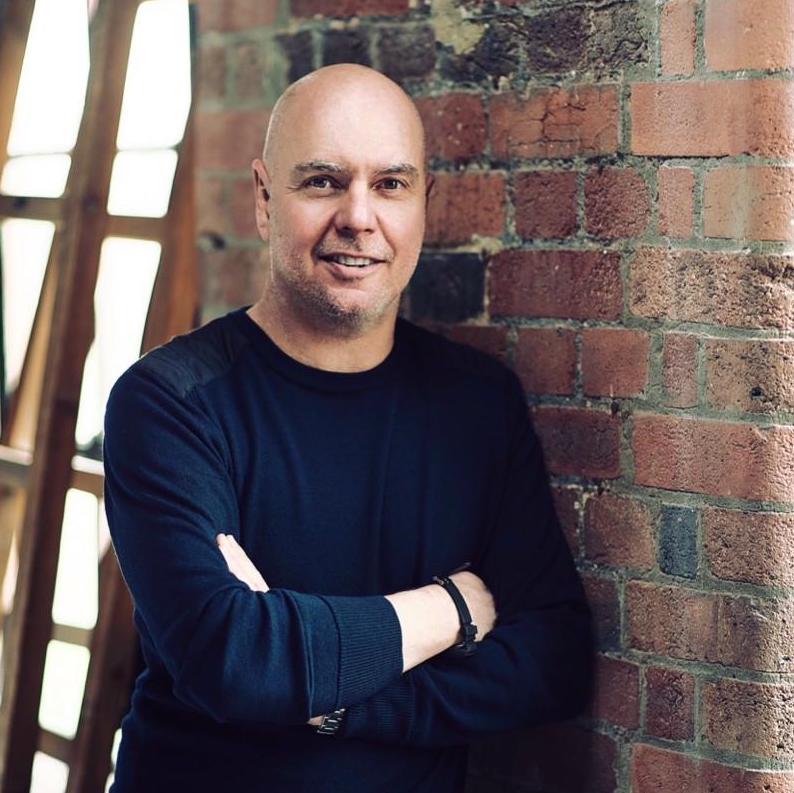
Marc Webbon is co-founder and Chief Executive Officer of Wonderhatch, the creative agency that has spent the last 18 months transforming from a transactional production company into a full-service strategy, creative, and production agency. Wonderhatch's client list includes Caffè Nero, Spotify, Ford, Knight Frank (and a wide range of super-prime property residences), the British Film Institute, NSPCC, 888, and Tango. The agency holds membership of the Alliance of Independent Agencies and has built strategic relationships with partners including Digital Cinema Media. In this conversation Webbon sets out the principle that the best content looks like the brand has made it (rather than a third-party agency), why the boomer generation is the audience advertisers underestimate at their peril, the shape-of-drive question he asks every interview candidate, the responsibility he handed his most junior team members for the agency's most important recent hire, and why his measurement of internal success is what his people give him in return.
From transactional production to full creative
The agency today.
If you'd asked me who Wonderhatch were six years ago, I'd have said a transactional production company. We've been on a path over six years, particularly the last 18 months. We're now a full-blown creative agency, providing strategy, creative, and production services to a wide range of clients. The variety is what keeps everyone in the business happy.
On the partner ecosystem.
A key partner for us is Digital Cinema Media. We work with them on NSPCC, Brixton Finishing School, Google, and SkyGlass. They've enabled us, and we've enabled them by introducing our clients into cinema. It's been interesting to watch the conversations grow.
The ecosystem is fundamental. I'm relatively new to this sector and I'm transparent about it. We've joined a few communities including the Alliance of Independent Agencies. Across the sector I'm genuinely inspired by how open everyone is to sharing information, advice, and introductions. We all need to coexist. Hiding away and thinking you can do it all by yourself doesn't end well. As an agency, being open and honest about we know this really well but we don't know this, we'd like to learn is what other people in the industry seem to appreciate.
Content that looks like the brand made it
The principle that underpins the work.
Content is our touchpoint and we know it really well. It's easy to make content that looks great. What's harder is making content that does what it's supposed to do. The discipline is that it has to look as if the brand made it first, rather than as if a third-party agency made it. That's what makes it authentic and gives the brand the real customer connection. We always come at content from the problem side first: what is the client trying to do, who are they trying to communicate to, and work backwards. Making it look great is easy. The tacit understanding of the task is fundamental.
Different clients sit in very different visual worlds. The content for Spam will look and feel very different to content for a luxury brand or a super-prime residence or Raffles. If our content looks, feels, and behaves as if it has come directly from the brand, that's success. The consumer feels the brand is speaking directly to them with no filter in between.
How that is done in practice.
Time. Spending time with the client. Sometimes I'll spend time getting to know them as people first. It's the same discipline as a documentary interview; you don't roll the cameras and start asking the strategic questions. You go for a coffee, lunch, a couple of drinks at the pub. Once you know them you understand how to frame questions to get the authentic answer. Once you have the authentic answer, the strategic questions land properly.
Why everyone is a consumer, and the property sector that forgets it
On understanding the audience.
Everyone is a consumer. Sometimes understanding consumers starts with understanding ourselves and what compels us to want to know more about a particular brand, and why we choose one product over another. A lot of that is peace of mind; we pay a premium for products that give us peace of mind.
You also have to understand the shape of those consumers. Our growth over the last 18 months has been about bringing strategy in-house. Our clients used to ask us, as a trusted production partner, to interrogate creative or come up with creative ideas. That extended into the strategy layer.
The shape of the strategy work.
We do a lot of work in property, more by accident than design. The kick-the-tyres principle: you wouldn't buy a house without a survey. Why would you invest in content or creative without doing the strategy piece first?
A property client will often say I need content to help sell development X, and assume they need product-driven content (the what: this is what you get for your money). People make decisions based on emotion. We push back; the what matters, but at a different point in the sales cycle. The first job is to tell them the why, pull the emotional levers, get the buyer to imagine themselves there: what their morning looks like, who their neighbours might be, what their life might look like. Buying a home is one of the most emotional decisions we make; it shapes who we become as people. Lean into that first. The product-detail piece will come further down the sales cycle. The job right now is to get them to stop and feel the emotional connection. Marketing is selling a feeling. Property is a dry, conservative sector; the reason we're successful in it is because we bring emotion to it.
The boomer audience, and entertainment as requirement
On a piece of recent research.
We've been doing strategic work in retirement living. Our strategist just published an article on the boomer generation. They have the money and the cash, and yet they're not being spoken to or recognised as a powerful audience that needs to be respected. Understanding how to position a brand or campaign to genuinely resonate with that group (so it feels authentic, as if the brand is speaking directly to them) is where success starts to happen.
Why every piece of content must entertain.
Entertainment is everything. We don't reserve it for our entertainment clients (DCM, BFI, Spotify, NBC, and others). Every piece of content must entertain in some way. Adolescence is entertaining, even with the powerful message inside it. Whether you're doing a fun feast for a flippant brand or working with the NSPCC on something serious and moving, you need to hold the audience's attention from the start of the content to the end. The call to action comes at the end. Make damn sure they're still with you.
Restructuring the team: empowerment, not hierarchy
On the team structure.
We've turned the structure of the business upside down. Change should never be a full stop. It should be a series of commas. We've created a culture of empowerment. Small examples: our new brand film, our new website, the hire of our incoming creative director (a couple of weeks ago). We gave junior members of the team the mandate to run those projects. I don't see them as juniors at all. They're the future of the business and they're the people we need to be listening to today.
The same approach extends to relationships with clients. Clients are executive producers on our projects. We don't keep them at arm's length. We embrace them and bring them in. And we recognise that what we deliver is often the fun bit in their week. My wife is a marketer; she tells me 90% of her job is really boring. So the bit we deliver needs to be fun for the client too.
Wonder Chats.
We host informal events called Wonder Chats: getting clients together from specific sectors, no branding, no agenda. The only agenda is we invite people we like and introduce them to other people we like, and let them grow their own networks. Clients have become friends with other clients of ours and found genuine collaboration through it. That builds strong roots; the work is not all about new business at the expense of the existing client base. Delivering more value and being a proper partner rather than a supplier is fundamental.
The shape-of-drive question, and the hire the team made
The three things he looks for in interviews.
By the time I meet someone in interview I already know they can do the technical task. I'm interested in three things.
Curiosity. They have to be curious as hell. Otherwise they're not in the right place. Curiosity goals: that's where the asking-questions discipline starts, in a safe enough space to ask.
Culture. Not whether they fit our culture. Whether they add to our culture and move it in the right way.
Drive. I have a lot of drive, and I'm interested in the shape of someone's drive. Everyone says they're driven; the differentiator is asking where does your drive come from? Someone who has real drive can answer that quickly and authentically. The shape of the drive (the fire underneath, or the aspirational drive trying to reach something) tells me how to manage and motivate them.
On the most important recent hire.
We let some of the younger members of the team take responsibility for the new creative director hire (probably the most important hire we'll make). We needed someone to build a boat for us, give us a vision. We let people who would conventionally be called junior tell us the shape of person we should bring in. That's powerful for the incoming hire, powerful for the team, and (when we tell clients about it) the clients love it.
We're seven women, seven men, a diverse and multicultural team. In the work we ask people what kind of business they want to work in, and then say go and build it. Rather than imposing a culture, we're giving colleagues the chance to create the place they want to work. That gives stickability.
The KPI inside the team, and the KPI on the brief.
Internally, the KPI is the team's happiness and confidence. Watching individuals grow, hearing them feel listened to, knowing they have a safe space to bring ideas. What people give you is a really good way of measuring how happy they are.
Externally, the measure depends on the client. In property the KPI is finite. I have 85 luxury properties at an average price point of £10 million, help me sell them. That has a full stop attached to it. Brand-building cases roll on differently; sometimes the measure is a feeling or an internal repositioning that doesn't lend itself to a clean number. The approach changes by client.
The question for the board
If separating big ideas from great design weakens both, what share of our briefs treat creative and design as one job versus two?