Skills, work, and AI agents. The future of the workforce is already being built.
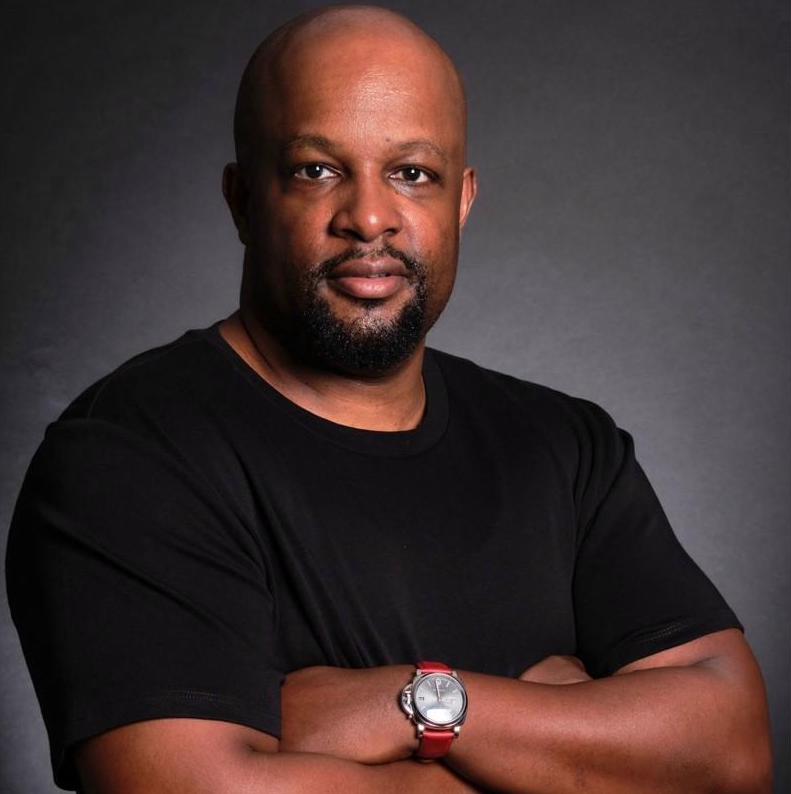
Ruslan Tovbulatov Chief Marketing Officer, Gloat
Interviewed by John Horsley
Published

Ruslan Tovbulatov is Chief Marketing Officer at Gloat, the talent marketplace platform working with global enterprises on the internal mobility, skills, and AI-orchestrated workforce. His career runs through enterprise B2B marketing leadership across HR tech and SaaS, with a consistent argument that brand is the strategic moat once product features are commoditised by AI. In this conversation he sets out why brand is the ultimate moat; the brand-demand-expand operating model he uses to run the function; the death of the org chart as a static artefact and the rise of the skill-orchestrated workforce; the 18-month CMO tenure problem and the framing that this is partly self-inflicted by CMOs who only run demand; the principle that great B2B brands are built on a singular point of view, not on a feature list; and the discipline of marketing being measured on growth, not on activity.
What Gloat is, and the case for brand as the strategic moat
The setup.
Gloat is a talent marketplace platform working with global enterprises on internal mobility, skills, and the AI-orchestrated workforce. The customer base is large enterprise. The motion is enterprise-grade B2B.
On brand as the moat.
The strategic argument I make internally and externally: brand is the ultimate moat. Product features can be copied and (in the AI era) generated. Distribution can be bought. Pricing can be matched. What cannot be replicated is the trust a brand has earned over time, the point of view it stands for, and the position it holds in the mind of the buyer when they're not actively in market. Everything else is a feature war. Brand is the moat once features are commoditised, and AI is commoditising features.
Brand-demand-expand: the operating model
The frame.
I run the marketing function on three engines. Brand: build the point of view, the trust, the mental availability. Demand: convert in-market buyers into pipeline. Expand: grow the existing customer base through cross-sell, upsell, and reference. The CMO who runs only demand is going to be replaced in 18 months because demand without brand has no compounding effect. The CMO who runs only brand is going to be replaced because the CFO can't tie the spend to the number. Run all three together, hold yourself accountable on all three, and the function survives the next budget cycle.
On where most CMOs over-index.
Most CMOs over-index on demand because demand is measurable, attributable, and politically safe. The work that builds long-term moat (brand, point of view, category creation) is hard to measure quarter to quarter. The CMO who only runs demand wins three quarters and loses the fourth, because the pipeline gets harder and more expensive without the brand layer underneath. The pattern repeats across the industry. That's part of why the average CMO tenure is now 18 months.
The death of the org chart
On the change Gloat is built on.
The org chart is dead as a static artefact. The way work has been organised for a hundred years (people in boxes, reporting lines, fixed teams) is not how work happens now and not how AI-orchestrated work will happen. People work across teams. People rotate. Skills are the unit, not the role. The chart is replaced by something more like a network: people, skills, projects, AI agents, all dynamically connecting based on what the business needs that quarter.
That's the case Gloat is built on, and it's the change every large enterprise is going to live through over the next five years. The HR function is being rebuilt around it. The CHRO and the CIO and increasingly the CMO are the leaders re-architecting how work is done.
On what that means for the marketing function specifically.
Marketing teams have always over-relied on the org chart. Brand sits over there, demand sits over here, ops sits over there, content sits over there. The skills-based view is more useful: storytellers, analysts, programme managers, designers, AI orchestrators, all moving across campaigns. The function gets faster, the work gets better, and the people grow into more than one role. The CMO's job is to set the destination and let the team form around it.
Building a singular point of view in B2B
On what distinguishes a great B2B brand.
Great B2B brands are not built on a feature list. They're built on a singular point of view about how the world is changing and what the company believes about it. HubSpot had the inbound point of view. Salesforce had the no-software point of view. Drift had the conversations point of view. The point of view is what creates the gravitational pull. Features fill it out. Feature-led marketing in B2B is a treadmill, because every feature is a year away from being replicated, and AI shortens that further. The point of view is what doesn't get commoditised.
On how a CMO finds the point of view.
You don't find the point of view in a focus group. You find it in the conversations with the most ambitious customers, the ones who are trying to do something most of the market hasn't done yet. Listen to what they're saying about the future, and what they need that nobody is providing. The point of view is the company's bet on what the customer is going to need next. Once you have that, the brand work is to dramatise it consistently for years.
The 18-month CMO tenure problem
On the framing.
The average CMO tenure is around 18 months. That's a system signal. The system is telling us something is off. My read: too many CMOs are hired on demand outcomes and then asked to deliver brand outcomes, or hired on brand outcomes and asked to deliver demand. The job has become bigger than it used to be (brand, demand, growth, product marketing, ops, customer marketing, partner marketing) and the time horizon has stayed the same. The CFO wants the quarter. The board wants the year. The brand needs three to five years. Squaring that takes a CMO who can communicate to both audiences in their language and hold the line on the long-term investments. Many CMOs cannot. That's not entirely the CMO's fault. The expectations are unrealistic.
On the way out.
Set the expectation on day one. Walk the CEO and the board through the three engines (brand, demand, expand), what each is going to deliver, when, and how it will be measured. Renegotiate the scorecard quarterly. Make the trade-offs visible. The CMO who explains the long-term investments in the language of the CFO survives. The CMO who keeps the long-term investments hidden from the CFO is fired when the quarter misses.
AI inside the marketing function, and the people piece
On the integration.
AI in marketing is over-hyped in the short term and under-hyped in the long term. In the short term we use it for the obvious things: content variations, briefs, summarisation, light research. The interesting work is rebuilding the function around AI agents that handle the repetitive workload (campaign QA, audience matching, basic reporting) so the humans focus on judgement work: the point of view, the customer conversation, the long bet.
On hiring and the people piece.
The people who win in this new function are the ones who treat AI as a teammate and who can hold a strategic conversation. The technician-only marketer is being commoditised. The judgement-only marketer who can't operate the tools is also being commoditised. The combination (strategic point of view plus fluent tool use) is the new bar.
On career advice.
Don't optimise for the title or the brand on your CV. Optimise for the CEO who is going to back the brand investment alongside the demand investment. Most CMO failures are the result of misalignment with the CEO on the time horizon. The right CEO is the single biggest predictor of CMO success.
The question for the board
If skills, work, and AI agents are rewriting the workforce, what share of our employer brand reflects this reality versus the old org chart?