Cloud production was not a pandemic workaround. It was always the future of the craft.
Simon Green Founder & Chief Executive Officer, EditCloud
Interviewed by Justin Cooke
Published
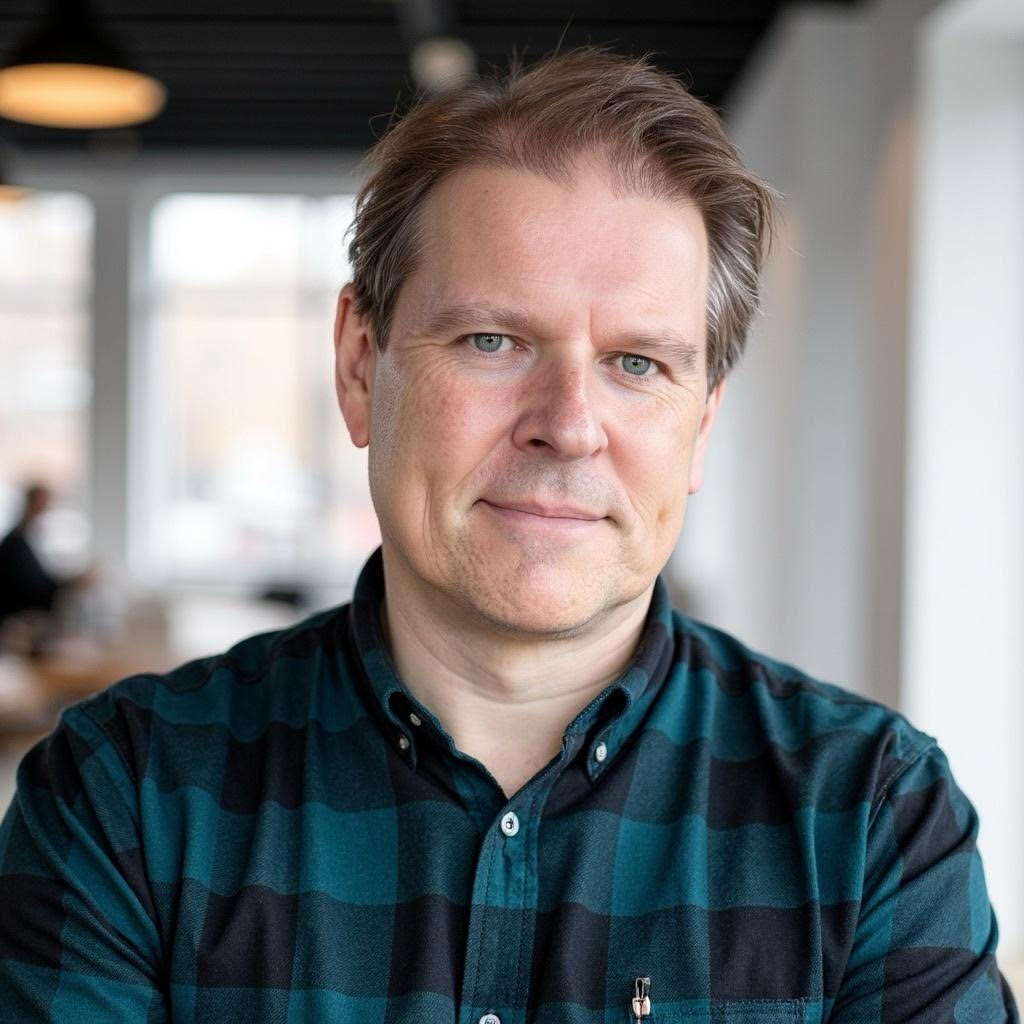
Simon Green is founder and Chief Executive Officer of EditCloud, the post-production platform that puts cloud-based editing infrastructure into the hands of creative talent anywhere in the world. Green has spent his career as an owner-operator in production, with editing roots that span documentaries, live sports, advertising, and social campaigns. EditCloud was conceived in 2017 and formally launched in 2021 from inside Green's own production business, which had been considering a major capex investment in physical infrastructure just before the pandemic, when he realised cloud was the right answer. In this conversation he sets out the technology-talent-training combination at the heart of EditCloud's model, why working with Walter Murch on his first Adobe feature confirmed remote collaboration is not new, why Come Dine With Me saved 60% of logging and capture time on a 20-year-old format that hadn't changed its method, the 78,000 air miles saved on a single BYD production, and why the take the technology to the talent principle is genuinely changing who gets to tell the stories.
From a Soho service business to EditCloud
You ran a service business with buildings in Soho before EditCloud. What changed?
You get sucked into the grindstone of doing this project, then the next, and as you grow you just have more projects. There is no scale in it. At the time I had a TV studio, post studios around London, and we were working in LA through COVID. I was sitting there thinking why are we paying a fortune to occupy these buildings when amazing talent and creative opportunity is everywhere? The last five or six years have been tough for parts of the industry, but I believe great creativity comes from challenging times and from limitations. That was the breeding ground for EditCloud.
We were early adopters of cloud before most people knew what COVID was. As we went through the pandemic, we realised we had something special. The thing we recognised is that technology only gets you part of the solution. We're fiercely agnostic on building in the best technology that's out there; we can plug it in and plug it out, and right now you need that. The sweet spot is connecting cloud-based technology, putting it in the hands of great talent anywhere in the world, and where appropriate training that talent. Technology, talent, training, the three parts that accelerate content creation and democratise access, sustainably.
The Walter Murch story, and the cloud experience problem
A formative moment for you.
One of our early projects was a dream. We worked with Walter Murch, the editor of The Godfather and Apocalypse Now. At university I read all his books. He was doing his first feature in Adobe, who are one of our strategic partners. I started saying the future is virtual collaborative. He stopped me. He said this isn't new. When he worked on Return to Oz, he was in London, his editor was in Oregon, and they would systematically hold the film up to the light, synchronising over a phone, while he was supporting Steven Spielberg on what became Schindler's List and George Lucas. The first iterations of remote editing were already happening. They were a privileged few. What we're seeing now is the democratisation of the same technology, but the human work of bringing hearts and minds along is still the part that earns the trust.
On why cloud as a term carries baggage.
Coming out of COVID, many people had bad experiences. Cloud meant I have to work from home. The technology was there, but the experience was hard. As an editor and someone who's worked with creators and production, you have to have a great creative experience. The experience matters as much as the technology. When do you need to be in the room to have a creative conversation, and when don't you? Throughout COVID, production teams were inventive at finding solutions, but they got burnt by zoom cameras pointed at edit suites, by lag, by feedback loops, by all of that. Editors need things to work; they don't want to be fumbling around. The technology has now matured.
Come Dine With Me, ITV Studios, and the 60% capture-time saving
A specific example you bring up.
ITV Studios is a customer. We work with their innovations team. They want to be more sustainable, more productive, and to be in the cloud, and we were invited in to be part of that transformation rather than to take the job at bottom dollar. Over the last six months we've been working with Multistory, one of their labels, on Come Dine With Me. Forty-two territories, made for twenty years. Understandably, the team would say this is how we've always done it. The phrase drives me wild, but I respect the discipline behind it. The market has changed, and a tight shooting schedule could now run differently. We were able to save 60% of their logging and capture time, and we made the overall production schedule shorter. We didn't undercut the competition. We gave them three or four options and worked closely with the team to land on a path that made the production 25% faster.
On training the senior editors who had been on Avid for 20 to 30 years.
The path required moving from on-prem Avid workflows to Adobe workflows. We ran the team through our training academy. Self-confessed dinosaurs, in their own words. Ninety-seven percent satisfaction rating through the academy. The day after the editors finished the academy, the head of production called me up and said right, we're in, let's do it.
BYD and 78,000 air miles, and security as non-starter, not bolt-on
The sustainability case, made operationally rather than rhetorically.
We ran production for BYD in the Middle East earlier this year. Streamed across three cinemas, NBC across the region. Looking back, the project couldn't have been done on the ground. We saved 78,000 air miles by not having the whole crew go out. People worked on the ground; the cloud uploads went from Riyadh, Jeddah, Dammam up to cloud; the creators and producers worked across America, England, Amsterdam, and France. That was for a brand whose own values are sustainable. Promoting those values in the content meant being able to point at the carbon impact of how we'd made the content.
Typically we reduce carbon impact by 51%, through travel, through efficiencies in moving media around. We also use sustainability as a broader frame: it's about driving diversity into the businesses as well, and we can track that.
On the trust question.
People remember the moves from tape to tapeless and from tapeless to hard drive. I have it backed up on this thing is what helps people sleep at night. Security is absolutely the number one thing. We use biometric logins so I know who is sitting in front of the seat in front of the screen. We're also moving away from on-prem storage and peripherals to deploying our ecosystem inside the customer's cloud account. Customers already have large cloud accounts with fantastic discounts; we deploy workstations into their ecosystem, so the assets sit with their security and they keep their negotiated cost base. The ultimate brand owners are in control of their assets.
The advertising parallel, and the case for assistive AI
On working with brands and agencies.
The advertising industry is under the same pressure as broadcast. Now more than ever it's looking at data, reporting, performance, and the operational side as well. Cloud helps because the moment you're inside the environment you can see down to the minute what's being done. What we're really interested in is the task management and task boundaries. Not I made this asset and it took me X amount of time, but understanding where tasks are done in the most successful way, in which region, with which tools, with which environment.
We're doing interesting work with Publicis on best-practice comparison across regions. How is one territory running operational excellence? How is another? Comparing the two is where the gains live. The first step isn't a silver bullet; it's the comparison itself.
On the way to talk about AI.
A year ago it felt like proper panic stations. AI is going to eat my job. The vernacular that's helped is assistive AI. It changed how people reinterpreted the technology. Generative AI and assistive AI are different things. The space we're really looking at is how to integrate assistive AI properly, which starts with a foundation of great data, solid processes, and the information feeding it.
Everything we're building is in cloud, which is a great bedfellow for AI. We're picking up rich data on the technology being used, the software, the time, and connecting that to performance. So for a social campaign, you can understand the performance marketing, then work upstream to understand the effort that produced the asset and the overall ROI. AI is 80% data. People jump to the end with AI and say let's just use this tool to do that. It has to be attached to a rich data repository.
Take the technology to the talent
A principle you keep returning to.
When we talk about diversity in brands, film, and storytelling, that's got to come from the people sitting in the chairs doing the work. It's easy to hire Dave, the white middle-aged man with twenty years on the toolset; safe pair of hands. If we have a problem with storytelling, the right people have to be in the right seat, and we have to support them and train them. EditCloud lets us take the technology to wherever the talent is. They don't need to come to London or Los Angeles. They can if they want. We can set EditCloud up wherever you like. On the days a parent has childcare or someone is caring for an elderly parent, or they don't live in New York at all, the technology goes to them.
I was working with a BAFTA-winning filmmaker last year. He was cutting a sequence about young black men in Britain. He gave it to one of his assistant editors and said can you pull this sequence together? He looked at the result and said I would not have cut it that way, but that was the right story. His own life experience didn't let him see what a young black filmmaker was seeing. He stepped down. He said I have to retire out of this and support this next generation of filmmaking. The technology now lets us give the voice, the microphone, the laptops to the people whose story it is.
Accreditation, the pharma parallel, and the advice
On how the discipline scales.
Being in cloud lets us track completed training. We're building an accreditation layer on top. A young video editor or creative-production professional may have worked on automotive accounts before but never on BMW. With assistive AI we can say you are skilled to do this work, you're available, and we can run you through the brand guidelines and the campaign directive as micro-credentials so you're qualified and eligible. For the brand: they found great talent that's available and brings the right skills. For the talent: a new doorway opens. I'm now qualified to work on BMW. That breaks down the it's who you know layer that has held the industry back. You can't have your cake and eat it. You can't run the industry that way and complain we're not driving enough diversity, opportunity, and sustainability.
The pharma parallel.
In pharma, with an FDA-regulated drug, you may have armies of thousands of people creating content around the world. If the FDA updates something, you have to get the whole army schooled up fast. We can deploy thousands of workstations with the training built in, so a logged-in user the next day sees you have to do this training, then you are compliant, then you can do the work. The accreditation layer becomes a regulatory tool as well as an HR one.
On the first step.
For us, talk to us. As someone who's been in the delivery world all my career, it's hard when people say we have to change. We're seeing the walls close in with market changes, sustainability pressure, diversity pressure, and the ongoing need to deliver creative excellence. Take a moment to think about what good looks like. You don't have to say I need to change everything, tear it up. With ITV Studios, the path has been three years. We don't go in and say stop what you're doing. We understand what you have, where you are now, where you need to be in two or three years, and the delta in between.
The trick is making everyone feel that this is their idea and they own it. It's not as scary as people think. I have never had a team turn around and say that was worse than I thought. They build it up in their heads (am I going to do myself out of a job, how will AI affect me) and they come out the other side saying I get it now.
The question for the board
If cloud production is the future of the craft, what share of our content workflow is built for cloud collaboration versus stuck in studio?