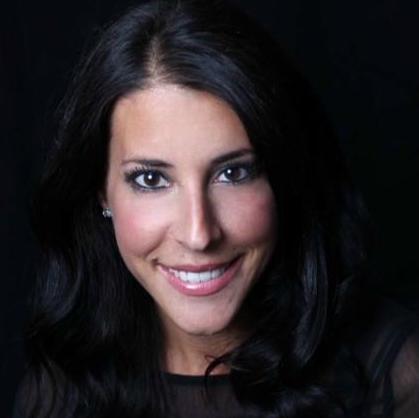
One Person Can Start a Movement
Mindie Kaplan is VP Innovation at MediaMint and the founder of Million Mammograms, a cause she launched from one social media post after her own early-stage breast cancer diagnosis. She is also the CEO and founder of Rated VR, acquired by MediaMint, and has spent her career moving from corporate automotive marketing through Microsoft and into immersive media and social purpose.
“It started with one social post. A cause just needs a clear purpose and the willingness to ask.”
Mindie Kaplan is VP Innovation at MediaMint and founder of Rated VR, the VR and AR creative agency she launched in 2016 and which was subsequently acquired by MediaMint. She is also the founder of Million Mammograms, a cause marketing initiative aiming to book one million mammogram appointments by 2028 through a combination of out-of-home activations, media partnerships, and community events.
Mindie began her career in automotive marketing at Nissan and Ford, where she worked on vehicle launches and learned that the launch of a new idea is the most inspiring part of marketing. She moved through CBS, Microsoft, and into the startup world, founding Rated VR after the voice in her head asking “what if” got loud enough to follow. At Microsoft, clients were already asking about VR and AR, but marketers were unsure when to jump in or how to measure it. She jumped in because everyone was new to it equally, built the agency from that insight, and was acquired into MediaMint.
Million Mammograms began with a photograph taken during her recovery from breast cancer, posted on social media with a simple ask: post your mammogram date. It went everywhere. Out-of-home agency Outfront offered remnant inventory. Financial Times gave full-page print ads. A Times Square activation followed. The model Mindie describes is consultative: understand what each potential partner is already doing in the cause space before pitching, find the overlap, and build together rather than building first and pitching afterwards. The goal is 2028. The method is asking.
“Authenticity is not a vulnerability. It is a superpower.”
“I posted my scars and asked women to post their mammogram dates. It went everywhere.”
Mindie’s Million Mammograms origin story is the clearest illustration of what she calls a one-person movement. There was no budget, no infrastructure, no formal brief. There was a photograph, an honest caption, and a simple request. The response revealed something about the industry that she had not anticipated: the people who reached out first were some of the most senior and outwardly confident women in the business, saying they had family history but were too scared. The campaign’s power was not fear-based, which was the dominant register of breast cancer marketing at the time. It was beautiful and positive. That shift in tone is what made it shareable.
“A cause should work year-round, not just in October. It does not have to be heavy.”
Mindie’s model for sustaining a cause outside its primary awareness month is to find the cultural moments that naturally connect to the campaign’s emotional territory, Valentine’s Day as a self-care prompt, for example, and to make the participation joyful rather than solemn. Internally, she sees corporate benefits programmes as massively under-utilised: when an employer runs an educational event or a benefits activation and employees see it, the sense that the company cares has a direct effect on culture and retention. The cause does not need to be breast cancer. The principle is the same for any purpose-driven initiative that wants to exist beyond its awareness peak.
“Before I pitch, I understand what the brand already has. Then I build on it, not from scratch.”
Mindie’s consultative approach to cause partnerships is rooted in her commercial background. Walking into a room with a fully-formed activation and asking a brand to fund it has a low conversion rate. Walking in with an understanding of the brand’s existing commitments, their infrastructure, their audience alignment, and asking how your cause can amplify what they are already doing has a much higher one. The Financial Times partnership came through that approach. So did the Outfront inventory. The partnerships that have worked are the ones where both sides are building towards something together.
Stay close to the conversation.
New leaders and insights. No noise.