Steve Reny and Jennifer Griffin Smith on running a single go-to-market function, and why twenty percent of every customer's addressable market is locked out without accessibility.
Steve Reny & Jennifer Griffin Smith Chief Executive Officer & Chief Market Officer, Acquia
Published
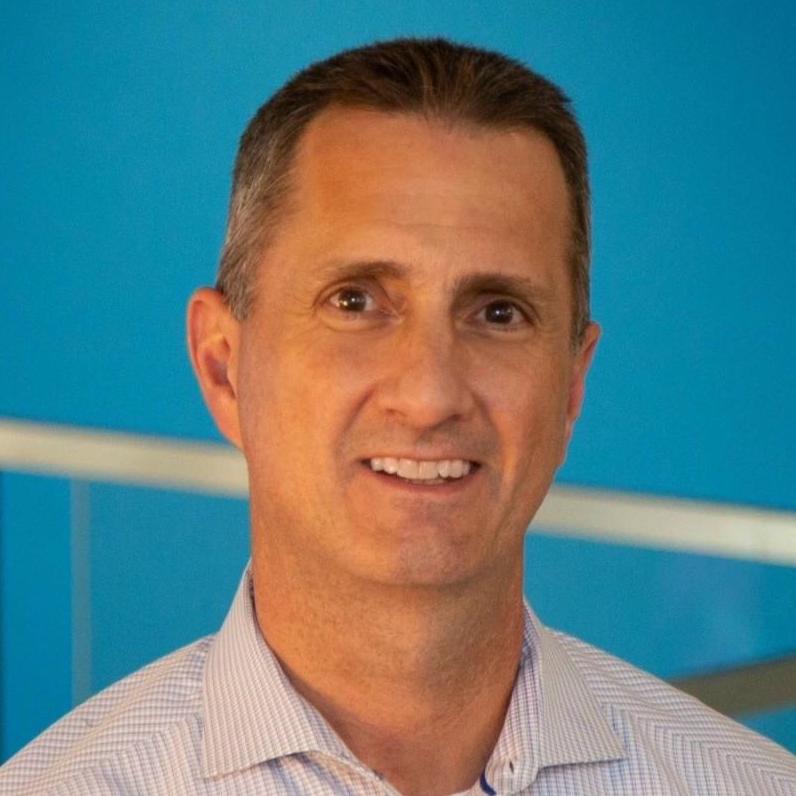
Steve Reny is Chief Executive Officer of Acquia, the open digital experience platform company founded in 2007 by Dries Buytaert, the creator and worldwide project lead for Drupal. Reny joined Acquia six years ago as COO and took over as CEO at the start of the year, after twenty-five years on the operating side of technology that began in finance at what is now KPMG. Jennifer Griffin Smith is Chief Market Officer at Acquia, in her sixth CMO-level role, having spent her career in technology marketing. Together they set out why Acquia uses the title Chief Market Officer rather than Chief Marketing Officer, why the company runs marketing and sales as a single go-to-market function rather than two attribution silos, why the notion of a single lead drives the marketing leadership “bonkers”, and why digital accessibility is the most underweighted strategic priority in marketing today.
The Chief Market Officer title and what it means
Why Chief Market Officer rather than Chief Marketing Officer?
Griffin Smith: Marketing is as much, if not more, about the market and the customer than the activities the team executes against. In my experience, this is my sixth CMO role, marketing is too often thought of as the part of the company that runs activities. One of the reasons I joined Acquia is the belief that everything we do is for the customer. If we in marketing, working closely with product and sales, aren't hyper-focused on customer needs, market needs, and innovating against those needs, then we are just doing activities. The title is a reminder.
That orientation seems to define how the function is built.
Griffin Smith: We have a culture where everyone operates as one for the success of the customer. Rather than it being a product team, customer success team, or marketing team, we think about go-to-market in terms of how we are innovating and how we are bringing innovation to market. I spend as much time with cross-functional teams as with my own marketing team. My team spends as much time with product, engineering, content, and customer success as with each other. The cultural ethos and the operational process that supports it is what makes it real for new joiners.
Reny: We run the company against what we call vital few objectives. The number one VFO is to improve the customer experience. Everyone in the company can name the VFOs in priority order. Where there is a trade-off decision, the question is whether it improves the customer experience. If it does, that's your priority. The orientation flows from the company's origin as an open-source community project around Drupal: openness in everything we do, in innovation, in partner relationships, in how we work internally.
The buyer has changed. Marketing has had to catch up.
Has B2B marketing materially changed as a result of the move to a buyer-driven world?
Griffin Smith: Marketing in the digital arena is hard. There is a great deal of competition and a great many digital paths to the customer, and the customer now self-serves with significant choice. The buyer has changed. The way you buy a car, self-serve a mortgage application, buy a shirt versus visiting a mall, all of it has changed. The pandemic accelerated it. Expectations have grown. If I can work from anywhere, I expect to be able to serve myself from anywhere. Everyone now expects frictionless, productive experiences. We deliver those as a product, and we have to deliver them as a marketing organisation.
The implication for marketing is targeting. You have to understand your audience even when you don't have the data on them, because the cookie-less future is almost here. The tactical mix has changed, the ROI per tactic has changed. Getting the mix right is hard, and working across multiple teams is hard. The discipline is staying true to the culture, working together, focusing on the customer, and being honest about what the data is telling you. AI tools can formulate data, but you also have to sense-check it. Gut feel, tested against the community.
Reny: Existing customers are also our best sellers. Delivering a great experience to the customers we already have, ensuring they realise the value they expected when they bought from us, is priority one. We can do the best marketing in the world, but if your installed base isn't happy and isn't willing to recommend you, the rest of the work is hard. Brand isn't what you stick on an ad. The brand is the service the customer gets and the value they see in the solution.
Why the lead is the wrong unit, and the buying committee is the right one
On the buying committee.
Griffin Smith: The notion of a single lead drives me bonkers. One person doing one activity on your website does not make a lead. There is a buying committee, probably ten people in the organisation involved in the purchase of one solution. We need to understand who all of them are and what they are doing. There are intent-based tools that let us understand unknown visitors and build a profile of an account, rather than an individual. It is a big change, and a hard one to implement, because teams have to move out of a volume game and into a higher-value game. It is harder to design programmes for specific accounts and committees than to push a campaign at a list. If we are doing our job, we are bringing the buying committee together inside the customer's organisation, because they often don't naturally convene themselves.
Reny: IT and marketing is the recurring example. The reality is that the buying centre doesn't sit with either function alone. One may hold the budget, but ultimately you need both. We see our role as bringing them together. Marketing teams are frustrated with IT for slow delivery; IT is managing the consolidation and time-to-market of multiple systems across the organisation. We have to speak the language of each buyer. There is no single language that fits all.
What gets measured, and what gets harder to measure
On measurement.
Griffin Smith: The traditional measures of lead generation through the funnel, how much goes in the top versus how much comes out the bottom, are no longer the whole picture. We look at this as an entire company. The creation of pipeline and revenue has historically been a blame game between sales-sourced and marketing-sourced. That doesn't help any team work together. Myself and the head of sales work together because neither of our teams can do it alone. We look at volume, account assignment, ICP fit, follow-up, training, win rates, conversion. We do multi-touch attribution, because the idea that a dollar of email generates a lead that converts to a piece of business doesn't exist any more.
At a high level we look at total sales and marketing spend as a percentage of revenue, and LTV to CAC. That is how we know whether the business is performing. Paid search is more expensive than it used to be, because everyone is paying to rank higher. Email is not dead; for many marketers it is still the best-performing tactic on response rate. We don't gate our content, because if you gate everything no one fills in a form any more. The discipline is looking at the whole picture, the content being consumed, where the sales and marketing percentage sits, and what is the LTV-to-CAC.
Reny: These knobs are turned every day. This is a living, breathing function that has to evolve. Market dynamics, the installed customer base, macroeconomic events all affect it. Progress over perfection.
Accessibility: the underweighted strategic priority
The most important thing on the horizon, from a marketing perspective.
Griffin Smith: Digital accessibility. I say that not because we sell a solution for it, but as a marketing leader. In all my years running marketing, I have never built digital accessibility as a core part of my digital strategy, and I feel a little shameful about that now I've been digging into it for the last year. If we want to address all our audiences, we have to make sure all our content and all our channels are accessible to everyone. Location, gender, ability. PDFs are usually not accessible. Forms with insufficient colour contrast can't be completed by anyone with colour-blindness. These are small things that have material effects on site traffic and conversion.
Reny: Up to twenty percent of our customers' addressable market is unavailable to them if they are not considering accessibility. The opportunity for them is to expand their addressable market. The way we change the world is through what our customers do: saving lives, educating the next generation, delivering the goods and services we use every day. The more efficient we can help make them, the better the work they do.
Three structural directions for the platform itself.
Reny: Content first. AI as it applies to content carries the pitfall of a sea of sameness as content is generated at scale. The opportunity is the generation, management, and conversion of the right content at the right time across the right channels. Insight second. Customers want decisions informed by data, and the opportunity is to give them genuine data-driven insight. Optimisation third. Accessibility is part of it. So is performance, operational efficiency, and the ability to do content, insight, and execution in an operationally efficient way.
The question for the board
If up to twenty percent of our customers' addressable market is locked out of the digital experiences we sell to them by accessibility failures we have not audited, what proportion of the marketing budget is currently committed to extending the reach we already have, versus addressing the audience we have not yet been able to count?