Every brand is going to be a media business.
Bryan Barletta Founder & Partner, Sounds Profitable
Interviewed by John Horsley
Published
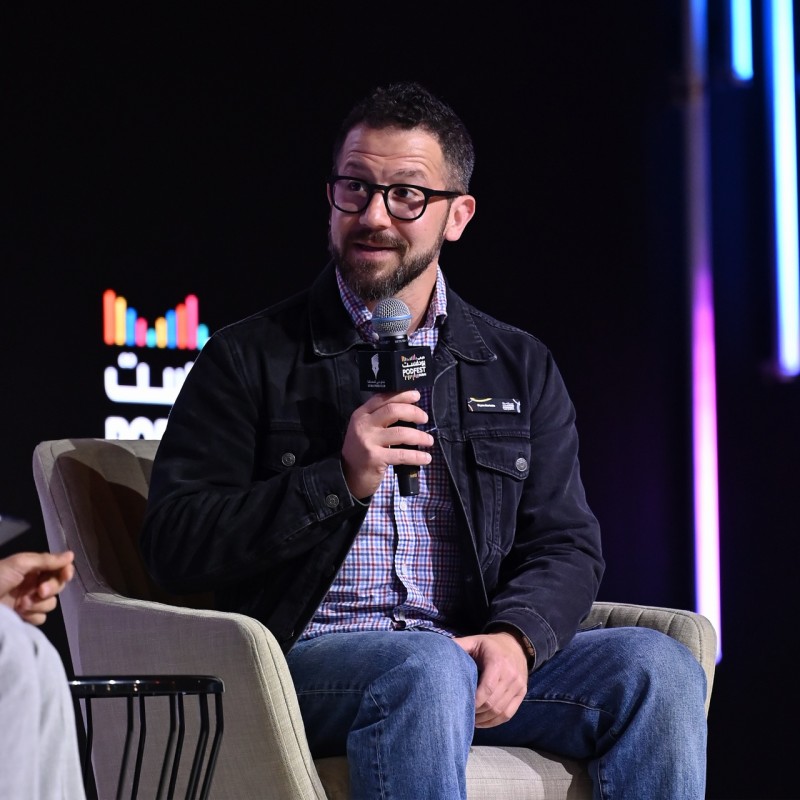
Bryan Barletta is Founder and Partner of Sounds Profitable, the trade association for the global business of podcasting. Sounds Profitable works with over 210 partner companies, is the leading podcast-industry researcher in the US, and is expanding globally. The company was acquired in 2024 by Podcast Movement, one of the largest podcast event companies in the world. Barletta's earlier career runs through 20 years in mobile advertising (he was on the team that built the first shakable HTML ad), then time at AdTheorent where he built one of the first podcast attribution products for State Farm and Progressive Auto. He works with co-founder Tom Webster (who spent 18 years at Edison Research) on a 5,000-respondent biannual US podcast survey. In this conversation he sets out the Serial water-cooler moment that began the current podcast era; the 7% gap between host-endorsed and announcer-read ads finding that explains the perceived value of host endorsement; the Apple HLS video moment that blew the walls off podcast distribution consolidation; the podcasting is just enough signal to hang ourselves with measurement reality; the every brand is going to be a media business trajectory; the $500-a-month, no-contract trade-association model; and the closing advice: get a job, then build the podcast on the side.
From mobile advertising to building the first podcast attribution
The setup.
I started 20 years ago in mobile advertising. I was on the team that built the first shakable HTML ad. I was at AdTheorent working on an attribution product when State Farm and Progressive Auto asked us on a call can we use this in podcasting? The sales guy I was working with, Matt Drangler, said yes. I hit mute and said what the F are you doing? And then we became the first podcast attribution company.
That was right around when Serial came out. People would show up to work late if they hadn't listened yet, so they didn't get it spoiled.
On the audience signal.
From the Sounds Profitable 2025 US podcast survey: 5,000 people surveyed. 55% of Americans have consumed a podcast in the past month. 71% of creators are now producing video alongside audio. Driven by podcasting giving creators permission to own their content. Personal, on-demand, something you can take with you.
Why listeners have such an affinity with podcasts
On the connection.
The world has become a lonelier place. I have two young kids, a startup that was just acquired, two companies to run. I don't have as much time to hang out with my friends as I'd like. When I put on a podcast, it makes me feel connected to a topic and people I appreciate. The longer you listen to them, the more you feel you've grown with them.
The data on this show: people listen for over 90 minutes for around 90% of the way through. Insane. By contrast, a B2B webinar gets maybe 20% completion.
Host-read versus announcer-read: a 7% gap
On the data.
An older Sounds Profitable study showed only around a 7% difference between host-endorsed ads and a scripted announcer-read where both were thematic to the content.
7% is not a lot. Podcasting lends itself to the belief that you're buying into the creator. Late-night TV ads on Colbert or Kimmel don't carry the same belief that the host personally benefits. When a podcaster reads an ad, the belief is that it directly benefits the host, that they are an entrepreneur. You take it a little more seriously.
On the measurement reality.
Measurement is IP and user agent. It'll never fit directly into a media-mix model unless the software is built to give it the right credit and weight. Just enough signal to hang ourselves with. Just enough to give us a hand up, just enough to put us down and make it difficult for digital buyers to buy us.
The Apple HLS video moment that blew the walls off
On the consolidation question.
We've gone through a lot of consolidation in podcasting, but most of it is inside-baseball. What Apple just did with Apple Podcasts HLS video blew the walls off. RSS is one app going to multiple hosting platforms. HLS video is the streaming solution where it's their app and their server. Apple has implemented HLS where it's their app and as many servers as integrate with them.
Lets creators determine who fills the ads and which tracking solutions they provide. In the last eight weeks we've had a moment where we all thought it would get narrower, and it has the opportunity to get even wider than it started.
Sounds Profitable: trade association at $500 a month, no contracts
On the business.
Tom Webster (leading podcast researcher, 18 years at Edison Research) and I make sure everything we say is supported. We set the price six years ago: $500 a month, no contracts required. 210 partners and growing. The partnership includes monthly consulting, Slack access for all employees of partner companies, a custom research database, discounts on events.
We emulate what I like about the IAB but more focused for podcasting, and what I like about MediaLink or C3 but $500 a month rather than half a million a year.
On the trajectory.
Every brand is going to be a media business in the near future. The podcast format does multiple things at once. Audio RSS, video, clips on LinkedIn, soundbites, data points that can be shared. Brands are starting to think can we crack our own edits, can we explore ourselves? Stackable content, soundbites, data points to share and to be reshared. The medium of podcast extends across all the other channels.
The question for the board
If every brand becomes a media business, what share of our marketing budget builds owned audio and video versus rents attention from platforms?