They digitised an entire nation. Now they are exporting that capability to the world.
Elizabeth Kiehner Chief Growth Officer, Nortal
Interviewed by Justin Cooke
Published
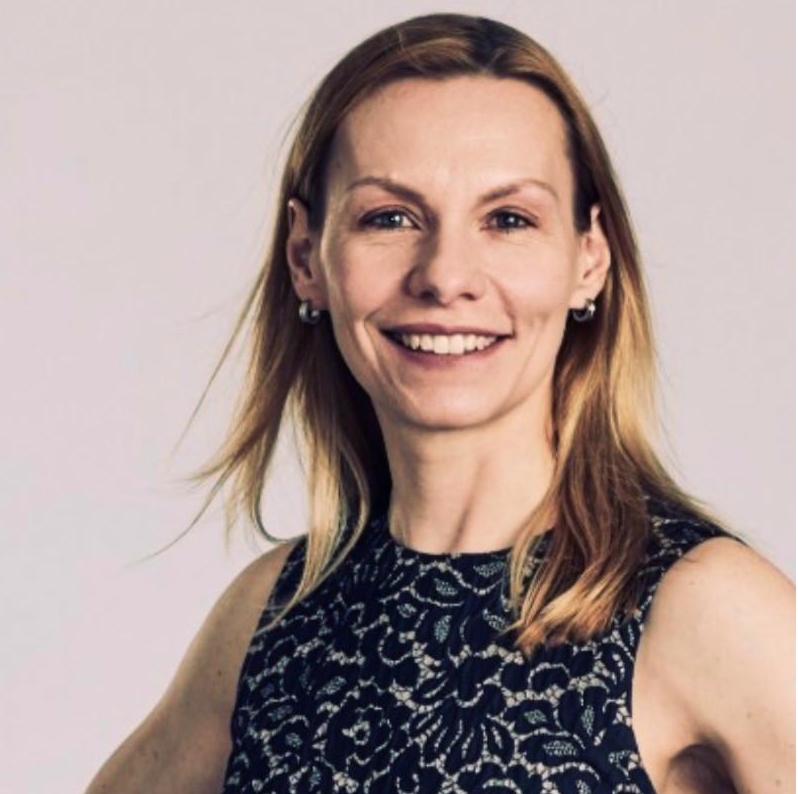
Elizabeth Kiehner is Chief Growth Officer at Nortal, the 25-year-old technology and consulting firm with US headquarters in Seattle and global headquarters in Tallinn, Estonia. Nortal led the digital transformation for the nation of Estonia after the country gained independence from Russian occupation, and Estonia is now considered one of the most digitally advanced nations in the world, in both government and health. Nortal has around 2,300 people; roughly 40% of revenue is government and public sector, the remainder corporate and mid-market. Kiehner's career runs from Havas in Chicago into IPG in Los Angeles, then UX and design (including running her own firm for eight years), then IBM where her data and AI work began, the digital transformation office she stood up at Memorial Sloan Kettering during the pandemic, and the Reinventing Work global practice she led at Capgemini. In this conversation she sets out the David-and-Goliath positioning against the Accentures, Deloittes, and IBMs of the world; why field marketing and executive one-to-ones beat booths for the kind of complex selling Nortal does; the trust-led marketing principle when working with governments and Fortune 500 corporate-security clients; the Creative Service Desk that runs follow-the-sun delivery for her own marketing function; the Tallinn Digital Summit moment when the Estonian Prime Minister gave Nortal a shout-out from the stage; and why critical infrastructure (manufacturing, wholesale distribution, energy) is the right US strategy rather than competing with Silicon Valley.
What Nortal is, and the Estonia origin story
The proposition.
We solve big and fundamental problems that can result in the transformation of society. Nortal is 25 years old. US headquarters in Seattle, global headquarters in Tallinn, Estonia. People often don't know where Estonia is on the map. Nortal led the digital transformation of the nation of Estonia after they became free of Russian occupation, and Estonia is now known as one of the most digitally advanced countries in the world, both on the government side and in health.
We're 2,300 people; small but mighty against the Accentures, Deloittes, and IBMs of the world. A bit of a David-and-Goliath story. Around 40% of clients and revenue is on the government or public sector side; the other side is corporate and mid-market.
The mandate.
I'm Chief Growth Officer focused on North America, where the business has been active for around seven and a half years. The brief from the CEO this year: make it happen and lead marketing, sales, business development, and acquisition activity. We're also actively expanding into Latin America.
On how she got here.
I started at Havas in Chicago, moved to LA and worked at an IPG agency, then promised myself when I came to New York that I'd move adjacent to advertising into design and UX. I joined a Swedish-owned design firm, became general manager of another, then ran my own company for eight years. After that IBM, where my data and AI work began and where I got the global client experience I'd been craving. I was rapt by the IBM Watson Jeopardy challenge; that captivation hasn't gone away. Between IBM and Nortal I stood up a digital transformation office at Memorial Sloan Kettering during the pandemic (no small feat), then ran Reinventing Work at Capgemini, the practice on return-to-office and the future of work coming out of the pandemic.
Trust as the cut-through, and the Tallinn Digital Summit moment
The principle that defines the work.
A great deal of what Nortal does requires high trust and high integrity. Government work. Highly sensitive work like corporate security with Fortune 500 clients. The most essential thing the marketing has to cut through is trust. We have a great deal of success with field marketing because being face to face is sometimes the quickest way to win trust. When we can't be face to face, we rely heavily on client referrals and people who can vouch for us.
Last year at the Tallinn Digital Summit, the Prime Minister of Estonia gave Nortal a shout-out from the stage in her introductory remarks. I was sitting in the audience trying not to laugh and wondering whether I could record it and put it on our website. That's the level of endorsement we work with, and the credibility piece is fundamental to building new client relationships and expanding existing ones.
On how the stories are framed.
Stories wrap around the result, the outcome, the business value, for a company, for a nation state, for a state or province depending on which level of government, or for a city. We need to see real business results. Some of the most interesting government work has come when an elected official knows they have only two or three years left in office and needs to do something profound that creates a lasting mark. In those moments we can really shine and help to do the art of the doable, and not only the art of the possible. We deliver real working product and code; we transform financial management systems for countries; we're trusted with data engineering of proprietary data with corporate clients. Those outcomes become the anecdotes we share.
Segmentation, the right-level-of-persistence email, and the artefact you save
On the customer-segmentation discipline.
Historically our strongest industries have been government, health, manufacturing, and energy and utilities. Within those we break down the roles and personas we sell into. It's a multiple mapping of what might be relevant to those people right now. We ultimately want the what's keeping you up at night conversation; before that, we have to demonstrate a value point or a hook to earn the time-of-day to enter such a conversation. That requires us to rely on business intelligence, on what the industry analysts are reporting, and on staying ahead of where trends and the industry are going, so when we show up we have something industry-leading and a slight provocation to lead with.
On the discipline of outreach.
Over the last 12 months we've become more sophisticated in our email marketing and our sequences. A customer this week complimented our team for having the right level of persistence, not crossing the threshold of being annoying, but making ourselves top of mind. Digital channels are everywhere, and as a consumer (both personal and business), I see how oversaturated people are.
I'm a fan of very short messages and trying to figure out the spark that ignites the person's curiosity on the other side so they at least react and say this piqued my interest, can you follow up. We use LinkedIn, run webinars, all the typical things. I'm mindful of not oversaturating people. We still print white papers in traditional paper format, because they live with the person or get passed around. Find the right intersection of digital channels and the artefact you want to save and share.
Speaker-led one-to-ones, no booths, and the US strategy that isn't Silicon Valley
On the field discipline.
We have impressive subject-matter experts. When we go into a conference or event, we typically won't be very interested unless someone has a keynote or is speaking in some way we can create a positive halo around. Investing in events where we can do pairing and matchmaking for scheduled one-to-one executive meetings has been very successful. We can sit down with like-minded people for at least 30 minutes. What doesn't work for a company like Nortal (and may work for SaaS or commodity businesses) is having a booth. That isn't how we convey the value we bring.
Live, in-person is alive and well. People are excited to be in front of one another again. There is real serendipity in who you bump into, who you pull into a conversation, who you didn't expect to meet and who turns out to be the person you launch the next big project with.
On where Nortal plays best in North America.
The US is highly complicated, highly fragmented. Looked at geographically or industrially, people know their vendors and there can be a great deal of loyalty, which is good. The Silicon Valley area is so competitive that it isn't always where we play best. We've leaned hard on a strategy around critical infrastructure: manufacturing, wholesale distribution, energy, brands that make the world tick, that get food onto the table, that make transportation and supply chains work. Areas where the error rate is zero and there's no margin for error. That's where we shine. A lot of those businesses are in the Midwest, though not only there. We focus on the parts of the country where we can fundamentally make a difference and aren't competing with Silicon Valley start-ups.
Top-line, bottom-line, and the Creative Service Desk
On measurement.
The metrics I live by are top-line revenue and profitability. In the growth role I'm looking at the revenue we've impacted. We don't care much about vanity metrics like clicks, likes, or the number of people who read this. Direct attribution to revenue where we can show it; where we can't, the fact that revenue is going up at a certain rate and not declining means the mix of activities and the investments we're making are paying off. The metrics are top-line and bottom-line driven, and I think they should be. That's the value of looking at growth rather than only marketing: marketing, sales, business development, comms, and PR all working together with the goal of growing the business.
On the team structure.
We operate in 25 or 26 countries. We have global group growth and marketing functions and team members, and local in-country teams. The balance of what's done globally versus what's done locally is the constant challenge. We created shared services for pitches, proposals, design, and copy editing. Last year we stood up a team called the Creative Service Desk (not the most creative name). They're based in Europe. From the US we wrap up a project or proposal, shoot it to them, ask them to design or copy-edit, and by the time they've worked on it, it's morning our time. Follow-the-sun applied to our own work. Customer relationships are very local. There's a certain amount of marketing that needs to be local to build customer intimacy; other things can be handled globally.
What she hires for, and the 2044 digital-identity vision
On hiring.
I appreciate people who are very into data, because that's where we live or die based on the success of the investments we're making, the campaigns we're launching, and the work we're doing. The team is a Microsoft shop, so being able to use Power BI and roll up the right summaries and analytics matters.
Beyond data, our work is a complex sale. I need someone inherently good at making complex things sound simple or effortless. That's a core communication skill that not everyone has, especially in an engineering-based culture where the engineers can over-explain how it's built rather than speaking to why and the value it delivered.
I wanted to be a journalist when I was younger. That single skill (interviewing) is enormously valuable as a marketer. You interview subject-matter experts inside the company to find the gold, the diamond, the secret sauce. You keep investigating until you reach the vein, the golden thread that becomes the story to tell. That requires relentless curiosity and someone who enjoys talking to people, including more introverted people, getting them comfortable to bring out what's in their minds.
On what she's most excited about.
For the past ten years we've been hearing about personalisation. What I'm excited about is personalisation that gets to the level of if I share personal data with you, know me and share back products, services, content that is relevant to me. I love learning about new things and I'm an early adopter in many categories, but no one likes being bombarded with things that don't make sense to them, their stage in life, their age, whatever the case may be. Precision marketing, even where it isn't one-to-one, that feels one-to-one. When brands achieve that they really win, and it comes back to being detailed on segmentation and knowing what resonates with which audience in which geography.
On where the world should be.
It's challenging in the US to do what Estonia has achieved because the fundamental difference is that Estonians own their personal data. In the US, we don't. Data interoperability is easy in Estonia. The example I keep coming back to in health: you go in for an appointment or procedure, you get moved from room to room, and in the second or third room you're addressed like a total stranger, asked for your name, your social security number, and you fill out the 24th form over again.
The space to advance is digital identity and interoperability, with the individual permissioning who has access to various information. Once I have permissioned that, the data should flow and I shouldn't be treated like a stranger. If you should know me, I shouldn't be asked the same question 24 times moving from one part of the building to the next.
The question for the board
If digitising a nation is the credential, what share of our transformation spend is benchmarked against state-level outcomes versus internal metrics?