Communities and influence have always been the same thing. Marketing just caught up.
Gordon Glenister Author & Founder, Membership World
Interviewed by John Horsley
Published
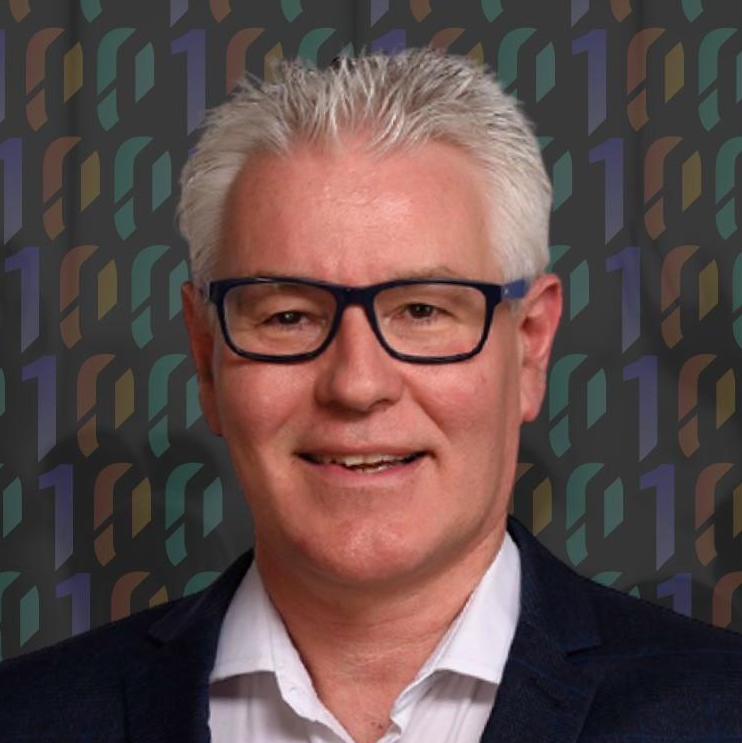
Gordon Glenister is a leader within the influencer marketing space, author of the book Influencer Marketing Strategy (being translated into Arabic and Chinese), host of the Influence Global podcast (now over 200 episodes), founder of Membership World (a community of around 7,000 trade associations and professional membership bodies), and co-founder of EmployedFluence.com, focused on employee-generated content and employer branding. He previously ran a trade association in the promotional products industry for many years before launching the influence division of the Branded Content Marketing Association in 2019. In this conversation he sets out the four pillars of why people follow other people (relatability, education, inspiration, entertainment), the IBM advocacy programme of 200 IBMers with their own contract and blue jacket signal, the Panasonic five-people-five-clients experiment that produced 23 of 25 target meetings, the chase the passion, not the influence career principle, and why he would invite David Attenborough on his podcast above anyone else.
A career across associations, content, and the influence space
The setup.
I ran a trade association for many years in the promotional products industry. In 2019 I launched the influence division of the Branded Content Marketing Association because I felt the influencer marketing industry needed representation. I knew about associations and very little about influencer marketing. I went looking for a book and couldn't find one, so I ended up writing one. It's been successful enough that this year it's being translated into Arabic and Chinese.
I host the Influence Global podcast, now into 200 episodes. The other string is membership and associations: I'm the founder of Membership World, a community of around 7,000 trade associations and professional membership bodies. People ask why I'm in two sectors. The two are linked: there isn't an association that doesn't want to become influential, and many content creators and influencers build communities and memberships.
The four pillars of influence
Why we follow who we follow.
I talk at events around the world about people's influence. Why do we hit subscribe? Why do we engage with content? Four things.
Relatability. We want to find someone like us whose content we want to consume.
Education. We want to learn something.
Inspiration. We want to feel something that lifts us.
Entertainment. Increasingly, more than the others.
Those are the pillars of great content. The most successful influencers are great storytellers. We tend not to remember facts. We remember the joke and the story. That's how the space has grown so massively.
On why people stay in membership organisations.
Belonging is what makes the difference. Why do you join a tennis club or a political party? You want to find something to align to, relate to, engage with. That's why people stay with membership associations for years. It's not only because it's a good place to understand what's happening in the industry, but because it's the place where they build friendships, connections, and trust.
Personal brand: the 10-by-10 research exercise
On carving out a distinct space in a saturated market.
A brand is what someone says about you when you're not in the room (the cliché Jeff Bezos uses). It's what other people perceive about you and tell others.
When I teach my programme on becoming more influential, the first step is research, exactly as you would for a brand launch. Pick the area you want to be an expert in (cybersecurity, food, anything). Look at 10 other people online; review their last 10 posts. That gives you 100 pieces of insight. On one spreadsheet you'll probably extract 20% (maybe a bit less) that's genuinely insightful. You'll realise what's working. The discipline when you're creating content and brand: put out what you know is working, rather than what you think will work.
You also need your own identity. Look at Yacht Guy: video content of super-yachts; I don't know the guy's name, but I remember Yacht Guy. Supercar Blondie: video content of supercars. They created a whole identity around what they do and don't deviate. Find a niche and stick to it, with consistency three or four times a week minimum.
If someone likes or comments on your post, that's the equivalent of shaking your hand. You'd shake back in a conference room. Why do we not always thank the people who took time to comment or follow us? The same principle applies.
On building personal brand without it being a performance.
People don't want look at me content; they'll turn off. The way through is adding real value. I've just been judging the Top 100 Marketing Influencer Awards, and the people getting huge levels of engagement are showing rather than telling. The pattern isn't here's a bunch of AI tools you can use; it's here's how I generated 500 leads a month using this formula with these tools. Demoing the tool in action. I created a song for my partner on Suno yesterday, my first time on the platform, and played it to her that evening. Because she could see and hear it, the resonance was greater.
On the discipline of memorable messaging.
Our attention is getting less and less. I use the three-word acronym principle. When we launched MESA, the Meetings and Events Support Association, I wanted something members could remember. I created the acronym CEO: Community, Education, Opportunity. That's all I wanted members to remember, because when they told other people about being a member, they could remember the three words and create their own narrative around them. Long mission statements don't survive contact with conversation. CEO does.
Employee-generated content: 8x engagement and IBM's blue-jacket programme
On employee advocacy done well.
Employee-generated content delivers about 8x the engagement of brand posts when done well. Beyond the engagement number, the second-order effects matter. If 20% of the workforce share content, what does that say about the culture of the organisation? What is it doing to recruitment fees? A graduate intake sharing content about their first behind-the-scenes experience reaches peers in their network who want to know more. When you present to a potential new client, don't only talk about products and price; talk about the culture, and share the posts from the 20% who are publicly representing the business.
Why advocacy programmes fall over: people don't know what to say, they're fearful of looking boastful, they don't want to get in trouble for saying the wrong thing. The answer is strategy first.
IBM is the model.
IBM has a massive global workforce, and their advocacy programme is over 200 people. The IBMers. They have a contract with each member of the programme: KPIs they commit to. Because being part of the programme is aspirational, there's even merchandise. There's a blue jacket, the IBM equivalent of the Masters green jacket, visible among peers and customers as a sign of a thought leader. Imagine not relying on a single CMO to do all the keynotes; instead a network of people sharing online, appearing on panels and conferences, contributing to articles. The tentacles of the business work at full stretch when employee advocacy is at its best.
On the CMO who worries about brand dilution.
The answer is proper onboarding to the programme with clear guardrails on what employees should and shouldn't do. The same principle as briefing an influencer: parameters, rather than verbatim script. There are an enormous number of tools now to evaluate employee advocacy and measure which content is working, who's producing it. You can gamify it for internal competition.
A specific story.
I interviewed someone from Panasonic on my podcast. They didn't go big like IBM. They focused on five people and 25 clients on their hit list. Over three months, the five salespeople created content that served those five-each clients. Five people, five target clients each. Not a wide ask, deep instead. They commented on the target individuals' LinkedIn posts. They talked about industry issues relevant to that sector. The objective was 25 meetings. They got 23.
Communities, AI, and the new currency of influence
On moving from content hub to true community.
A challenge in associations is the new generation. Gen Z and Gen Alpha have a different approach to associations than my generation did. We joined an industry body because it was the right thing to do and good to be in the club. The younger generation is more transactional and career-driven, asking what's it going to do for me, and now. Associations have had to rethink the offering, including the recognition that one size doesn't fit all.
The most important step to move from content hub to community: find ambassadors and break things down. Some WhatsApp groups are too big and unwieldy, just notifications all the time. Smaller groups that serve a purpose work. Be super clear about the objectives of the community and what it's there to serve.
A media-entrepreneur group I belong to is excellent because people share what's working, ask peers about specific challenges, and find common problems. One person this week posted about roadshows; four or five others were interested, one had a perfect format, and a group of five formed around the common challenge. That isn't easy with competitors in the room. When I was working at the BPMA, regional events struggled because people didn't want to share their secrets. We had to bring in guests (brands telling them this is how we work with promotional gift companies) so they had a blueprint to react to.
On AI-generated content.
LinkedIn content has been written or doctored by AI to the tune of over 80%, according to recent reading. I embrace AI. The pace of change is huge, and we haven't seen anything yet. AI influencers exist; some are beautifully made and easy to engage with. The principle that matters is transparency. I don't mind if something has been changed by AI; just tell me. What I don't like is being deceived. The wider public feels the same.
Work we did at the BCMA with the influencer platform Hype Auditor looked at how content creators use AI. Most are using it for ideation, content, and scheduling. Others are investing in digital twins, and there are creators who are uncomfortable with digital twins. We're still in a phase of education and experimentation.
On where influence is going.
Influence used to be about knowledge and reach. Now it's much more about trust and signal. Trust and influence have always been linked; the most trusted people you know are influential. A leading broadcaster I won't name had a reputation so massively tarnished recently that you start to ask if it can happen to him, who else? Trust is what builds relationships. When we can't trust things and people, it's worrying.
Brands now want personality and authenticity so they become relatable. That's why they still use influencers, especially in tight niches: the engagement is real. If you ask people who they follow, they say I love her content or I buy through their links because the relationship feels genuine.
The internal buying problem, and chase-the-passion advice
On the internal-buying problem.
The biggest issue is internal buying. A marketing manager wants to do something but has to convince a senior bean-counter who has always done exhibitions or a marketing plan a certain way. Asking the business to divest money from one channel into another is hard.
The advice: start with a trial. Small budget, make it work, then scale. Saying we're going to put £100k into influencer marketing when the brand has never done influencer marketing is a massive mistake. The industry wants the revenue, but spent well, with the right influencers, the right tools, or a good influencer agency that understands the work. In the early days, influencer marketing was top-of-funnel brand awareness. Now it's absolutely in the performance space, down the funnel. Live-stream selling on TikTok shop is moving product in minutes. The high street is dead partly because of how this is changing.
On the myth he wishes would disappear.
Treat influencers and content creators as real people and creative experts, rather than as employees. Bring them into the briefing stage. They almost guarantee better solutions than the brand has, because they know their audience better than the brand does.
On who he would invite on his podcast.
David Attenborough. Through his programmes he's brought a real enthusiasm to the planet, changed how we think about recycling, and his voice is the most engaging I've heard. From a cinematography and videography point of view it's in a class of its own.
There are incredible people in every community. Go find them and have a beer with them.
On career advice.
Do the 10-by-10 research. Look at who else owns your niche. I won't help someone carve out an identity until I know how we're going to push their narrative. We want to find something unique about your story and content that will grab attention. It will probably be quite niche, rather than all things to all people. Then create content you're absolutely passionate about. Don't chase the influence. Chase the passion. The influence will follow.
The question for the board
If communities and influence are the same thing, what share of our brand investment builds an owned community versus rents one?