From automotive launches to VR to AI, always chasing the edge of what marketing can be.
Mindie Kaplan VP Innovation, MediaMint
Interviewed by John Horsley
Published
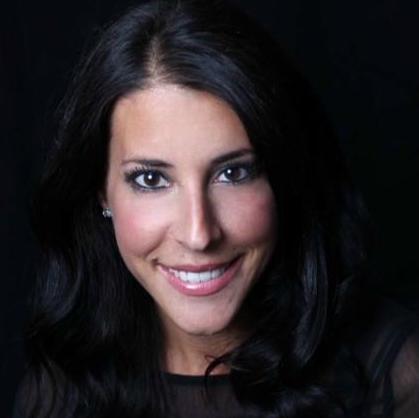
Mindie Kaplan is Vice President of Innovation at MediaMint, founder of Rated VR (a VR/AR agency later acquired by MediaMint), and creator of the Million Mammograms campaign. She has spent her career across automotive (Nissan, Ford), CBS, and Microsoft, before moving into the start-up world with Rated VR. In this conversation she sets out why she left a corporate path for a start-up after the what-if voice got louder; the one year methodology she uses for any new venture; the early-stage breast cancer diagnosis that became Million Mammograms (now scaled to a 40-market campaign in Times Square with out-of-home partner Adfront, a full-page ad partnership with the Financial Times, and a launch in London); the principle that breast-cancer imagery has been fear-based rather than motivational and how to change the narrative; the Mamosas feature (a Calendly-style function so women can invite a friend to their appointment); the partnership model with existing breast-cancer charities rather than starting another nonprofit; the goal of one million mammograms by 2028; and the principle that resilience is a choice approached pragmatically.
A career from automotive to VR/AR
The path.
I started in automotive: launching a new vehicle was inspiring early on. I had a curiosity about taking a new idea and putting it into the market in whatever form that took. The path went from a corporate background (Nissan, Ford, CBS, Microsoft) into the start-up world.
Early on the discipline was experiential, with the limits of what you could do given the channels at the time. As digital and then social grew, the work changed completely.
On a personal note: I was conditioned early to think corporate was the only path, with the security and the 401(k). As digital and creators evolved, you could see you could build your own company, product, or brand with scrappiness. That's where I went out on my own and started Rated VR, which was then acquired by MediaMint.
On the leap.
I wasn't sure if I was risk-averse. The what if voice in my head got louder year after year. The fear of failure was a quick thought; what hung me up was what if I don't do this and something bigger could have come of it, and I regret it? I assumed I could always go back to corporate America. I had the conditioning and the skill set.
So I tried a methodology: I'll try this for one year. It's the same approach I used when I moved to New York from Chicago, where I wasn't sure I was cut out for New York and gave it one year. With Rated VR, a lot of my Microsoft clients were asking about the technology, and marketers weren't sure when to jump in, how to measure it. I saw the need.
Million Mammograms: the origin and the imagery argument
The origin.
I was diagnosed with early-stage breast cancer with no family history. I shared with friends and probably over-shared on social. The reaction was unbelievable; what I'd done seemed to bring people together and inspire them. I was very positive through it, when I could be, which was often.
I'm a marketer at heart. A friend had taken a photo when I was recovering. A lot of my clients aren't female, and they're older. I asked myself what the implications of posting the image were. I'd been told it was powerful. I decided to put myself out there, scars and all. The intent was to change the narrative on the imagery I'd seen when I was going through it.
Most breast-cancer marketing is fear-based, which gets people to do something. The other side is motivational. If it's beautiful, it's not as scary. I posted on social on a whim: ladies, post your mammogram dates, because I caught mine early and I wanted to share. It went everywhere. Everyone was posting. It worked.
On the scale-up.
The industry has jumped on this with tangible ideas to bring it to life. At CES I met an out-of-home agency, Adfront, that offered remnant inventory. We did a Times Square campaign, launching in 40 markets. The goal: a million mammograms by 2028. The Financial Times (a MediaMint client) has been giving inventory, including full-page ads in print. Women I've never met message me to say I made my appointment, thanks for showing this other side, it's not as scary.
A specific design choice.
When women say I'm too scared, I'll say I'll go with you. I started Mamosas, a Calendly-style function on the site that lets you invite a friend to your appointment. Whenever I speak, women of all ages come up with a story or an apprehension. The change is that catching it early like I did helps you avoid it being a great deal worse.
What I learned: alpha women are sometimes the most afraid
On the response.
The most eye-opening response: women in the industry who are strong, alpha, very organised are the ones who have reached out emotionally to say I have family history but I'm too scared. I was shocked. Younger women with family history or with friends who went through it have also said I'm too scared, and Mamosas exists to put a friend alongside them.
On building a movement.
You can create a one-person movement. With Million Mammograms I partnered with existing breast-cancer charities because they have the infrastructure. I'm not looking for donations. I wanted the count of scheduled appointments to move.
The discipline: reach out to partners, be vocal, ask. I didn't know what was possible; I shared, someone made an introduction, and I'm now doing talks. One coming up is with Google on using their insurance. Whatever platform you're trying to get to (advertising your cause, an event partnership, a podcast), talk to the partners and ask.
Activating brands around purpose, and year-round social impact
On the consultative principle.
Really understand what the brand's purpose is. Pharma brands working on breast cancer make obvious sense; beauty brands also do. I use AI to research the top brands supporting a given cause, then go deep on LinkedIn to find the warm intros. Understanding the carve-out is the work: pharma at early stage or late stage, beauty brands with products versus pink-ribbon programmes versus existing events. Consultative conversations on what they're already carving out, then build with them rather than pitching cold.
On the calendar question.
Breast cancer gets a lot of love in October. From a B2C standpoint there are tentpole moments year-round (I did billboards around Valentine's Day positioning this is your day of self-care, go get your mammogram).
From a B2B standpoint, there's an opportunity for companies to do more with their benefits. Employees notice the support given. People have come up and said thank you for working on this, my company did an event together with you, that meant so much because either I went through it or my mum did. More educational events on what the benefits are, especially when good benefits aren't being utilised. The events don't have to be heavy. We serve mimosas at ours.
Resilience as a choice, pragmatically approached
On the leadership lesson.
Resilience is a choice in business and personally. I'm wired as a solution person. Feel the burn, then what's the plan. Health or anything else.
A side observation: things have changed in how people collaborate. People are more straightforward, using their personality, being real. People want to do business with people they like. When you're open and share your resilience, the biggest leaders I've worked with have reached out to say thank you for sharing that; personally I'm working through this as a parent, or I'm working through this at work, and it made me communicate differently because of how real you were.
On the discipline.
I used a lot of the tools I'd use to manage a client through the diagnosis and the treatment. The top doctor with a Google Doc of questions ready. Questioning why we were doing something. The confidence, the resilience, the organisation came from the career. I felt equipped emotionally to own the process. When I got the diagnosis I had a moment of this has to be a mistake; no symptoms, no family history. I felt the fear, then what's the plan. Being mentally prepared was part of the work.
On the call to action.
Schedule, depending on your age and situation. Taking ownership of your health is so important. Before, I probably would have put something off. We're all busy. The test you know you're overdue on, or the proactive test that at your age you should be getting; a few hours of inconvenience can save you a great deal.
For women, go get your mammogram. If you're told to wait, push back. Men: I know men resist the doctor. Put on a good podcast, walk there, get a workout, take an Uber, get there. Get the test done. Check it off the list.
What's next, and turning a personal challenge into change
On the trend.
Creators have power. A personal share done organically and for the right reasons makes people rally and share with friends. I've seen it working.
The other side is misinformation. With cancer there's a drink a green juice and you're all good current that's loud. Everyone's responsibility is to do the research. Personal share done the right way is a powerful purpose-driven channel; the discipline is being responsible with it.
Smaller micro-influencers will have a great impact too, as they continue to create products relevant to their audience. And at the big-brand scale, like Patagonia, going all in on the causes and standing behind them day-to-day is what works.
On the roadmap.
We're going global. We're launching in London. The creative is bold (the imagery shows scars), and I wondered whether the UK was ready; the partners think it is. Across the year we're talking to beauty brands about showing beauty and healing through breast-cancer work, with a younger, more approachable register. Anyone who wants to volunteer can; I'm seeing the social sharing get the numbers up. There's also a marketplace of products that are helpful for women who've had breast cancer aggregating on the site. Everything is at millionmammogramchallenge.com.
Three principles.
Wait for the right timing. Don't force it. After my experience I went through a period of major FOMO; I just wanted to have fun and not talk about it. Then it resurfaced through people asking, and I felt called to do something with it.
Look at what side of the cause is important to you. For me, early prevention and changing the narrative. Then make it actionable.
Decide whether to make it a full-time thing or a campaign. I decided not to create my own nonprofit (after research; there's a lot to it) and instead partner with existing charities. There are different ways to get the messaging out in partnership: their newsletter, their events, speaking slots.
The question for the board
If the edge is always one technology cycle ahead, what share of our R&D investment chases the next versus optimises the last?