Brand is lived by your employees first. Not a logo on a thirty-second spot.
Minter Dial Author, Speaker & Adviser, MYDIAL
Interviewed by John Horsley
Published
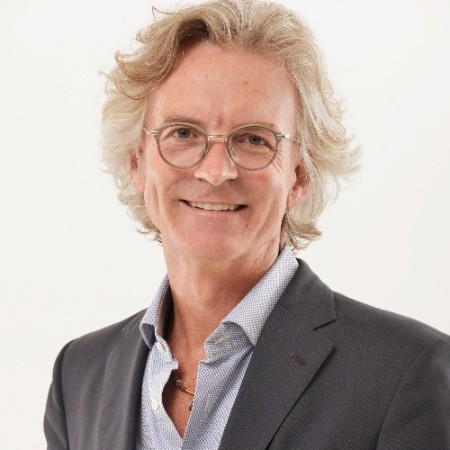
Minter Dial is a writer, speaker, and adviser specialising in branding, transformation, and leadership. He spent 16 years at L'Oreal, including running Redken globally. He has published seven books (working on his eighth) and a Second World War documentary film. He holds British, American, and French passports, has changed countries 15 times, and his career has spanned tennis, investment banking, and Zoom in addition to consumer goods. His books include You Lead and (with Caleb Storkey) Future Proof. In this conversation he sets out the strategy is choice; the most strategic decisions are what you don't do principle; the sameism warning about AI prompts that produce the same bland outputs as everyone else; the empathy as the most important negotiator's tool reframing; the measure trust inside before you can claim it outside principle; the you lead you discipline; the five characteristics of a good leader (curious, humble, empathic, courageous, karmic); the seven-second hug tribal-branding example from Redken; the would you tattoo this company's name on your body? test for true brand belonging; the Salesforce gives back without marketing the giving admiration; the don't take it personally leadership cliche he wants retired; and the closing principle: embrace imperfection, don't mistake risk for safety, and remember that life is a 24-hour gig.
Strategy is choice, and sameism is the AI risk
On the principle.
Strategy is choice. Choice of what we do and, more poignantly, what we don't do, where we don't go, what channels we don't try. Not trying to be everywhere all the time for everybody.
The proliferation of channels, technologies, and tools to measure has contributed to burnout. Without a strategic backbone to decide what to do and what not to do, it gets very complicated.
On sameism.
The problem with the AI moment: people produce material that is rather bland. The promise of automation is to free us up. If we use AI to generate text or imagery using prompts most others are using too, the AI engine will produce something quite similar.
Sameism is the risk. We're going to look the same, smell the same, write the same. Be aware of using AI to produce something differentiated. Knowing what differentiates you starts with knowing your strategy, your values, your purpose.
Empathy as the negotiator's tool
On the reframe.
In my book Heartificial Empathy I describe empathy as the most important tool for the negotiator. The negotiator is somebody who has to deal with people who don't necessarily think the same. If you don't understand or pay attention to them, what kind of solution are you going to come up with?
Empathy has two main types: cognitive (the why and how someone is thinking) and emotive (how they feel). I'd add a third: empathy with the planet and ecology around you, the rest of the human and animal species we share the world with.
You lead you: the principle behind every leadership style
On the discipline.
My book You Lead argues that to lead others you have to lead yourself. Find your purpose. Be in tune with your beliefs and your values. How can you authentically have a vision and lead other people if you have no idea where you're going yourself?
Find that out. It takes time. It takes courage. We tend to live in our circle of confidence as opposed to our circle of competence. We need to dig deeper. Once you've done that, you can express it authentically, and that's incredibly attractive.
On the five characteristics.
A good leader is curious, humble, empathic, courageous, and karmic. Curious: open to learning, to other points of view, to the world. Humble: aware you don't have all the answers. Empathic: feeling what others feel. Courageous: hard things have to be said and done. Karmic: invested in the long game, in the relationship, in the consequence.
The tattoo test for brand belonging
On the Redken seven-second hug.
At Redken we had a hugely strong tribe. The seven-second hug was a thing: salespeople meeting customers in the field would hug for seven seconds. Sounds odd, but it was a code. A way of saying we're part of this thing together. It bled into how customers felt about the brand.
On the diagnostic.
The question I ask companies: would the people working for you tattoo your company's name on their body? A brutal test. Some Harley-Davidson and Apple staff have done it. If the answer is no, you have work to do on belonging.
Brand isn't a billboard. Brand is lived by your employees first. You can't claim trust on the outside unless you've measured it on the inside.
Salesforce gives back without marketing the giving
On the admiration.
I admire Salesforce's 1-1-1 model: 1% of equity, 1% of product, 1% of employee time given to philanthropic causes. Marc Benioff has been doing this since the start. The quietness around it is what I admire. They don't market the giving. They just do it. Authentic.
Contrast with a brand that runs a 30-second purpose film and then doesn't do anything substantive in the community. The audience smells it.
On the cliche to retire.
Don't take it personally. If you're in business and a project doesn't work, of course you take it personally. You spent two years on it. The notion that you should not take it personally is a corporate detachment that breeds disengagement. Take it personally. Care. Then learn and move on.
The question for the board
If brand is lived by employees first, what share of brand investment builds internal belonging versus runs external claims our own people would not endorse?