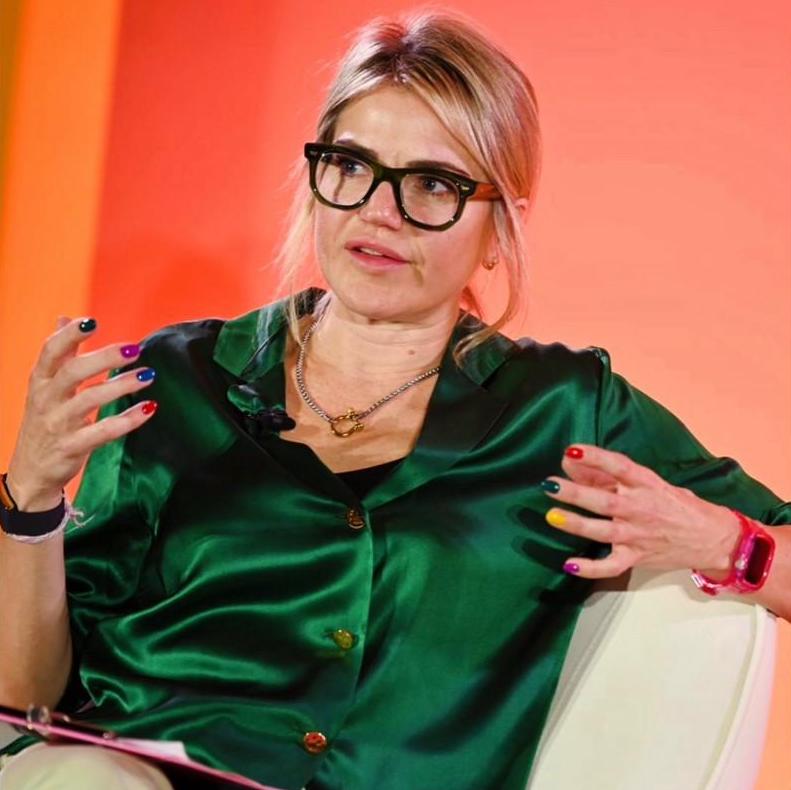
41 million monthly users. First-party data is how The Sun makes every one count.
Owen Griffiths Commercial Revenue Director, The Sun
Interviewed by Justin Cooke
Published

Owen Griffiths is Commercial Revenue Director at The Sun, part of News UK, responsible for the commercialisation of the brand across print, digital, app, video, and the off-platform offering. The Sun is a global business reaching around 41 million users a month across the UK and growing US operations. Griffiths has been with News for 17 years. In this conversation he sets out the 10-year partnership with Tesco that took front of mind recognition from around 45% to 51%; the current bun mock-1980s newspaper takeover for Paramount+; the Nucleus data platform built on first-party data and instantly polled reader panels; the Sun Originals video proposition built on the Venn diagram of commercial interest and editorial heritage; the speed-dating workshop where 15 readers tell brands face-to-face what they think; and why the early experiment with AI translation didn't work, so the team has gone back to human-in-the-loop.
What The Sun is now, and the breadth of the platforms
The role and the breadth of the work.
I look after the entire commercialisation of The Sun across all of its platforms and portfolios. Display ad in print to full partnership on the website to the new video offering and what goes beyond that as we diversify. It has never been more important that as a company we can help clients and agencies bring all of that together. Even just on the video offering we have around 140 sub-channels across nine different platforms. When we go out to partners we need to bring that into focus.
Nucleus.
The way we bring it into focus is data. We've worked hard to consolidate the first-party data we have about consumers across all the platforms. We've packaged it as Nucleus, our data platform, with tools inside it that connect advertisers to the different communities, and tell us where and when those communities are consuming.
The scale.
The Sun is now a global business. UK operations and a growing US operation. Globally, around 41 million users per month, across the traditional newspaper, the apps, off-platform offerings like YouTube, and potentially CTV in future.
The 10-year Tesco partnership and the four-way discipline
A canonical example of partnership.
We have long-established partnerships with grocers, who fit naturally alongside our audience. Tesco is the cleanest example. The partnership is approaching its 10th year. The brief was to be front-of-mind for our readers, the first brand they think about when they consume our product.
In the early days that meant an ad on the front page of the newspaper, which sounds commonplace but was controversial with the editorial team at the time. We had to do real work to get them on board. Over the decade we've evolved it into the digital space: Tesco is the first ad you see when you land on the website on the day they're running, and in the app there's a splash screen that launches just as the user opens the app. Front of mind, literally.
The measurable result: recognition has grown from around 45% to around 51%, which is substantial in a market this saturated. Brand recall and front-of-mind perception is what a long-term partnership of this kind genuinely delivers.
The four-way communication discipline.
The partnership runs as a four-way conversation. Sun commercial, the agency (Essence MediaCom in Tesco's case), editorial, and the client. Every week when an execution goes out, everyone is informed about what's happening. Everyone knows their role and how they can develop it.
The agile partnership example.
Paramount+ was launching an 80s-themed show. We thought through how to lean into the 80s with our editorial. Nostalgia was the entry point. We turned both the newspaper and parts of the website into a mock 1980s version of itself, incorporating characters from the show in very specifically Sun-style headlines. We even changed the masthead from The Sun to the current bun. The recognition for the reader is yes, this is the way, but it doesn't feel forced because humour and creativity are doing the work.
What makes a great partner, and the data Nucleus delivers
On the qualities Griffiths looks for.
A willingness to work with us and evolve with us over time. Clear on KPIs (what you can deliver and what's a challenge to deliver). Particularly when partnerships integrate with editorial, we always have to be conscious of editorial objectivity and not always tell editorial what to write, because readers want a level of independence. Be clear on objectives and make sure everyone feels involved through the communication. The ideal partner is someone willing to work with us on an idea and develop it naturally over time.
On what Nucleus and the reader pools deliver.
We aim to have everything we can about our readers and what they consume. Brand perception sits at the top: we have a facility to poll our readers on our website instantaneously. If you want to know exactly what readers are thinking about anything at any moment, you can. Our audience has a habit of picking the winner of reality-TV shows from the start; bookmakers should pay attention. Getting instant feedback on where the brand stands (as opposed to where it thinks it stands) is genuinely valuable.
We can then layer on what the target audience is consuming, how long they're engaged, and the talent tie-ups (the celebrities they're searching for and reading about). All of that gives the client and agency more context for why we're recommending the positions we choose.
On who leads the partnership dance.
The best partnerships come when all three (brand, agency, publisher) are in the room together. We've gone out proactively to brands and agencies with ideas, but if we do, it's incumbent on us to know what their challenges are before we walk in and tackle them. That comes from long-term communication. We maintain relationships with agencies and with the clients themselves in both marketing and senior exec teams, so we can bring that knowledge into the room.
Sun Originals: video on the Venn diagram of commercial and editorial
The video proposition.
We're predominantly free-to-view; we have a small membership scheme but it doesn't make up the majority of readers or revenue. So we have to be commercially minded with what we build.
When we sat down to design Sun Originals (deep, engaged, long-form video content that resonates with readers and advertisers), we mapped the Venn diagram of where do we know there's existing commercial interest with our partners and where do we have a historical editorial stance to play with. The intersections gave us two initial areas.
Sport. The Sun Sport is long-standing and famous for the insight it provides. Editorially, we got Prince William talking about his love of football and Aston Villa, which is an example of the journalism the brand can bring in that space. We launched a show with Betfair called Tactics Exposed: our journalists go deep into the tactics a manager might use for the weekend's games, and Sam Rosbottom, Betfair's PR lead, comes on the show, gives his perspective, and adds betting context organically.
Fabulous (the female lifestyle brand). Women 25 to 40, often with kids in the household, thinking about feeding their family. A natural fit with grocers like Tesco.
On going global.
We've been seriously out in the US for around four years. We've experimented to see what translates and what doesn't. I still have to remember to say soccer rather than football. The lesson early on was the value of boots on the ground. We have four or five journalists and three or four sales staff dedicated in the US who know what will resonate with that audience.
For tech content that spans both markets we still translate appropriately. We do this from a human element. An early experiment with AI translation (not only for the US, also for non-English-speaking territories) showed the technology isn't at the state it needs to be. We've gone back to human-in-the-loop for that.
On AI inside the operation.
The creation of content remains very much in the human realm. People come to The Sun because they trust the journalists and want the opinion they give. The current plan does not change that. Where AI is interesting is in efficiencies in the background, in how we propose data to partners, and in how we present data. Multiple mock-ups of an ad created quickly for a client. An external-facing chat-style interface where a client can ask questions of our brand and self-serve insight into the audience, leaving the team to focus on the genuinely creative bringing-to-life work that only a human can deliver.
The speed-dating workshop, and structuring the commercial team
The measurement layer beyond brand-lift studies.
We work with partners like Differentology to offer brand-uplift studies. We measure every click and impression on the websites and use the Nucleus pulse functionality for instant feedback. We maintain reader panels of around 300 readers for deeper insight.
The most distinctive piece is what we call the speed-dating workshop. We invite the client and the agency in. We invite around 15 readers from a deliberately diverse background. The readers tell them one-on-one exactly what they thought of the brand: did you see this advert, what did you make of it. It can be a bit dangerous; the golden insights come from there. The funds work, the resonance with the everyday people is real, and the client gets it from the audience directly.
On the team.
Commercially we structure around expertise. A dedicated team speaks to clients directly. An agency team speaks at varying levels (a direct investment team plus an agency development team for high-level strategists and planners). A studio team is the commercial creative arm, sees partnerships teams, and creates the commercially funded works. A commercial services team sits as the rock behind all of that, providing insight and data points that lead thought process and delivery, execution and optimisation.
When we move into new areas where we don't have the historic background (video being the recent example, digital before that), the pattern is the same: inject expertise into those teams and let the rest of the teams bring themselves up to speed by osmosis.
On measurement.
Editorially, the standard metrics: page views, newspaper circulation. The move is toward what those numbers look like per user. Brands are more interested in engagement, in intent, in whether the reader is taking action that suggests they're in the mood to buy. Nucleus ingests different targeting models. If a brand is working with us, we want to know the outcome you're solving for, then optimise accordingly. Some brands still want CTR optimisation; others care about attention metrics or emotional targeting. The right tool for the right job, starting with the outcome the client needs and working back from there.
Culture, what's next, and 17 years' worth of career advice
On culture and growth.
We have a North Star: connecting brands with communities through the power of content and data. Every team meeting returns to it. Leadership runs sessions to update on strategy and include the team by sharing information.
Moving into new areas surfaces people who in a traditional structure wouldn't have been visible. Dean Scoggins, one of our sports editors with a print background, is now fronting two Sun Originals shows and has found a new lease of life as a TV personality. The principle I buy into after 17 years at News is that anything is possible. There are opportunities to take advantage of.
On the trends.
Two things. Video, where the market and consumer are moving, gives more opportunities and more platforms to tell the story on. The way we connect brands with video is going to take off on a different level.
The other trend is the questioning of the historic narrative around news. The trade press has covered news avoidance and brand safety. Stagwell recently announced the News Alliance to tackle the question. We've long been telling that story. The case for a quality free press and the journalists inside it is worth restating.
On the next generation.
Find a mentor early. Someone who has walked the path before you, or someone you aspire to be. Two functions: they give you the practical knowledge of how things work day-to-day when you're new and know nothing, and (more importantly) when you're in an organisation, learn how it works. Experienced people can tell you how to navigate the trickier inner corridors with better functionality.
The question for the board
If first-party data makes every visitor count, what share of our audience strategy depends on logged-in signal versus third-party cookies?