The algorithm is hungry. Feed it counter-pattern creative. Or be ignored.
Tom Ollerton Co-Chief Executive Officer and Co-Founder, Automated Creative
Interviewed by Justin Cooke
Published
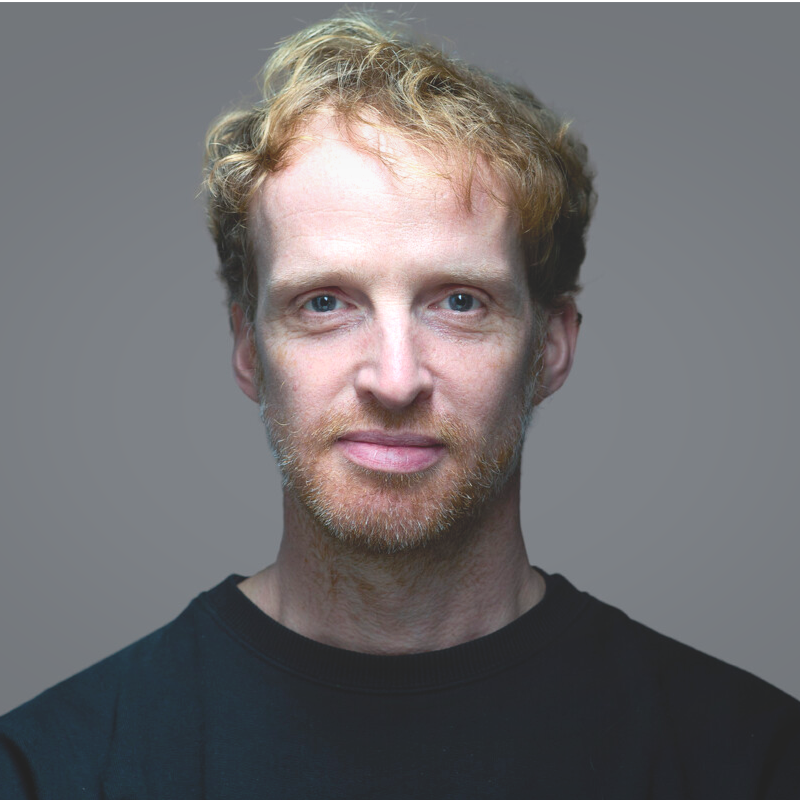
Tom Ollerton is Co-Chief Executive Officer and Co-Founder of Automated Creative, the ad-tech platform that combines data and creativity to scale, test, and optimise performance advertising. Working with Bose, Mars Petcare, Formula 1, Jack Daniel's, Specsavers, Tony's, and Reckitt. In this conversation he sets out the hard ones-and-zeros plus the soft fluffy creativity discipline; the strategic tags model that explains why ads work; the automation is the easiest, optimisation is the optimal distinction; and the AI is a giant predictive-text guess machine observation.
From failed musician to head of sales in two weeks
The setup.
Failed musician until I was 28. After music fell out of the sky I worked in a kitchen as a chef. Dating a woman who worked at a mobile agency, I asked one day what did you do today? She said, I designed a user experience for a Java app for Guinness. The penny dropped: you can work in a creative industry and earn decent money, which you do not in food and generally not in music.
I applied and failed to get into agencies until a Gumtree ad came up for an intern five minutes from my house. I walked in, said give me that job, I will do anything, I will make myself indispensable. Two weeks later I persuaded the founder to let me be head of sales. I went on to Sky, then We Are Social, then founded Automated Creative.
AI will come down a pipe like electricity
On the founding insight.
At SXSW years ago, Kit Nicholas (who invented Siri) said in the future, AI will come down a pipe like electricity. That stuck. Alex Hobhouse and I ran an event called I will Be Back at the intersection of creativity, ads, and AI. Twenty events: a brand, an agency, an academic, and a supplier on each one.
It became obvious AI would eventually be good enough to support human creativity. We set up Automated Creative with that vision. We did not realise it would take eight years for the thing to happen. We are all enjoying the aftershock of the ChatGPT big bang of two or three years ago.
On the discipline.
The traditional creative says performance is disgusting, get that word out of my mouth. The hardcore performance marketer says brand is fluffy. Both require different types of creativity.
Amy Wright at Automated Creative has led the work: bring performance thinking to brand, and brand thinking to performance. Instead of one YouTube ad that runs and is done, use data to optimise the first second. If they are not getting through the video, you are not landing the message, you are not growing the memory structures, you are not going to get the brand lift. At the bottom of the funnel: what brand cues should go into the performance ads? It is the same team.
Strategic tags and the why ads work
On the unique discipline.
If I asked a brand marketer why did your paid ads work last year? nine out of ten say I do not know. With tagging and tracking, you can answer specifically.
Strategic tags in the alcohol industry typically include: does the ad have a serve, flavour cues, ingredients, heritage. We tag every ad for every alcohol brand we work with against those tags. The CMO talks to the dashboard like an LLM: what drove click-through in France on Pinterest? Answer: flavour cues. What drove Add to Basket for Gen Z in North America? Answer: provenance. Instead of guesswork, the brand gets analytics about why ads work.
On the distinction.
People confuse automation with optimisation. Automation is the easiest thing you can do. Optimisation is the optimal thing you can do. The value marketers bring is oversight. On some clients it is fully automated and the work goes out the door. On others there is a human strategic layer because marketing is fundamentally one human speaking to another human. Not poking machines and hoping sales come out the other end.
ChatGPT is a predictive-text guess machine
On the limits.
ChatGPT is trained on words. It is a predictive-text guess machine. If you ask what happens when a glass is knocked off a table, it says the glass will smash. Only knows that from words. The new AIs being trained on video will have a very different understanding of the world.
Humans do not operate only in words. Tiffany Rolfe at R/GA said the only good thing about getting older is you have more data: everything you have seen, felt, touched. As marketers, suppliers, and agency folk, we have ingested vast data about the world that ChatGPT has not. For mid-to-high-conversion products like Bose (seven years), there is nuance. Decades of knowledge about position, brand, copy, video, animation, timing. That is what marketers bring on top of the platform.
Every AI update returns us to zero
On the structural reality.
Going back to Kit Nicholas: AI comes down a pipe. We are not ChatGPT, we are not Anthropic, we are not Google. They are calling the shots by how good the product is coming out of the pipe. With every update, we are all back at the same level again.
Remember Snapchat: you spent half a Saturday working out how it worked, then on Monday Justin is our Snapchat expert. You got wheeled into pitches. Same pattern with every AI update. We are going back to zero on a pretty regular basis.
On the upside.
My daughter is being taught coding at school. I voice-prompted Claude: make me a platform game for Teen Titans where Robin jumps over barrels of fire. It made it. She said it was rubbish. I said, tell it what you want. She prompted the next version. My daughter is already in a world where her imagination can be realised.
We have been in this industry 20 or 30 years. This is the first time we have said that with credibility. It cost 30 quid a month. We are in a creative industry where there is no physical limitation on what an idea can be. Anyone who tells you they know what is going to happen next is lying. We are all making it up. At least we are in a position to be part of that story. What a time to be alive.
The question for the board
If every AI update returns us to zero, what share of creative spend commits to the strategic tags that explain why ads work versus the tool everyone has next week?