A brand is the idea you own in someone else's head.
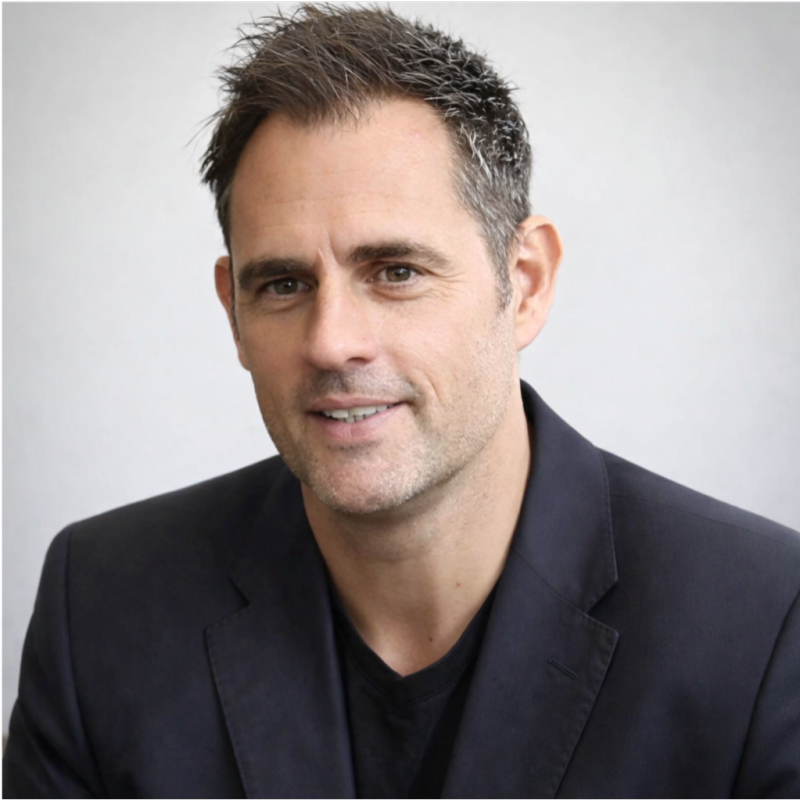
Paul Anderson Founding Partner & Global Executive Creative Director, Gravity Global
Interviewed by John Horsley
Published

Paul Anderson is Global Chief Creative Director and a Founding Partner of Gravity Global, the most-awarded independent B2B marketing agency globally. He trained at ad college in London and joined his first agency at 21, presenting TV scripts to Alan Sugar for the ZX Spectrum +3. The agency's work for Embraer is voted by LinkedIn as the most successful B2B campaign of all time and is the most-awarded B2B campaign in history. Gravity's creative department globally runs around 60-70 people, with a programming division in Vietnam, producing roughly 20 client products a month and developing the agency's own AI-driven creative workflow. In this conversation he sets out the platform concept model that Gravity uses as its B2B version of the big idea; the 84% of B2B sales are emotionally led statistic that underpins humanising brand voice; the 5% in market at any one time truth from 6sense data that argues for brand investment over short-term demand-gen; the CMOs are job-hoppers and brands suffer for it observation; the culturally a million miles away lesson on local creative leadership; the purpose of the place is what makes people stay principle; the jaw-dropping phase he's in with AI; and the closing brief to anyone entering the creative side of marketing: look for organisations with brands that matter.
The 84% statistic that argues against jargonistic B2B
The principle.
I don't see the divide between B2B and consumer creativity. B2B brands have to compete harder than ever. Our work for Embraer is the most-awarded B2B campaign in history, and LinkedIn voted it the most successful B2B campaign of all time.
The stat that should change behaviour: around 84% of B2B sales are emotionally led. You wouldn't think that, would you? Why are we ditching human qualities? It's not about humanising B2B; it's about being human. If you abandon a one-to-one conversation with customers and become jargonistic, you lose attention. Attention is the biggest commodity you have.
5% in market: the case for B2B brand investment
On the data.
A 6sense survey found that around 5% of people are in market at any one time to buy something. If a brand throws short-term tactics out all the time to get sales, it could be wasting 95% of its effort because the buyer isn't in market. Brand is a really important part of the story.
When shortlists are put together for vendors, the vendor that wins the business at the end of the day was already on the shortlist before the shortlist was drawn up. Attribute that to the power of brand.
On the CMO short-termism problem.
CMOs are job-hoppers (18 months somewhere, two or three years at most). They're not invested in the long-term life cycle of the brand. As they move up their career ladders, brands eventually suffer.
We're not seeing many CMOs making the C-suite in the true sense. CEOs aren't valuing what marketing is doing. Around 3% of CMOs sit on the board. I make sure the CMO sits on the Gravity board.
The platform concept: Gravity's version of the big idea
On the model.
At Gravity we talk about platform concepts (our language for what would be called a big idea). A platform concept has to work at many layers: the employer brand, investor relations, the sales team, customers. Do you have a singular idea that can do all of those things? Often not.
Many brands come to us with a strap line under the logo and say we don't bother feeding back to that, it's just there. Wrong. We should be living the brand promises.
The test.
Brand is the idea you own in someone else's head. What's the idea your brand owns? People find it really difficult to articulate the idea they truly believe they own. If you do own an idea, it's a lot easier to see it coming through the demand-gen work because everything ladders back to it.
Culturally a million miles away: the local creative principle
On the lesson.
When we did our first US acquisition, the American partner said Paul, you can be the US Creative Director too. I said no. I'm culturally a million miles away. I don't get the jokes, I don't understand the politics. You have to have local creativity in every market you operate in because of cultural nuances.
On what makes people stay.
Once the local-creativity layer is right, you go higher and ask what culture do we want to have as an agency, what are we about? For us: serving brands that make a difference to the world. That culture feeds through into the creative department.
A guy once said I was going to leave the agency, but the purpose of the place is what makes me stay.
I'm in the jaw-dropping phase with AI
On using AI in the work.
I love AI. I'm old enough to remember the birth of the internet and commercialising it; I'm in the same jaw-dropping phase with AI now. I use AI probably 40% of my day most days. The creative department uses it all the time. We've built training systems for staff. We're developing AI-driven products for clients at around 20 a month with a programming division in Vietnam.
It lets us visualise quicker and to a higher level than before. The client can see what they're buying earlier on. A static-asset library example: a client had invested over years in a static picture library. We brought it to life with AI; the assets moved and did things, so the client didn't have to film everything again. Their brand heritage was right there.
On synthetic audiences.
Where the personas of the audience are right, you can create synthetic audiences and validate the creative ideas against them. You get a flavour of how the work will land and what the audience thinks. Fine-tune from there.
The question for the board
If 84% of B2B sales are emotionally led and only 5% of buyers are in market, what share of our spend reaches the 95% with brand work?