Independent social agencies are winning because culture moves faster than holding companies can follow.
Adam Clyne & Mark Lainas Founder & CEO · President US, Coolr
Interviewed by Justin Cooke
Published
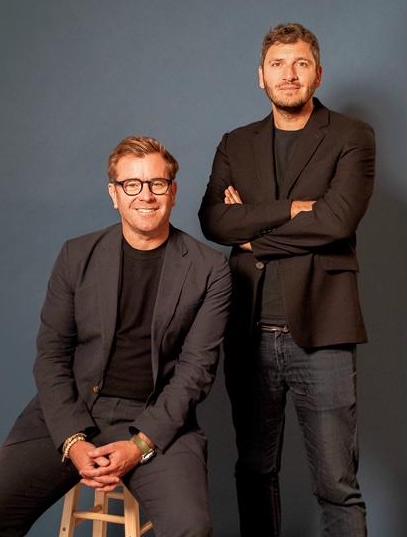
Adam Clyne is the founder and Chief Executive Officer of Coolr (stylised coolr, no E), the independent social-first agency he founded eight years ago. Mark Lainas is President of Coolr's US business and is spearheading the US expansion. Coolr has grown to over 150 people, raised private-equity capital, and has won Cannes Lions and other industry awards. Clients include Burger King (their agency of record for eight years and counting), Deliveroo (a one-off project that became three to five influencer campaigns per month for five years), and over 75 brands launched onto TikTok as one of TikTok's first official partners. Clyne previously led EMEA digital at Weber Shandwick (taking them to a digital agency of the year position) and was Chief Operating Officer at LADbible. Lainas' career runs through Ogilvy and BBDO and other holding-company shops as well as more recent independent agency leadership. In this conversation they set out the big agency brains plus social-native speed formula that founded Coolr; the Burger King Kanye West Twitter campaign that became the most-liked brand tweet ever globally; the TikTok early-mover bet that produced the muscle memory of launching 75-plus brands; the we care about every single post, comment, reply, and tweet value on the kitchen wall; the acceptable face of social positioning that lets the agency interface with CMO, CEO, legal, and compliance; the Office UK-to-US analogy for the US expansion; the fundamentals before AI discipline; and Clyne's living in the platforms is non-negotiable test for any contemporary marketing leader.
Why Coolr was founded
The origin.
Coolr was the culmination of two previous experiences. At Weber Shandwick I was Head of Digital for EMEA, transforming a traditional corporate-PR business into something more digital and socially centric. I flew to Switzerland to meet Nestlé and Unilever to help guide them through the change in digital communication. We won digital agency of the year.
Then I got headhunted to LADbible as COO, the veteran of a fast-growing business whose founders were in their early to mid-twenties. I'd been talking about social and how brands should do it. Going into LADbible was humbling: there was a whole different way of thinking about social, scaling communities, playing in culture, being agile, nimble, and quick.
Coolr was the culmination of both. When we started meeting brands we talked about combining what we called big agency brains (strategy, creativity, the ability to mesh into compact organisations, compliance, legal) with the speed and agility of a social publishing business like LADbible. A potent mix nobody was talking about: how you interface with grown-up brands at the speed of culture. People talk about that all the time now; at the time it was new.
The name: Coolr is the evolution of a water-cooler conversation. In an office, people would talk about what they watched on TV; that conversation transferred into the digital and social ecosystem. Spelt C-O-O-L-R, no E, literally and metaphorically the evolution of the water cooler.
On staying in lane.
Social doesn't stand still. We don't try and go outside our swim lane. If it's social content, publishing, or influencer, we'll do it and be best-in-class. We don't make TV commercials. We don't do PR. We don't do events. We want to be best-in-class always at all things social.
The Burger King-versus-Kanye-West tweet, and the Deliveroo five-year always-on engine
The iconic moment.
The first iconic moment was winning Burger King. We were tiny. The client took a bet on us. We've been their agency of record for eight years. Soon into the relationship we ran a Twitter campaign for Burger King against Kanye West, who at the time was the hottest music talent on the planet. It went on to become the most-liked brand tweet ever globally. It showed that the speed-and-agility cultural programme we'd developed for Burger King was something brands could do. Nobody had really had permission to act and behave like that before. A huge influx of clients followed. We won a Cannes Lion for the work. More importantly, we set the pace for a different way of doing social: being part of the conversation, taking a brand's tone of voice and replaying what other people were trying to articulate.
A second tentpole.
Eighteen months in we did a single influencer campaign for Deliveroo (recently acquired by DoorDash). It was a huge success. They came back asking for another. Before we knew it we were doing three to five influencer campaigns every month for Deliveroo. Five or six years later we're still doing them, at greater scale.
On the platform play.
We started experimenting on TikTok in 2019, before the pandemic. There weren't really brands on it. We did campaigns for Burger King. We saw the scale of the reach: it was like old Instagram or old Facebook, where natural organic viral moments were possible. Other platforms had downgraded that ability in favour of paid-only placement. TikTok hadn't.
By 2020 lockdown, when everyone was at home dancing in their bedrooms in front of TikTok, we already had a killer case study to show other brands what scale could look like. We became an official TikTok partner, one of the first. Fast-forward and we've launched 75-plus brands onto the platform with the muscle memory of how to win there. The craft of copy-and-speed (tweets, Xs) still matters, alongside the influencer side and platform-first creativity. The work is about meshing them.
We care about every single post, comment, reply, and tweet
The value on the kitchen wall.
We have values in the business, and the one on a vinyl in the kitchen reads: we care about every single post, comment, reply, and tweet. We do big campaigns and big productions, and we sweat the small stuff because a single post or single reply can become the biggest thing in the world. Traditional agencies don't care about that in the same way. That's what makes us social-first. We celebrate the brilliant comment, the brilliant reply. It sounds ridiculous in other agencies. In ours it's lauded. Mark and I came out of a meeting earlier where we interrogated four or five different individual posts and comments across clients. It permeates from Adam through everyone in the agency.
On the discipline.
There has to be personal accountability at Coolr because all of our work is so visible. I want to be able to say to anyone in the agency why did you post that on our house? Did you think that was where we wanted to be? Not as an arsehole; we want the best work. Is it good enough? Do I think it's good enough? Does the consumer think it's good enough, because they vote with their thumb.
You have to be the medium. Trying to be the consumer when you're not the audience is dangerous; I'm not Gen Z. Put yourself in their shoes as much as you can: will they be interested in that, does that speak to them, the proof is in the pudding.
The US opportunity, and the Office UK-to-US analogy
On the moment.
In 2025 in the US, social media viewership is going to overtake linear TV viewership for the first time. If a CMO isn't putting social media as the first thing on their marketing plan for 2026, they're not doing it correctly. CMOs feel slightly unaware of what to do, and that's where our experience, model, and positioning help.
The US agency environment isn't servicing clients well right now. Big holding companies trying to do everything and unable to. At the other end, micro-fragmentation: a roster of hyper-specialist agencies that only care about their narrow KPI, leaving the client to manage many agencies without clarity on what's working. Coolr offers a way to do social media exceptionally well under one roof with one team. Clients will come from both extremes: those who want to get rid of the big agency that's trying to do everything, and those who want to consolidate three or four specialists.
On localisation.
A useful analogy is The Office. The original was a British paper-factory show with Ricky Gervais in Slough. It was recreated with a complete replica and an American top-spin. Different show, same show. The art direction, the process, everything the same, and built for the local market's tone of voice, personality, comedy, and humour. We want the same operating model at Coolr in the US, built for the local culture and local audience. Not arrogantly the Brits have all the answers. We have a proven methodology that works unbelievably well; we fine-tune it for this market.
The other discipline: the balance between sending great people from the UK who want to come over and hiring people in market who truly understand the culture (Halloween, Thanksgiving, Super Bowl, the communities and sub-communities evolving year over year). Coolr has to know that level of nuance to help brands win.
On the US expansion leader.
I've sat in every seat across competitors: big holding-company, independent agency. Understanding where each one's weaknesses and strengths are is useful for understanding where we can provide real value for clients. I'm old (Justin keeps mentioning this on the podcast), and I'm young at heart. The startup energy of being in the trenches together is in Coolr's DNA: the care about every comment and tweet value is a scrappy, passionate, startup attitude. I was known as a disruptor in the holding companies; the iteration of Coolr expanding into the US has all the rigour of the last eight years plus a President who's up for being scrappy and scaling like the agency did eight years ago. We won't act like a 150-person agency in the UK because we aren't that here yet. We will be soon; we're not it yet.
Fundamentals before AI, and the live-on-the-platforms test
On what's most exciting in 2025.
The industry is obsessed with the new. Everyone wants to be first to AI, like they wanted to be first to Metaverse 18 months ago. Many brands haven't got their fundamentals sorted out. We took on a big global brand 18 months ago whose aspiration was to be one of the best brands on social. The audit showed they hadn't posted on one of their channels for 12 months.
What excites me is getting brands match-fit for today, rather than obsessing about tomorrow. Brands doing a poor job in the space have so much potential. AI is coming; we overestimate things in the short term and underestimate them in the long term. The work we see with gen AI isn't quite where it needs to be yet. Most brands we work with are cautious about it; deciding whether they want any data or IP living in that space. In 18 to 36 months it will rewrite how we do everything.
The opportunity for today is the brand that knows it needs something and isn't sure what (the acceptable face of social positioning: we can interface with CMO, CEO, legal, and compliance and still produce work that cuts through). We value partnership and relationship for the long term: three, four, five years, not three, four, five months. When you're invested in each other as a partnership, the work pays off.
The test.
You have to live on social. If you're not living in it, you can't judge whether a piece of work is good or not. What worked three months ago doesn't work any more. I'm not on TikTok (said jokingly by marketers) is crazy. You can't book a billboard and then blindfold yourself when you drive past it.
I open talks at events by asking hands up if you've been on platform X, Y, and Z today. The answer is always how many have been on LinkedIn versus how few on TikTok. Okay, you're interested in your career, and not interested in your consumer.
To win in social, live and breathe the space. If it's not for you personally, create a persona for your audience: a profile of a 21-year-old, follow the brands a 21-year-old follows, follow the creators, follow the artists. You get a feel for what the audience is really about. Be in the weeds. Not in glass corner offices, detached. The narrative is it was the social media intern that did it; this is a sophisticated, complex category and brands need to be in the weeds to win.
Mark's add.
What I'd tell a 21-year-old about success in their career, and what Adam describes, is the same thing: curiosity. The 70-plus TikTok brand launches happened because the agency's value was being curious enough to see something happening and ask what is that, let's understand it, how can you win on it? That's true within social and outside it. When AI turns up, be curious enough to understand it well enough to form a point of view. So many people at all levels lack curiosity about the channel they're in, the client's industry they're supposed to know, or new technology and innovation. If you aren't in the evening annoying your wife because you're on your phone looking at something someone mentioned today, you're doing yourself and your business a disservice.
The question for the board
If independent social agencies are winning because culture moves faster than holding companies, what share of our agency roster moves at that speed?