Strategic capability cuts through. A function just mirrors the silos.
Jason Warnes Marketing Advisor and Investor, Independent
Interviewed by John Horsley
Published
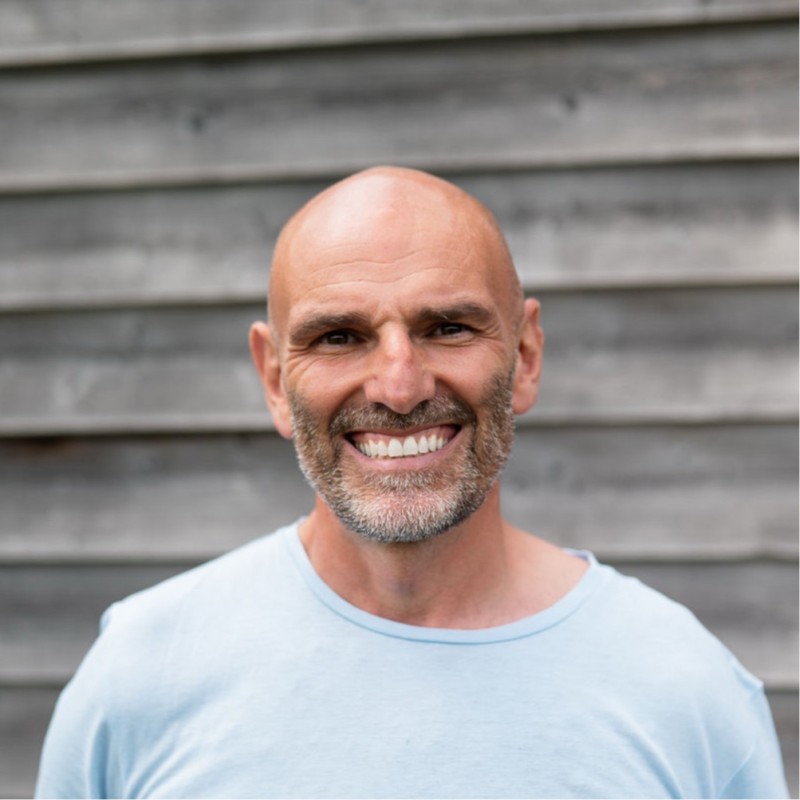
Jason Warnes has more than three decades across the world's most demanding agency, consulting, and holding-company environments. He joined AKQA in 1998 and spent 15 years there, including four years in Berlin building the office that worked with Volkswagen and Audi. He spent five years at Deloitte Digital as a partner in the consulting practice, then returned to WPP (which had acquired AKQA after he left) as a global client lead running multi-agency integrated teams for some of WPP's biggest clients. His client experience runs across BMW, Rover, Land Rover, MINI, MG, Microsoft, Sainsbury's, Fiat, Ferrari, VW, Audi, Volvo, Shell, and BP. In this conversation he sets out the David Ogilvy run the agency like a kitchen in a restaurant principle still alive at AKQA; the capability cuts through, function does not contrast between consultancies and holding companies; the three preconditions for transformation (CEO mandate, practical understanding, time); the variable-media-spend balancing act at Volvo and Shell; the prediction that AI will make optimisation table stakes and leave brand as the only differentiator; the new optimisation surface being appearance in AI engines rather than search engines; and the closing brief for any agency built from scratch: a small core of fewer, more capable people with commercial understanding and curiosity to apply technology to a specific client problem.
Ogilvy ran his agency like a kitchen, and the principle still holds
The setup.
I started in 1998 at AKQA. Fifteen years there, four of them in Berlin setting up the office to work with VW and Audi. After that, Deloitte Digital as a partner for five years. Then back to WPP as a global client lead running multi-agency integrated teams.
It was pioneering. We were building websites, kiosks, online campaigns, CRM programmes, e-commerce shops hosted under our tables. Interacting with customers in ways nobody had done before.
On what stayed the same.
I'm a big fan of David Ogilvy. He ran his agency like a kitchen in a restaurant. The principles and fundamentals between AKQA and Ogilvy were exactly the same: attention to detail, everything that left the studio or the kitchen had to be absolutely perfect. You couldn't afford for anything to be not living up to the brand. Key to AKQA's success.
The big idea is harder to find and harder to defend now because many objectives are measured by optimisation and performance, which drives clients to demand certain types of solutions. The core of great ideas is still there. Go to Cannes and the work is not short of them.
Consultancies are capability-led; holding companies are function-led
The contrast.
In consultancies, strategic consulting is a capability that cuts through everything: delivery, technology, consulting. In holding companies, marketing is a function that doesn't cut through all the departments.
Inside a holding company you have lots of functions that mirror functions inside the client. The experience team talks to the experience agency, the comms team talks to the campaign agency, the digital team talks to the digital agency. You don't get the consistent thread through everything you do. That's where things break down.
On the three preconditions for real transformation.
CEO buy-in and mandate. Without proper agreement and alignment, nothing happens. At Deloitte, once it was green-lighted you had full support. In marketing, transformation programmes are often led from inside the function without the authority to drive it through.
Practical understanding of what you're doing. I've been on the receiving end of a 100-page strategic review saying save 30% in marketing operations, just go and do it. Without understanding the practicalities, it doesn't happen.
Time. Recent work has reinforced how long transformations take. Set realistic expectations on objectives and the plan. Commit to the long-term. It doesn't happen overnight.
Performance has detracted from brand, and AI is about to make that obvious
On the consequence.
The fixation on optimisation and performance marketing has detracted from real brand investment. With AI coming, much of that optimisation becomes table stakes. When you take optimisation out of the equation, what's left is branding. Without branding in a world of ubiquitous optimisation, there's no standout.
On how Volvo and Shell balanced brand with short-term commercial results.
Volvo defined campaigns as moments: big moments with integrated work happening at the same time. The X90 launch was a brand moment with significant investment.
Shell and BP were the same: tactical and brand investment balanced. The constant iteration was variable media spend. If commercial performance needed tactical sales (sell more cars), media spend moved. The big campaign was still running but the performance money was diminished. Constant adjustment throughout the year. More relevant now: huge scrutiny on the marketing budget from the CFO, smart businesses recognising the value of brand. AI and automation are helping the case for strong brand work.
The new optimisation surface: appearance in AI engines, not search engines
On the front line.
A lot of discovery now happens through AI engines. I've renovated my home relying on ChatGPT for product recommendations. The new front line for brands will be how they appear in AI, rather than in search-engine optimisation. Search is still important. Brands that appear favourably in AI models will be the ones that win as people switch.
A few years ago a renovation would have started with Google searches; that has now changed. Only a small proportion of people are switching, but it's the start. Optimise to AI, not only to search engines.
On the agentic governance question.
Your next customer is going to be a robot. If you're investing heavily in brand and building trust now, trust matters in a world where my bot is evaluating suppliers. The decision still rests with me at the end. You have to have the governance and the confidence that the agent is acting in the right way.
I'm playing with generative AI and slowly progressing to the agentic world. I have to be more than 100% confident the workflow or agent is acting on my behalf in the right way. If you're not confident, it spirals into something you don't want to see out there.
If he built an agency today: small core, commercial understanding, curiosity
On the recipe.
A small core. Fewer, more capable people. Commercial understanding, associating yourself with key client metrics and performance. Curiosity to explore and try different things. The application of technology to solve a particular client problem.
The AKQA brief I had to reply to when I applied was tell me something that wasn't possible five years ago that is now possible today. Present a piece of work. Be curious about what new things are available to us.
On the future of agencies.
All projections show smaller, more productive teams. Still a place for new people coming in with strong technology understanding plus the fundamentals: brand idea, customers, the client's business. Squeeze and tension across the agency space: consulting businesses extending into marketing, technical platforms taking direct client relationships. The agencies thriving have deep client partnership moving into outcomes-based and performance-based remuneration. Not performance marketing: we get paid on you performing as a business.
The question for the board
If AI makes optimisation table stakes, what share of our marketing investment builds brand versus runs work that will soon be commodity?