450 million monthly visitors. Still led by the honest wisdom of the crowd.
Justin Reid Senior Director of Global Partnerships Solutions, Tripadvisor
Interviewed by Justin Cooke
Published
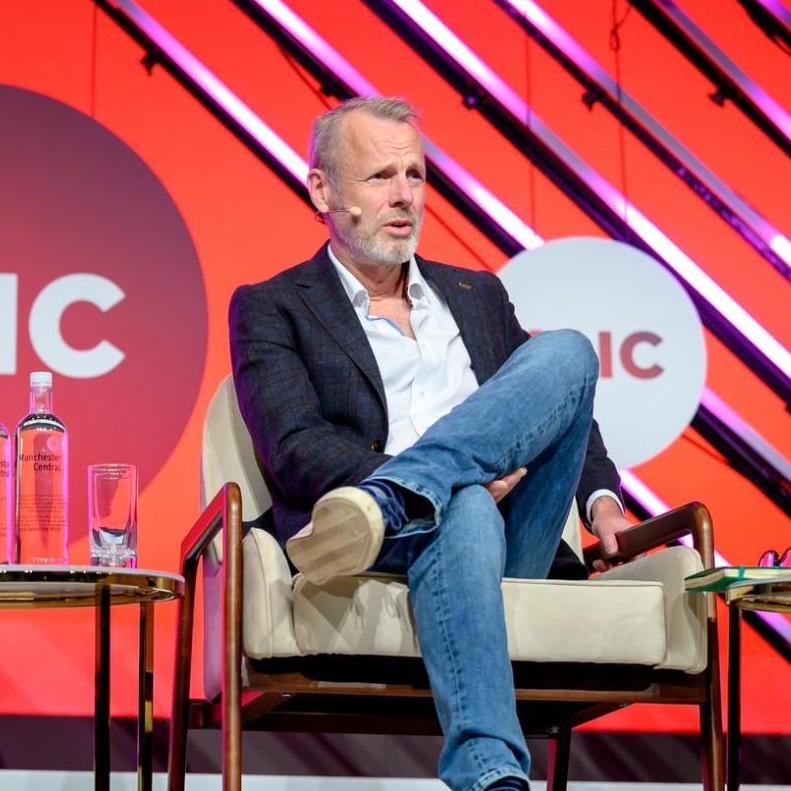
Justin Reid is Senior Director of Global Partnerships Solutions at Tripadvisor, the world's largest travel guidance platform with around 450 million monthly visitors and over a billion reviews. Reid leads global partnerships across EMEA and APAC, working with destinations (Visit Britain, Visit California, Saudi Arabia, Abu Dhabi, France, Turkey), hotels, restaurants (through the company's restaurant booking arm The Fork), the fast-growing experiences arm Viator, and travel-adjacent brands. In this conversation he sets out the better world for pets partnership with Mars Petcare and the insight from the pandemic-pet boom that drove it; the 25-process review fact-checking work the company runs to protect the trust position; the Wonderlab in-house creative studio and the Outernet takeover with Abu Dhabi; why Tripadvisor is choosing to work with Olympic athletes who are just under superstar status rather than mainstream influencers; and why the post-pandemic traveller has moved from get away from the desk to give me an experience that matters.
What Tripadvisor is, and the breadth of the platform today
The proposition.
Tripadvisor is about making people have a better experience. We're still the world's largest travel guidance platform. About 450 million people visit the platform every month. Truly global, founded in the US which is still our largest user base, and hugely popular in EMEA and APAC. We remain loyal to the founding roots: independent advice from fellow travellers, leaving reviews that are honest but moderated, fact-checked through around 25 different processes (some automated, some manual) before a review goes live. The wisdom of the crowd. Over a billion reviews powering what we say is the best.
Beyond the hotel review.
What started as a review platform for hotels has developed into a place to book hotels, and into the all-encompassing travel experience. We own The Fork (restaurant booking and reviews), and Viator is the biggest expanding area of the business (experiences). When people are booking a destination, where they stay matters; what they do is increasingly what drives the decision.
On what makes Tripadvisor a partnership platform.
Partners are divided across hotels, destinations (Visit Britain, Visit California, Saudi Arabia, Abu Dhabi, France, Turkey), and travel-adjacent brands. The destination work surfaces the best place in the world for the experience the traveller is looking for, built on the reviews and the editorial content.
The founder's principle.
Steve Kaufer, our original founder and CEO until a few years ago, built the company around the belief that no one should suffer what could be one of the biggest purchases of their year, and the purchase isn't only for themselves but for the entire family. Let the truth come to the surface from people like you and me. What are people saying, not what glossy marketing copy says.
The Mars Petcare partnership: a better world for pets
A specific example of travel-adjacent.
Mars sells more dog food than chocolate (a fact I didn't know before I learned it). A great insight from the pandemic was the surge of people who bought pets, and the post-pandemic anxieties they then had about travelling. Three concerns: how many times can you ask a neighbour or parent to look after the dog? If you put the dog in kennels and you feel guilty about the anxiety the pet is being put through, what is that experience like for them? If you take the pet with you, is the pet going to be as welcome as your child or your mother, or excluded?
We work with Mars Petcare and Cesar on a better world for pets campaign. The product changes: when someone leaves a review, did you have your pet with you? Filters for pet-friendly properties. A pet-friendly accreditation scheme. Last year we published the best places globally to travel with your pets, built on reviews left by pet parents. You wouldn't normally associate pet food with travel, but Mars puts the wellbeing of the pet at the heart of its messaging, and so the partnership lands.
Why the platform sits differently in the buyer's mind.
When people come off Tripadvisor, they feel reassured. The information has helped them make a better decision about possibly the largest purchase of the year, and a purchase being made for the family. They come off feeling good. We like to contrast that with how people sometimes feel coming off some of the major social platforms. The Adolescence show on Netflix has had an enormous impact on the public conversation about the dangers in certain areas of the web. We are brand-safe; we do extensive fact-checking; and the association with being in a good, friendly place where good is being highlighted is a real differentiator. Go and find that good, make yourself a better person. That contrast matters at a time when the mental-health effects of other platforms are well documented.
Wonderlab and the Abu Dhabi takeover of the Outernet
On the in-house creative studio.
We have an in-house creative studio called Wonderlab. We took over the Outernet last year in partnership with Abu Dhabi. It wasn't an advertising campaign for Abu Dhabi. We clustered the real reviews from real travellers across the Outernet, brought the experience of being in Abu Dhabi to life for people in London, and let visitors sample smells and flavours. Surprise and delight for people walking past Tottenham Court Road. Previously the work for that destination would have been banners on the site. Now we can bring advertising to life and experiences to life, backed by the authenticity and trust people have for the Tripadvisor brand.
On the measurement frame.
The most tangible metric is the simple ROI for the destination. Attention metrics are important but not an end in themselves. The proof point is: as a result of a destination spending money, did we take someone through the full user path from I was looking at London to I was looking at Paris? Did they then look at a hotel, book a restaurant, book an experience? If someone in New York books a restaurant in Paris, they're going to Paris. Apply trusted average-length-of-stay formulas (often six to seven days) and the average spend in the destination economy, multiply by the volume of people who did it, and the ROI is solid.
Beyond ROI, brand-lift studies have a place for partners like Mars Petcare or L'Oréal or Visa. Across multiple platforms a brand-lift study at least gives a consistent set of metrics about how an audience moved on awareness and inclination to purchase. We also look at reach for some of the video campaigns; we have a 30-minute Amazon Prime show called The Wanderer that takes a traveller who has never been to a country and shows it from the inside through the eyes of locals, guided by Tripadvisor reviews. Hours viewed, repeat visits, shares.
Post-pandemic behaviour, the AI planner, and the super-app vision
The single biggest insight.
People work from home three days a week in big cities. The idea that a holiday is getting away from the desk has been completely replaced by I want an experience that matters to me. Because you're not commuting as much, because you've recovered the hours, the holiday has to connect on a deeper, emotional level. That drives the demand for experiences. Tripadvisor's job is to unearth gems: destinations with not many reviews but five-star reviews across the board, surfaced so the visitor goes for quality over quantity.
On how the product is changing.
We've adopted AI. We have an AI planning tool. It simplifies the trip planning process. Tell it I want to go to the south of Italy, I want local cuisine, I want local culture, I'm there for five days, taking my parents, partner, and dog and it pulls the best together into the itinerary.
The vision is to make Tripadvisor the one-stop for everything in the travel purchase, the inspiration, the hotel, the itinerary built from the best of the best, all on the same platform. Over time the platform will evolve into integrating partners like Uber for booking transport, possibly Netflix for the travel-inspiration side and the in-flight entertainment side. A super-app for travel, with loyalty rewards (discounts, exclusives) so the most loyal customers see Tripadvisor as the essential partner.
The Olympic-athlete content principle, and doubling down on truth
On the choice of who to work with on content.
I have a healthy scepticism about travel influencers. The travel influencer who says this week this is the best destination and you scroll their feed and they've said the same about 17 different destinations in 17 minutes is not authentic. We've started a project with Olympic athletes, deliberately choosing those just under superstar status. Olympic athletes get the spotlight once every four years; many work second jobs in between. They have strong personalities, they're driven, they believe in clean living, they make good role models, and they have a real influence in a defined specialism. An athlete talking about training is fine. An athlete talking about an amazing destination they went to, discovering things they didn't know, finding a country's welcome more than they expected, taps into a different audience and a different mindset. The trust athletes have plus the trust Tripadvisor has produces something different from generic travel influencer work. Good content creators and genuine people.
On the principle that lets Tripadvisor appear inside other brands' campaigns.
We've seen the big social-media platforms remove the idea of fact-checking. We are doubling down. The recent trust-and-safety report shows the number of reviews we have taken down and the processes a review goes through to appear live. People need to know that when they read something online, it is at least a truthful opinion. Opinions can differ; the actual event must have happened. People are fed up with reading things they know aren't true, and with the idea of alternative truth. There is truth. That's what we're doubling down on.
The leader's own list.
I'm going to Mexico in a couple of weeks. Mexico City, then Oaxaca, then the Cape. I've never been; my partner has, and the food scene won me over. The general advice: it's very hard to go wrong with Italy. Travelling around Italy is accessible from top to bottom by train. Don't only go to the Instagram places (everywhere is an Instagram place in Italy at this point). Don't always go to the top restaurants; go to the local places. It's hard to have a bad meal.
The question for the board
If 450 million monthly visitors are still led by the wisdom of the crowd, what share of our marketing earns that endorsement versus pays for it?