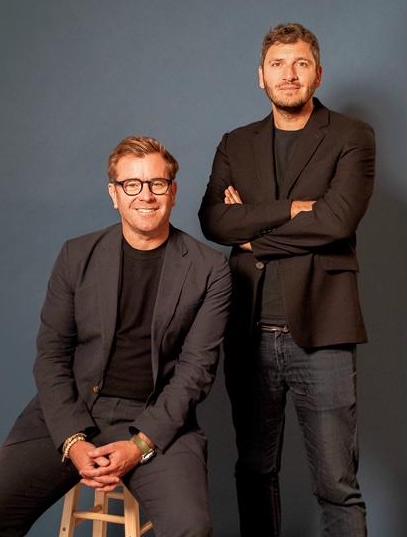
The world's most used creative format is also the most underestimated advertising medium.
Kevin Hein Chief Growth Officer, GIPHY
Interviewed by John Horsley
Published

Kevin Hein is Chief Growth Officer at GIPHY, the creative platform that for ten-plus years has been the world's home for memes, reactions, and stickers, now operating as a high-growth business inside Shutterstock. He spent over a decade at Meta (joining Facebook two years pre-IPO when it had fewer than 2,000 employees, leaving when it had around 80,000) after earlier roles at Yahoo and CNET. In this conversation he sets out the move from feed-based environments to group-messaging environments and what that means for how brands participate; the one in three smartphone users sends a GIF every day scale fact; the Pepsi MUG root-beer campaign that produced a 4% sales lift and 2.5x ROI on direct soda sales from GIFs with no click-through and no offer; the Call of Duty Replacer campaign that took over the top 60 GIFs; the TV-franchise client that eliminated all paid except GIPHY and saw the first season-on-season viewership lift in 14 seasons; the cultural velocity discipline; the if you walk into a wedding you don't interrupt the circle, you listen and then add value principle; and the form factor will change everything in five years prediction.
A career through Yahoo, Facebook pre-IPO, and now GIPHY
The setup.
It started at CNET, around when Google was taking on the search market. I joined Yahoo for the search business and the digital-display business, which led to a wider digital footprint. Around 2009 I was asking marketers where they were allocating budgets and where they saw ROI. They consistently said Facebook and experimental. End of 2009 into 2010 I moved to Facebook, two years pre-IPO, when the platform was nascent. Thirteen-plus years later, that led to consulting and, 14 months ago, to GIPHY.
On the formative period.
I went from fewer than 2,000 employees to around 80,000. Multiple MBAs in one role. Around 2011 a Facebook study on affiliation found that if you're in line at a bank and the person in front of you is wearing a T-shirt from the university you went to, you're more likely to trust them, more likely to give them your money, simply because of the association. That was the springboard for building out a friend network, then enhancing communities as the platform grew.
The creative side: a feed-based environment that drives engagement through social context. An ad with your friend likes this brand attached. Community plus creativity together. The rest is history.
On how brands and people connect.
For a long time on Facebook the only way to market to people was if they were already fans. That initial loyalty (the person saying I want to be associated with this brand) was the requirement, and the association then spread to wider marketing. By the affiliation principle, John knowing me, John liking X brand, John affiliated with X brand means I now like X brand. Natural expansion through association.
From the feed era to the chat era, and cultural velocity
On the change.
In a feed environment (TikTok, X, the rest), the mindset is how do I feed my dopamine, get my stimulation, engage with content? In a messaging environment (the group chat with friends discussing a birthday or a trip), the context is completely different. The code-switching between the two is profound.
Group messaging is a community in itself. If you're a brand wanting to be part of that conversation: think about walking into a wedding or a party and seeing a group in a circle talking. You don't interrupt with what you think they should hear. You walk over, listen, see what's appropriate, and then magically and effortlessly join the conversation. In a feed environment you can yell and it can work. In a group message or an intimate chat, you have to be additive.
Culture is moving to private space because of feed exhaustion. Some tolerate ten minutes; some tolerate hours. The messaging environment has different comfort. With the macro context, people want a break and to talk to people they love and care about. There will be a much greater migration toward group messaging.
On the discipline.
Cultural velocity is an instinctive yet insight-and-data-driven perspective on what is relevant right now. The brand isn't trying to come in saying here's what you should do; the brand is understanding what's going on in culture and drafting off it.
The Bad Bunny Super Bowl halftime announcement is an example. The moment matters mostly to the NFL and a large part of the world will watch. You don't want a blatant brand endorsement; you want to understand the momentum around it. There's Bad Bunny's audience, the people still rooting for Taylor Swift (not opposed to him, a different audience), and people in the middle who are part of the entertainment. Brands that work across all three through creative win because they join the conversation rather than create it.
There's also the adoption case: Volkswagen and the Beastie Boys, Run-DMC and Adidas. Volkswagen never endorsed the Beastie Boys; there was no paid association. Run-DMC's My Adidas wasn't paid; the brand was part of the ethos. They integrated coolly and it likely drove sales.
On what shareability says.
A valuable currency on top of clicks and engagement is shares. When a GIF does well, it gets shared a lot. Sharing equates to virality and gives deep insight into what's working. A sports example: the Yankees won last night on a home run. You'd think a GIF of the home run would be the most shared. The most-shared thing is the batter standing at home plate for a while after the swing, capturing the emotion. Every sports network has the home run; what wins is the face, the reaction, the pause, the drama. That's the emotional context that gets shared.
The Pepsi MUG campaign, Call of Duty Replacer, and the TV-franchise lift after 14 seasons
A worked example.
Pepsi's MUG brand (a smaller-and-still-billion-dollar root beer) came to us wanting to create creative. We shot 60 pieces of GIF creative with a 6-foot-5 person in a dog mask: silly, on-brand things (bacon in a fryer with root beer poured on it). None of the GIFs had a click-through, an offer, or a destination. The only thing you could do was share with friends.
Pepsi gave us digital access to their anonymised sales data so we could measure whether we sold more soda. We had over a 4% sales lift and 2.5x ROI on direct soda sales. I questioned the data at first; we did the holdout. The campaign was different, on-brand, awesome creative, a great product. The code-switch matters: I'm not in a feed-based environment, this is different, this feels on-brand, this feels fluid, this feels normal.
Another worked example.
Call of Duty has been the best-selling game for 16 years. They came to us with a character called the Replacer, designed to replace you while you play the new release. We took the top 60 GIFs (the classic Leonardo DiCaprio reactions and the rest) and put the Replacer character into them. The branding was incredible. A long campaign with brand lift and an effect on sales. A year later, those GIFs are still being shared. The virality isn't a short burst; it goes on for a long period.
A third example.
A long-running TV franchise was losing viewership. They eliminated all paid advertising except us and didn't tell us. After 14 seasons, this was the first season where they saw an increase. The only thing they could attribute it to was the campaign. Right creative in the right environment.
On the work.
GIPHY has been a global platform loved by the world for memes, reactions, and stickers for ten-plus years. A billion-plus audience, integrated across the surfaces most of the world uses every day. Around two years ago we began developing the ad product, with GIFs in messaging as the main catalyst. The brands that get it really get it. It's not programmatic; it's white-glove service. You need insights to build the right creative. The brands that partner with us welcome the extra effort because the work pays off.
AI accelerates creativity, then makes everything feel the same
On the pendulum.
OpenAI's Sora app is essentially TikTok with all the content AI-generated; the UI is identical. At first it'll be fun to watch what AI can do. Then deep fakes become a significant problem. Then people will seek comfort in normal group messaging.
I'm seeing famous people who are no longer with us (Robin Williams, Martin Luther King Jr., Queen Elizabeth) recreated in AI. Cool and quirky for a minute; dry six days from now. Then a deep fake creates an Orson Welles War of the Worlds moment and people freak out. People get tired. The pendulum swings back. People will start migrating to what's comfortable in their brain. Maybe an anti-feed revolution that points to messaging.
On the prediction.
The phone form factor will disappear. Within five years we'll have a pod in our pocket that's the WiFi and the battery, and we'll be wearing glasses. Neurological connections, physical ones. Meta has launched something you wear on your arm to move your fingers and adjust. When the form factor changes, everything changes. There's a reason Jony Ive has been hired by OpenAI. He knows a thing or two about form factor.
Leadership lessons, and the three-piece model at GIPHY
On a discipline.
Don't take anything personally. Really feel it in your bones. In business, if you take things personally you don't have an accurate pulse on what people are feeling and saying. Understanding that lets you become focused on what the business needs, what people need, and what you're hearing and seeing without bias.
On merit.
A lot of what you inherently know to be true through experience, values, and outputs doesn't fully apply today. There's still a clear role for meritocracy. Merit plays a role; more factors influence who advances. Many influences beyond experience, beyond relationships, beyond results. It's not who you know, it's who knows you: what's your presence across social surfaces, what philanthropies do you believe in, how do you build character. All this builds the brand. Merit's good. The verdict on the change is out, and the personal-brand layer holds.
On the model.
When we work with partners (the strategic partners hosting GIFs, or brand partners), all three are critical. Strategy: sometimes we're the lead, sometimes we're the complement. The question what do you want to do? gets asked and not thoroughly enough. People: cliché and true. Execution: know the client's business, practise (which we don't see enough of), plan, and execute flawlessly. Be the best meeting of the day. Without research and practice and a sense of what do I want to achieve that helps the client, the meeting is just another call.
Communication, curiosity with AI, and the visibility-vs-participation closing
On what to do.
Hard work, however you define it. First in, last to leave, however you define it. Determined, hustling, taking risks.
I've yet to see anyone study the effects of the two-year world shutdown during COVID. Direct-to-consumer digital businesses grew exponentially. Employers coddled us. The change was collaborative and supportive. Five years on, the world has moved back and nobody is examining what that did to us. Dell's return-to-office in the US: 50% of people aren't doing it. The financial institutions are five days a week. Nobody is looking at how that's materially impacting us.
The principles to recommend: communicate. Not on Slack and not on text. Email is still underutilised. Communicate as if your text is hard-hitting. Don't use sloppy language. Lead with the point.
The Gen AI question: it might help people communicate better in business by forcing them to think about the prompt, the proposition, the elements of the company they work for. There's a curiosity gap (not a generational one, a curiosity one). People earlier in their career don't know what questions to ask AI. The first question they need to ask is what do I want to achieve? If you don't know the prompt, you start with a baseline that won't get the same result. We need more mentors and more patience.
On the test.
The ability to sense authenticity is many times more powerful than almost every other emotion. Casamigos: Randy Gerber, George Clooney, and Mike Meldman couldn't find a tequila they liked, so they made their own. They had no business plan and didn't want to sell it commercially. The goal wasn't to make money. They were already wealthy. They were solving for their own problem.
There's a session this week from the Chief Growth Officer of Shark Ninja. The brand is obsessed with customer insights and the little nuances. A six-hour meeting every week with the CEO, the product leads, and her: they look at SKUs and at what customers are saying and make tweaks. Completely obsessed with design. Reminds me of old Apple. Stay true to what the customer needs. Cliché, and it's not being done as often as it needs to be. The CMO pressure of I need results now drives a vicious circle that pulls people away from the customer.
On the participation question.
We don't have a visibility problem. The opportunity is to be more of a participant in the conversation, rather than interruptive.
The question for the board
If the world's most used creative format is also the most underestimated, what share of our creative budget reaches the audience in that format?