Trust is scarcity. An LLM can report the news, but it cannot break it. Protect the journalism, or lose the value.
Pierce Cook-Anderson Managing Director of Advertising, Mail Metro Media
Interviewed by John Horsley
Published
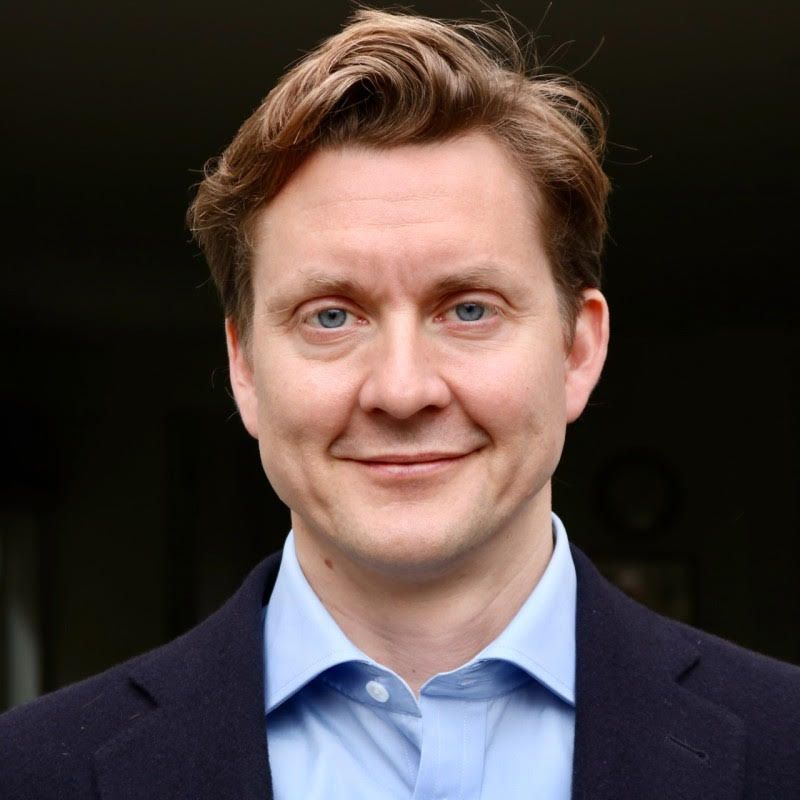
Pierce Cook-Anderson is Managing Director of Advertising at Mail Metro Media, the commercial home of the Daily Mail, Metro, i and New Scientist. He returned to publishing after two decades that took him through media sales and the sell side of ad tech, and now leads the title's response to AI, zero-click search and the fight for fair value in return for its journalism.
From the Mail on Sunday features desk to following the money into ad tech
The setup.
Cook-Anderson started 21 years ago on the features department of the Mail on Sunday as a journalist researcher, and thought he would become a journalist. Within six months he realised he was more interested in the business of publishing than the day to day of journalism, though being on the chase is not far from sales. He found Future publishing himself and spent a decade in media sales across Future, Sky, the FT and Newsweek.
On following the money.
He watched the money flow out of direct deals and into ad tech, from Teads and Kiosked deals at Newsweek, and concluded that was where he needed to go. He joined OpenX as an SSP during the rise of header bidding, moved to Smart Adserver as UK country head as it became Equativ, then into sell-side curation and first-party data with Audigent, which Experian bought at the end of 2024. Now, 21 years later, he is back in publishing.
Everything is coming back to passion audiences
On the lesson from Future.
He remembers Future as a genuinely innovative FTSE 250 publisher with a big London presence and around 100 titles, already deep into passion points and niche audiences. His boss Claire Dove taught him to be laser-focused, because media can be fun but if your eye is off the prize you miss the opportunities. Hers is one of the longest careers in the industry, and he says everything is now coming back to those passion audiences.
News publishers are the most trusted brands, alongside linear TV
On the existential moment.
Cook-Anderson describes an existential and pivotal moment driven by AI and zero-click search, layered on 25 years of digitisation and social. The threat falls hardest on independent publishers in the mid to long tail. With journalism in his blood, he says now was the time to go back and lead from the front.
On trust as scarcity.
Premium, trusted journalism is scarce because not everyone can produce it, and that scarcity gives it value. People will pay for content that is not slop. Once content is just scraped and rewritten by LLMs the inherent trust is gone. News publishers are, in his account, the most trusted brands alongside linear TV, and return on ad spend is higher when news brands are in the plan, because people go to authoritative sources.
An LLM can report the news, but it cannot break it
On what an LLM lacks.
The models constantly scrape for the most present information, but they cannot break news, because they have no original content. They blend everyone else's content from many sources. There is no journalist in Jerusalem or covering the next political crisis. The model can report on it, but the content came from human beings elsewhere, so it is almost outdated by the time it appears.
Blocking the crawlers until there is fair value for the journalism
On the fair-value fight.
Mail Metro Media pays for around 1,000 journalists, does not use AI to make content, and runs a paywall, so subscription grows in importance alongside advertising. Over 60 per cent of users come directly to The Mail. Cook-Anderson accepts the need to be present inside LLMs, but if journalism is taken and distributed with no fair value, no payment and no advertising the publisher controls, then news brands cannot continue. So it has blocked the crawlers for now while running trials, refusing both to put its head in the sand and to give away what it produces.
Opening up the Alzheimer's articles: when publishers should let LLMs scrape
On the worked example.
Brands now ask how their content will show up inside an LLM and what their geo strategy is, and a blanket block leaves them invisible to AI despite paying to work with the title. So the answer is selective partnership: allowing certain commercial content to be scraped. His example is Alzheimer's, a public health issue the audience cares deeply about, where being present inside the LLM serves the reader, so those articles could be opened up.
From transactional deals to joint business partnerships underpinned by the brand
On the change in selling.
You cannot buy the content, there is still a church and state divide, but the way publishers sell has changed since his Newsweek and FT days. It is now joint business partnerships across social, video, print and the website, with far more creative, bespoke work to make brands stand out. Outcomes packages have driven millions of pounds of product spend off a single article, and even a short influencer clip is powered by the brand behind it. It is far less transactional than it was.
From twelve ads a page to four and a half, and no more wallpaper
On premiumisation.
Everything comes down to ROAS, and there is still no free lunch, but the conversation is now about premiumisation. Ads per page have fallen from 12 to an average of about 4.5, and around three for subscribers, with new full share-of-voice formats that are more interactive, because they do not want to bombard readers with wallpaper. Pages are faster with less latency, and the sales team, agencies and brands are on board.
On the alternative.
Publishers still delivering the uncanny valley experience will not survive, especially with AI, as page views fall between 30 and 70 per cent year over year. Stuffing more ads onto the page to claw back every piece of addressable monetisation will not work for anybody.
Fewer, more trusted partners, 200 billion data points, and a message to the CMO
On the partner cull and the data.
In 18 months the number of ad tech partners has been cut by about 50 per cent, with ads.txt entries down the same, and no real loss of money. What wins now is collaboration, insight and ease of use, not just a cheque via an SSP. The title has something like 200 billion first-party data points and can build outcomes and guaranteed deals, working with Permutive as a DMP for cohorts and intent.
On protecting what you love.
Relationships are primarily direct rather than programmatic, and CMOs already know the value of trusted, regulated news environments, backed by studies from News Works, Wavemaker, the AOP and the IAB. His message is to protect the thing you love and invest in it, rather than take the money into other channels, because this existential moment is real and no one should assume it is forever. And for young people, the industry is hard, but those who genuinely care are the ones who get on.
If AI answers keep our journalism visible while stripping out our ability to monetise it, what is our fair-value model for the LLMs, and at what point does blocking the crawlers cost us more than it protects?

Interview · Episode 141
Do not look like your category. Own your food and drink codes. Specialists win.
Olaf van Gerwen · Founder & Global Creative Director, Chuck Studios

Interview · Episode 140
Identity is the marketer's Rosetta Stone. Connect every touchpoint, or you measure none of them. And the death of the cookie made identity stronger.
Travis Clinger · Chief Connectivity & Ecosystem Officer and GM of International, LiveRamp
Interview · Episode 139
Proxy metrics are dying. Marketers now demand ROAS at every stage of the funnel. And AI lets the campaign respond to the market in real time.
Luca Filardo · Chief Revenue Officer, Adlook