Marketing now means reaching people and machines at once. Story is the shortcut. And great craft still rises to the top.
Jennifer Kattula GM & CMO, Microsoft Advertising
Interviewed by John Horsley
Published
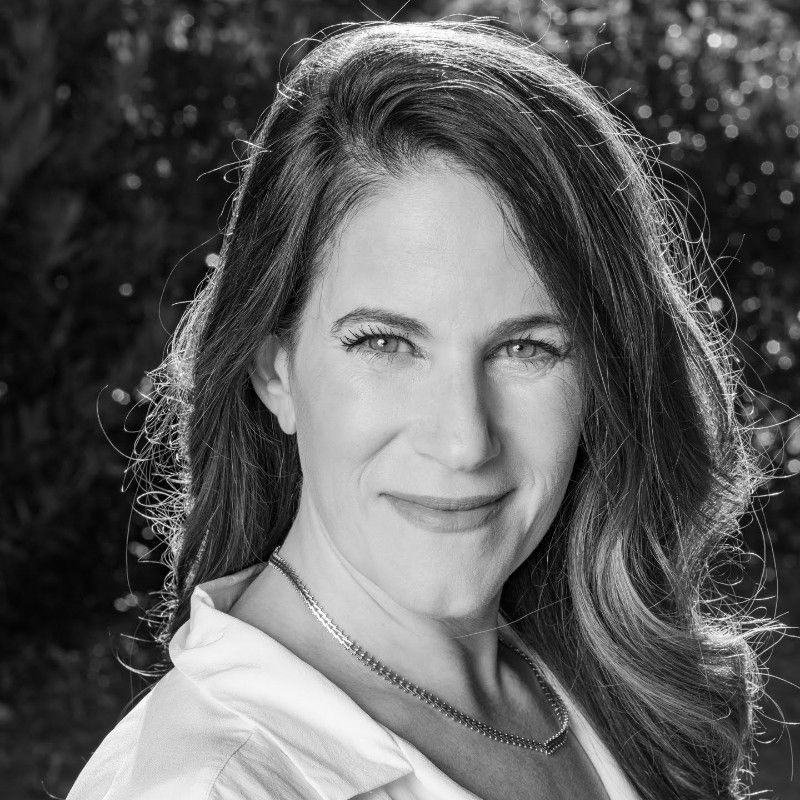
Recorded at Cannes Lions, Jennifer Kattula, GM and CMO of Microsoft Advertising, argues that marketing now happens on two fronts at once, to people and to machines. She lays out three eras of the web living side by side, makes the case that B2B has converged with B2C on emotional value, and insists that story and craft are the edge as AI pulls content towards the mean. She also puts the marketing leader at the tip of the spear on transformation, because they own the customer experience.
From coding websites to speaking human
The setup.
Kattula started as an engineer, coding and building websites in the first dot-com era. She was good at the technology and loved it, but what drew her was telling the story about technology, helping people understand and simplify complex things in human terms. A career switch and business school later, she has spent 20-plus years across marketing and technology.
On human language.
It comes down to what people need and care about, core human values like efficiency, connection, belonging and fear. That holds even in B2B. Marketing to media buyers early on, the insight was that many were early in their careers, lowest on the totem pole, so the programs showed them love and made their lives easier. We are all people, she says, so we are always marketing to people, and she tries to speak in human language.
B2B and B2C have converged on emotional value
On the convergence.
B2B and B2C have converged over the last 10 years, because information is everywhere and people get it on social media, something like 10,000 impressions a day. You have to break through. B2B used to be about the feature or benefit, and now it is about the emotional human value the product creates, the unlock, the magic for yourself or your business.
On storytelling.
The story is what connects us. Even with hyper-personalised advertising, if you are not connected to the story the brand is telling, and to the community buying that brand, it does not land. The story is the shortcut, just like a brand's visual identity. Now stories travel through creators, many mediums and live experiences, and the craft matters even more amid so much AI.
Brands now have to be found across three eras of the web
On marketing to LLMs.
We are living in three eras of the web at once: the clickable web, the chatbots, and increasingly autonomous agents. To be found, a brand has to be readable by the LLM and backed by a rich content ecosystem that tells its story, not just a manifesto but product information, reviews, case studies and community. Many of those ecosystems are incomplete or scattered, so the task is showing up in a chatbot with credibility, found and resonant at once.
On the ecosystem.
People no longer get information one way from a brand. They get it from creators, reviews, their own experiences and word of mouth, and most products are still bought in a store where merchandising influences them. There is a huge ecosystem to account for, and the hard part is putting value on each piece and how they relate.
For B2B, people buy from other people
On employee advocacy.
Kattula maps her audiences from senior decision-makers to managers to the people in the tools, then builds a connected ecosystem of content that tells one story while staying relevant to each. The company also launched an employee advocacy program, colleagues acting as creators who talk about the products with their own networks. For B2B, people buy from other people, so it extends reach and deepens connection authentically, with the storytelling told through the lens of a human being.
On the executive voice.
Faceless companies are giving way to faces. Kattula calls it a win-win-win: people build their personal brands, learn a skill and land speaker spots, and it helps the company because social algorithms change and organic reach is out of your control. Every leader has a different angle too, product leaders on the technical side, the CMO on why the brand matters, each connecting the dots for the bigger story.
Copilot and MCP servers turn everyone into a builder
On the platform.
Copilot is built into the Microsoft Advertising Platform, the Monetize publisher platform and Clarity, and customers see gains in diagnostics, reports and creative production, uploading a brand to spin up many asset permutations quickly. The thesis is that people of all disciplines want information through natural language, asking for what they want and getting it back in a digestible format.
On democratisation.
Kattula points to the new MCP server for the platform: connect and query it from your chatbot of choice, inside your own workflow, because people do not want to log into a million tools. She calls it complete democratisation, with employees building their own dashboards and automations, empowered to move faster with their imagination unlocked. The last mile stays human, because AI never gets you all the way there, so the time saved goes to strategy and refinement.
The risk is that everything starts to sound the same
On the mean.
The question Kattula hears most is what it means to do branding and marketing to machines, how to do it responsibly and how to still care for the brand and the craft. Because LLMs are trained on historical data, they regress towards the mean, and everything can start to sound and look the same. The job is to keep pushing and stay relevant amid an explosion of content and a fixed number of hours in the day.
On craft and reps.
Great content still rises to the top. Even AI-generated work takes craft, iteration and practice, not a simple prompt. It really requires the reps to do something extraordinary with AI. Whether human-made or AI-made, if it is great it rises, and that comes down to the judgment of the expert human.
The marketing leader sits at the tip of the spear
On the year of the AI builder.
Roles are getting much wider. The disciplines within marketing used to hand off in a linear way, and now they are blurring, people going wide while going deep. On Kattula's team this is the year of the AI builder, with employees deciding how they use their tools in their own workflows, going from idea to execution and closing the feedback loop themselves.
On the board's language.
With AI, the marketing leader often drives the transformation, because they own the customer experience and are first to see traffic coming from an LLM or to connect the MarTech stack to the product stack. Kattula's work with finance partners has built aligned measurement models, learning the rhythm of the business and what matters quarterly versus yearly, so the team can get pointed about what it will and will not do, with defensible measurement behind it.
Curiosity, curated rooms and building on the side
On Cannes and culture.
No single brand jumped out, but the smaller, curated experiences had the most impact, a women's lunch with the right people and real connections being the standout. That is the magic, in-real-life connections you cannot get over coffee in New York. The experiences leaned into AI, creators, sports and celebrities, and Kattula welcomes them because culture is part of marketing.
On staying curious.
Kattula vibe codes on the side because she thinks of herself as a builder, drawing inspiration from Lenny's podcast to stay fluent beyond the Microsoft ecosystem. Her advice to anyone starting out is to stay curious and to have real examples to talk about, things you are passionate about, expert in and have made, not just an education on a resume.
How will your brand show up with credibility inside the chatbots and agents your customers now use to decide, and can you prove that value to the board in the language your CFO cares about?

Interview · Episode 141
Do not look like your category. Own your food and drink codes. Specialists win.
Olaf van Gerwen · Founder & Global Creative Director, Chuck Studios

Interview · Episode 140
Identity is the marketer's Rosetta Stone. Connect every touchpoint, or you measure none of them. And the death of the cookie made identity stronger.
Travis Clinger · Chief Connectivity & Ecosystem Officer and GM of International, LiveRamp
Interview · Episode 139
Proxy metrics are dying. Marketers now demand ROAS at every stage of the funnel. And AI lets the campaign respond to the market in real time.
Luca Filardo · Chief Revenue Officer, Adlook